

The Regional Secretariat of the One Health Program in Central Asia organized a media webinar on how to report zoonotic risks accurately, responsibly, and without causing unnecessary public alarm.
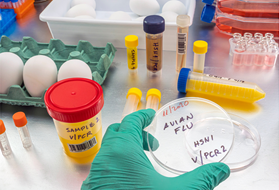
Whenever new outbreaks of highly pathogenic avian influenza (H5N1) are detected around the world, international media publish numerous stories about the disease and its impact on the economy, agriculture, and public health. In Central Asia, however, the issue remains largely overlooked. Most publications appear only during emergency situations, such as restrictions on poultry imports or reports of outbreaks in neighboring countries. Analytical articles, expert interviews, and explanatory reports that explore the causes of virus transmission and effective prevention measures remain extremely limited.
Meanwhile, experts are increasingly emphasizing the need for explanatory journalism, particularly in the field of infectious diseases. During outbreaks of dangerous infections, journalists play a crucial role in helping the public distinguish facts from rumors and scientific evidence from speculation.
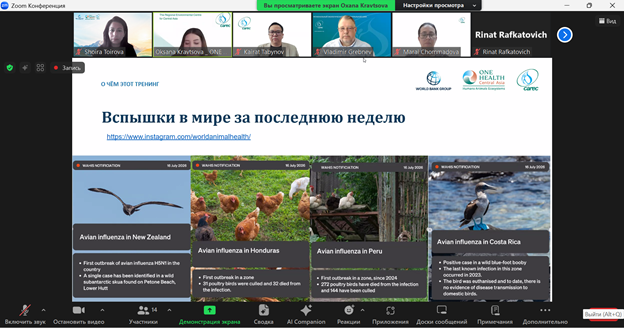
These issues were at the heart of a webinar for journalists held on 20 July 2026, organized by the Regional Secretariat of the Regional One Health Program in Central Asia, hosted by the Regional Environmental Centre for Central Asia (CAREC) and financially supported by the World Bank under the Pandemic Fund project. The event was organized as part of regional efforts to strengthen the One Health approach and enhance professional communication on zoonotic diseases, including highly pathogenic avian influenza (H5N1).
The webinar formed part of the project's broader efforts to raise awareness, strengthen cross-sectoral collaboration, and support Central Asian countries in the prevention, early detection, and responsible communication of risks at the human–animal–environment interface. During the webinar, experts discussed not only the disease itself, but also where journalists can find reliable information, how to verify facts, why avian influenza should not be viewed solely as a veterinary issue, and the important role the media can play in preventing misinformation and improving public awareness.
When There Is News but No Explanation
Analytical and explanatory reporting on avian influenza in Central Asia remains limited. Nevertheless, even the relatively small number of publications reveals a common pattern. For example, in 2018, media outlets reported on Kyrgyzstan's ban on imports of poultry and poultry products from Kazakhstan following an outbreak of the disease. In 2021, Sputnik Tajikistan covered the vaccination of domestic poultry in the Sughd Region. The report described preventive measures, the use of H5 and H9 vaccines, and noted that an avian influenza outbreak the previous year had resulted in the deaths of several thousand chickens and caused substantial financial losses to poultry farms.
At the same time, as with many similar publications, the primary focus was on the news event itself—an outbreak, a vaccination campaign, or newly imposed restrictions. Left unexplored were the questions that help readers understand the broader issue: what highly pathogenic avian influenza is, why its spread is monitored not only by veterinary services but also by public health authorities, environmental specialists, and international organizations, and why it matters for animal health, human health, and the economy. As a result, audiences learn what happened, but do not always understand why it matters. This lack of explanatory journalism creates an information gap that may contribute to the spread of rumors and misinformation.
Why Do Journalists Rarely Cover This Topic?
There are several reasons.
First, to date, no confirmed human cases of H5N1 infection have been reported in the countries of Central Asia. As a result, many newsrooms consider the topic to be of little relevance to their audiences. At the same time, experts point out that the region lies at the intersection of three major migratory bird flyways. Every year, tens of millions of migratory birds pass through Kazakhstan, while the wetlands of Kazakhstan, Kyrgyzstan, Tajikistan, Turkmenistan, and Uzbekistan serve as important stopover sites for migratory species.
Second, the topic itself requires knowledge across several disciplines, including veterinary medicine, epidemiology, ecology, and public health. Not every journalist knows where to find qualified experts, how to interpret scientific data, or which sources can be trusted.
Third, many newsrooms are concerned about causing public panic. As a result, coverage is often limited to brief news reports without sufficient explanation, even though audiences need clear context rather than isolated facts.
The modern One Health approach views the health of people, animals, and the environment as one interconnected system.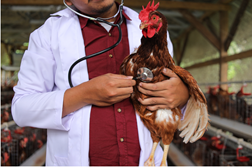
Highly pathogenic avian influenza is one of the clearest examples of this approach.
The virus naturally circulates among wild waterfowl before it can spread to domestic poultry, causing large-scale bird mortality and significant economic losses. In rare cases, it may also infect humans through close contact with infected birds. To date, however, sustained human-to-human transmission has not been documented.
For this reason, reporting on avian influenza should extend beyond the work of veterinary services alone.
It is also a story about:
● food security;
● agricultural economics;
● biodiversity conservation;
● bird migration;
● countries' preparedness for emerging biological threats.
This broader perspective helps audiences understand the connections between the environment, agriculture, and human health.
One of the practical components of the webinar was an overview of international resources used daily by veterinarians, epidemiologists, and researchers. These sources can help journalists quickly verify information, access official data, and prepare evidence-based reporting.
First and foremost is WOAH WAHIS (World Animal Health Information System), the official information system of the World Organisation for Animal Health, which publishes reports on animal disease outbreaks, including highly pathogenic avian influenza, as well as interactive maps and official country notifications. Another key resource is FAO EMPRES-i+, which provides global data on the spread of transboundary animal diseases and infections with zoonotic potential.
Information on confirmed human infections is regularly published by the World Health Organization (WHO), while the European Centre for Disease Prevention and Control (ECDC) issues analytical reports that include risk assessments, analyses of emerging virus variants, and recommendations for countries. Journalists preparing more in-depth stories may also benefit from using Nextstrain, which tracks virus evolution in near real time; GISAID, the world's largest database of influenza virus genetic sequences; and OFFLU, the joint WOAH–FAO network that brings together leading international reference laboratories.
When reporting on developments in Central Asia, experts also recommend consulting national veterinary services, ministries of health, official WOAH Delegates, and the Regional Secretariat of the One Health Program at CAREC, which coordinates regional cooperation on the prevention of and response to threats at the human–animal–environment interface.
● WOAH WAHIS — https://wahis.woah.org/
● FAO EMPRES-i+ — https://empres-i.apps.fao.org/
● WHO (Avian Influenza) — https://www.who.int/teams/global-influenza-programme/avian-influenza
● ECDC (Avian Influenza) — https://www.ecdc.europa.eu/en/avian-influenza
● Nextstrain — https://nextstrain.org/
● GISAID — https://gisaid.org/
● OFFLU — https://offlu.org/
The webinar experts offered several practical recommendations for journalists.
First and foremost, journalists should rely only on verified sources of information and avoid sensational claims about a "new pandemic" unless such statements are supported by scientific evidence.
It is equally important to explain to audiences the difference between seasonal influenza and avian influenza, to remind them that most human infections result from direct contact with infected birds, and that properly cooked poultry meat and eggs are safe for consumption.
Journalists should also report not only on disease outbreaks but also on prevention measures, including biosecurity at poultry farms, the monitoring of migratory birds, the conservation of wetlands, and interagency cooperation within the One Health framework.
These practical recommendations formed the core of the webinar. Participants discussed how to distinguish verified information from rumors, avoid alarmist language, explain why official and scientific sources are essential, and help audiences understand the links between wildlife, domestic poultry, human health, and the economic consequences of disease outbreaks.
Avian influenza is one of those topics that journalists often return to only after a problem has emerged. Yet the role of modern journalism is not only to report on bans, outbreaks, or emergency situations, but also to help society understand why these events occur.
Central Asia is located in a region with the potential risk of highly pathogenic avian influenza spread, while at the same time having the opportunity to prepare for such challenges in advance. This is precisely the goal of the Regional One Health Program in Central Asia: to strengthen cross-sectoral coordination, promote knowledge sharing, support the prevention of zoonotic diseases, and improve risk communication.
The webinar organized by the Regional Secretariat demonstrated that journalists can play a role no less important than veterinarians, physicians, or environmental experts. By explaining complex scientific issues in clear language, debunking myths, reducing the risk of panic, and helping the public make informed decisions based on reliable evidence, journalists become an essential part of disease prevention.
This is the kind of journalism that serves as one of the tools for preventing future epidemics—and an integral component of the One Health approach, which recognizes the interconnected health of people, animals, and the environment.
Shoira Toirova PR Specialist, One Health Program