

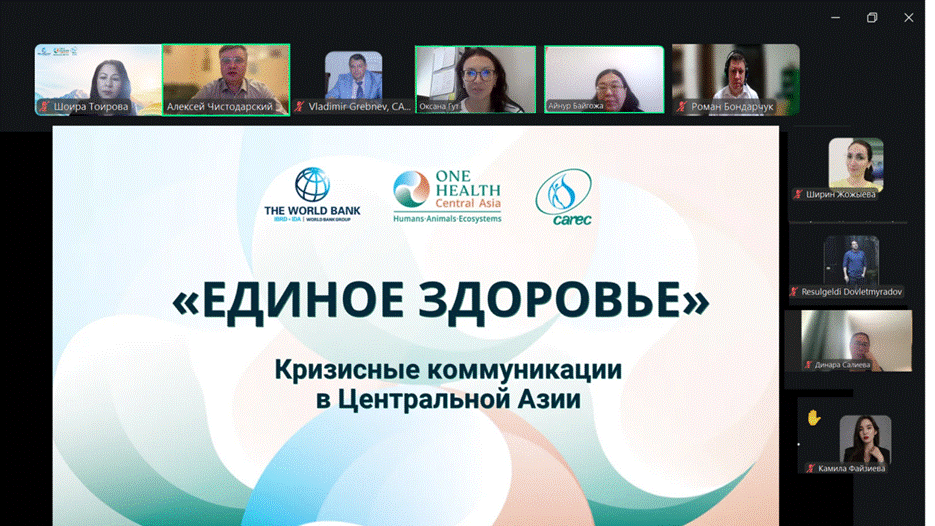
On October 15, 2026, a specialized regional webinar dedicated to strategic and crisis communications in public health, veterinary medicine, and environmental protection was held online. The event brought together journalists, editors from leading media outlets, heads of government press services, and communications professionals from across Central Asia.
The webinar was organized by the Regional Environmental Centre for Central Asia (CAREC) as part of the Regional One Health Program in Central Asia.
Effective Messaging and Infodemic Management
The first session was led by Shoira Toirova, Communications Specialist for the One Health Program (CAREC). Her presentation focused on risk management methodology and countering misinformation during emergencies within the One Health framework.
Participants examined in detail:
· Peter Sandman’s Risk Communication Model: Balancing objective hazard levels with public outrage, where identical facts demand fundamentally different communication strategies;
· Six Core Principles of Crisis and Emergency Risk Communication (CERC): Speed, accuracy, credibility, empathy, promoting action, and respect for the audience;
· Mechanisms for Tackling Infodemics and Rumors: Differentiating unintentional errors (misinformation) from deliberate manipulation (disinformation), conducting environmental monitoring ("social listening"), and applying rapid fact-checking techniques without inciting panic.
"Crisis communication in the One Health context goes far beyond issuing post-factum statements. It is about establishing a transparent, verifiable pathway to accurate data well before information vacuums are filled by speculation on social media," emphasized Shoira Toirova.
Communicating Amid Polycrisis: UNDP Experience
Alexei Chistodarskiy, an international expert in strategic and crisis communications with over 20 years of experience leading communications and advising senior leadership at the United Nations Development Programme (UNDP), delivered a practical breakdown of complex, multi-layered crises.
Drawing on the experience of the UNDP Country Office in Belarus, the speaker examined the phenomenon of overlapping crises—when health or epidemiological emergencies unfold against a backdrop of socioeconomic tensions or eroding institutional trust. The expert outlined three strategic shifts in communications:
· From dry event reporting to human-centered stories: Personal narratives complement data rather than dispute it, fostering genuine empathy;
· From blanket messaging to targeted dialogue: Tailoring communications to the values and concerns of skeptical audiences;
· From institutional monologues to trusted partner voices: Amplifying institutional messages through the credibility of relevant key opinion leaders.
Cross-Sectoral Collaboration and Media Partnerships
In the final session, Ainur Baigozha, publisher of Aleminform.kz and Sportinform.kz and founder of the PR Room professional community, outlined practical tools for sustainable and productive collaboration between press services and editorial teams. Utilizing case studies, she examined earned and native media placement formats for socially significant topics, prompt media response protocols, and the development of reliable expert pools.
The webinar concluded with an interactive discussion on overcoming interagency silos between ministries of health, veterinary authorities, and environmental agencies during public health and ecological emergencies.
For further information:
Oksana Kravtsova – Regional "One Health" Program Coordinator, CAREC, okravtsova@carececo.org