

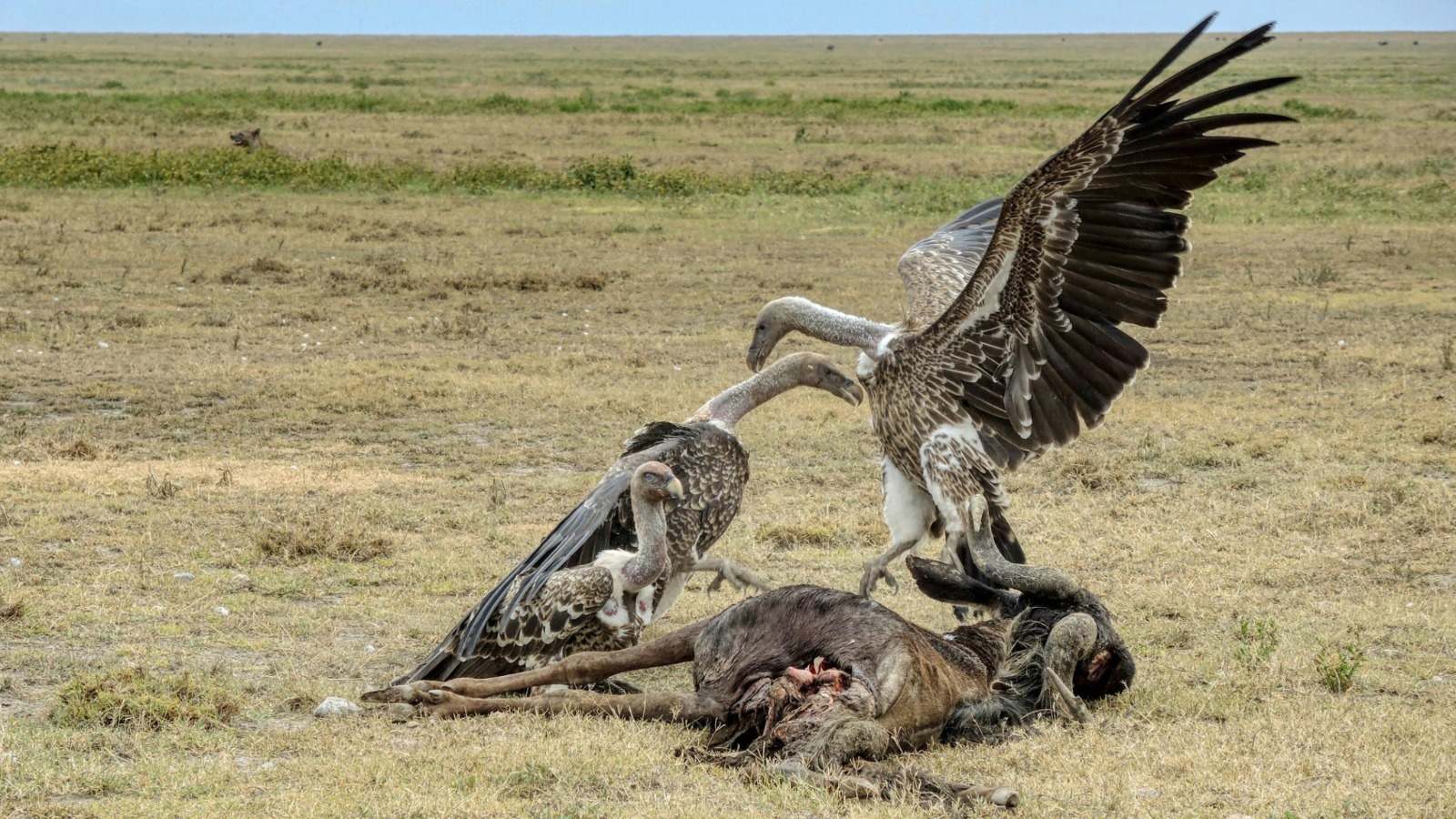
In India, the veterinary use of diclofenac led to a catastrophic collapse of vulture populations. In Kazakhstan, researchers have documented a sharp decline in breeding griffon vultures, and a scientific study identified signs of toxic effects from the drug on the steppe eagle. Does this mean Central Asia faces the same threat? A direct link has not yet been established. However, there is good reason to raise this question before a potential risk turns into an ecological crisis.
India: How a Livestock Drug Led to the Death of Vultures
In the 1990s, South Asia witnessed a rapid population crash across several vulture species. Scientists determined that one of the primary drivers was the veterinary use of diclofenac—a non-steroidal anti-inflammatory drug (NSAID) used to relieve pain and reduce inflammation in livestock.
The mechanism proved unexpected. The birds did not come into direct contact with the medication; they ingested it through food. When scavengers fed on carcasses of livestock treated with diclofenac shortly before death, drug residues entered their systems. Sensitive species developed severe renal failure accompanied by uric acid accumulation and visceral gout, frequently leading to rapid death.
The scale of the consequences was catastrophic. According to studies, populations of three South Asian vulture species—the white-rumped vulture (Gyps bengalensis), Indian vulture (Gyps indicus), and slender-billed vulture (Gyps tenuirostris)—collapsed by more than 95% compared to baseline levels in the early 1990s. In 2006, India, Pakistan, and Nepal enacted measures banning the veterinary use of diclofenac. However, the drug did not vanish from the food chain overnight; subsequent monitoring continued to detect its residues in livestock carcasses and dead vultures. (Green et al., 2006, PLOS Biology, "Removing the Threat of Diclofenac to Critically Endangered Asian Vultures"; Cuthbert et al., 2011, "Effectiveness of Action in India to Reduce Exposure of Gyps Vultures").
This experience demonstrated that a pharmaceutical safe for its target animal when administered correctly can pose a lethal hazard to another species exposed to residues along the food chain.
Yet the diclofenac issue is not limited to vultures.
In 2014, a study focusing on the steppe eagle (Aquila nipalensis) was published in Bird Conservation International. Researchers examined two dead eagles discovered at a cattle carcass dump in Rajasthan, India. Both birds exhibited visceral gout, and diclofenac residues were detected in the tissues of one individual. The authors interpreted these findings as evidence of the drug's toxic impact on the steppe eagle and suggested that the potential hazard could extend to a broader spectrum of raptors. (Sharma et al., 2014, Bird Conservation International, Cambridge University Press).
Photo: Bird photograph · Accipitriformes · Steppe eagle · ! wingeds.world ! winged
While this represents significant scientific evidence, its constraints must be recognized: a study based on two individuals cannot determine how widely diclofenac affects steppe eagles or what proportion of their overall mortality it may account for.
Central Asia: Griffon Vulture Decline in Kazakhstan
Against the backdrop of these international findings, census data on the Eurasian griffon vulture in the Karatau Mountains of southern Kazakhstan have drawn particular concern.
In a study published in December 2023, scientists compared field observation data from 2010 and 2022. The shift was dramatic: the number of active nests dropped from 74 to just four. In 2022, researchers located seven nests, but only four were occupied. The encounter rate along survey transects fell from 12.4 to 0.17 individuals per 100 kilometers.
Consequently, active nests in the surveyed area decreased by approximately 95%, and encounter rates plummeted by roughly 99%. These figures reflect findings specifically in the Karatau range, rather than the entire griffon vulture population across Kazakhstan or Central Asia. (Kaptyonkina et al., 2023, Biodiversity Research and Conservation Centre; Vulture Conservation Foundation: "Griffon Vulture decline in Kazakhstan").
What drove this decline? The authors evaluated several hypotheses: food scarcity, poison baits used for wolf control, and veterinary pharmaceuticals. Given the recovery of livestock numbers and rising saiga antelope populations, food shortages proved a less plausible explanation. Local residents also reported using poisons to target wolves, though the exact chemical composition of those baits was not established.
The researchers placed special focus on veterinary NSAIDs. In response to an official inquiry, the Committee for Veterinary Control and Surveillance of the Ministry of Agriculture of Kazakhstan provided an authorized drug registry that included diclofenac, ketoprofen, and flunixin. Regional veterinary departments in Turkistan and Zhambyl regions also supplied data on drug utilization. Notably, the quantitative figures cited in the publication for 2018–2022 pertain to ketoprofen and flunixin, rather than diclofenac. While the authors consider veterinary pharmaceuticals one of the most probable hypotheses, they stress the necessity of further research: direct toxicological evidence proving that these specific compounds caused the griffon vulture decline in Karatau is not yet available. (BRCC, "Are veterinary drugs dangerous to wildlife? Finding out why the griffon vulture is disappearing in Kazakhstan," November 6, 2023, publication).
How Widely Are NSAIDs Used in Central Asia?
Data from Kyrgyzstan illustrate why this issue warrants further investigation. According to Preventing a Health Crisis in the Kyrgyz Republic: Mitigating the Risk of NSAIDs Use on Vultures, 70% of respondents reported using NSAIDs, with diclofenac being the most frequently cited drug at 30%. Meloxicam, identified by the authors as a safer alternative for vultures, was reported in 21% of cases. Meanwhile, 43% of treatment decisions were made without professional veterinary supervision.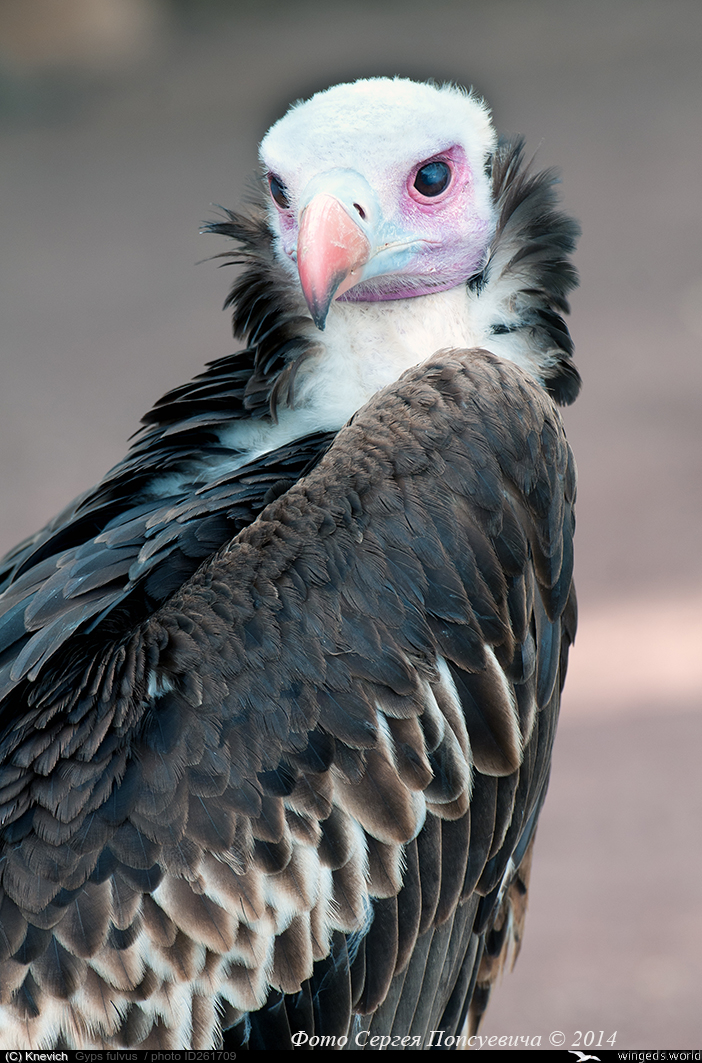
Photo: Bird photograph · Accipitriformes · Griffon vulture · ! wingeds.world ! winged
Another critical factor is the disposal of livestock carcasses. According to the aforementioned report, 89% of carcasses were disposed of improperly, and at least 49% of the documented methods allowed scavengers direct access to carcasses or facilitated contaminant runoff into water bodies. Only 15% of respondents were aware of diclofenac's toxicity to vultures.
These findings highlight a potential exposure pathway of veterinary pharmaceuticals to wild birds. However, these percentages represent the participants of this specific study rather than all farmers across Kyrgyzstan, let alone the broader region. The authors also emphasize that Kyrgyzstan currently lacks toxicologically confirmed cases of vulture mortality caused by NSAIDs, as well as data on drug residues in avian tissues. Consequently, while the study identifies a potential risk, it does not prove that diclofenac has already driven vulture population declines in the country.
Are Diclofenac and Bird Population Declines Linked in Central Asia?
To date, three separate circumstances must be distinguished. In South Asia, the toxic impact of diclofenac on several vulture species is scientifically established. In Kazakhstan, the number of active griffon vulture nests in the Karatau Mountains has fallen sharply, though the underlying cause remains undetermined. In Kyrgyzstan, NSAID usage patterns and carcass handling practices have been identified that potentially expose scavengers to drug residues, yet confirmed cases of vulture fatalities attributable to these substances do not yet exist.
The study of the steppe eagle in India also suggests possible toxic effects of diclofenac on other birds of prey. However, these findings do not prove that the drug is causing steppe eagle declines in Central Asia.
Therefore, verifying a potential link requires toxicological testing of tissues from deceased birds, residue analysis of livestock carcasses, and systematic mortality surveillance across wild bird populations.
Why Is It Important to Address This Question Now?
Vultures fulfill a vital sanitary role by removing animal carcasses from ecosystems. International experience demonstrates that the loss of these birds can have consequences extending far beyond biodiversity alone. A study by economists Eyal Frank and Anant Sudarshan estimated that the collapse of vulture populations in India during the 2000s was linked to more than 500,000 excess human deaths. This figure reflects the measured impact of the Indian crisis, rather than a projection for Central Asia. (Frank E. and Sudarshan A., 2023, The Social Costs of Keystone Species Collapse: Evidence from the Decline of Vultures in India, SSRN).
For Central Asia, the objective is not to declare diclofenac the established cause of raptor decline, but rather to evaluate this risk. Achieving this requires population monitoring, mortality tracking, toxicological research, safe carcass disposal, and assessing the availability of safer veterinary alternatives. Furthermore, conducting community brief-lectures and sanitary-educational outreach with farmers on the ground is critical to explain safe livestock burial and carcass disposal procedures, as well as the hazards associated with specific pharmaceuticals. Collaborative action among veterinary, agricultural, and environmental authorities will ensure threats are identified before leading to irreversible outcomes.
Acting Before a Crisis Is Proven
The experience in India proved that veterinary diclofenac can cause mass mortality among sensitive vulture species. Kazakhstan has recorded a steep decline in griffon vultures, and Kyrgyzstan has identified conditions under which scavengers could encounter pharmaceutical residues. Yet a direct causal link between diclofenac and raptor declines in Central Asia remains unproven.
This is precisely why the issue must be investigated now. The One Health approach provides a framework to integrate wildlife conservation, veterinary practices, and public health, enabling early risk assessment and proactive safeguards before potential hazards escalate into an ecological emergency.
For Central Asia, the central question today is not whether a crisis is already proven, but whether we know enough to prevent one.
This publication was prepared by the Regional Environmental Centre for Central Asia (CAREC) under the Regional "One Health" Programme in Central Asia, with financial support from the World Bank and the Pandemic Fund.
Shoira Toirova – PR Specialist, "One Health" Programme
For further information:
Oksana Kravtsova – Regional "One Health" Programme Coordinator, CAREC, okravtsova@carececo.org