

Medications that stop working have never been a purely medical issue. A significant portion of the world's antibiotics is used not in hospitals, but on farms. Here is a look at what published regional studies tell us about the situation.
Kairat Tabynov, DVM, PhD, Veterinary Sector Consultant at the Regional Environmental Centre for Central Asia (CAREC)
Antibiotics transformed 20th-century medicine, turning once-fatal diseases into treatable conditions. However, bacteria adapt. The more frequently and uncontrollably a drug is used, the faster resistant strains emerge. This phenomenon is known as antimicrobial resistance, or AMR.
The global scale of the issue is well documented. In 2021, approximately 4.7 million deaths were associated with resistant bacterial infections. According to researchers' projections, drug resistance could cause up to 39 million deaths between 2025 and 2050 [GBD 2021 Antimicrobial Resistance Collaborators, 2024].
39 million
estimated number of deaths associated with antibiotic resistance between 2025 and 2050
Here is a professional translation into English, matching the style and tone of the previous sections:
Crucially, an often-overlooked factor is at play here: resistance does not develop solely where humans are treated. A significant portion of the world's antibiotics is used in livestock production, where the selective pressure exerted on bacteria is fundamentally different. Rather than individual courses of treatment, it involves continuous exposure across large animal populations, as well as soil, water, and food products.
Resistance genes are not bound to a single species of bacteria. They can be transferred between different—even unrelated—microorganisms via mobile genetic elements. Put simply, a harmless intestinal bacterium in a cow can hand over "antibiotic defense instructions" to a pathogen.
These resistance elements reach humans through several pathways.
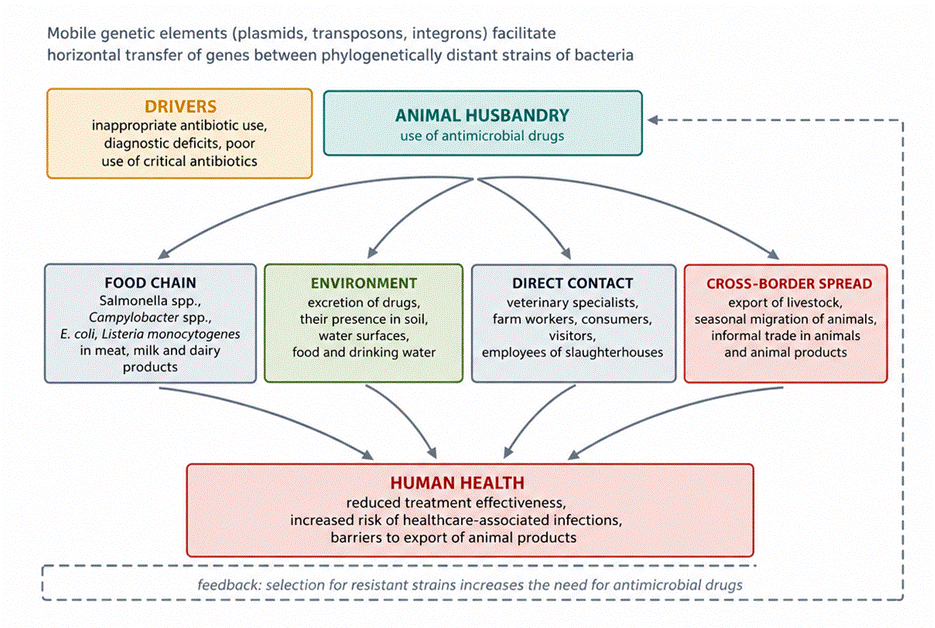
Figure 1. Pathways of resistance gene circulation in the agrifood system
Resistant bacteria enter meat and dairy products. Up to 70–90% of drugs administered to animals are excreted in manure, subsequently entering the soil and water. Veterinarians, farm workers, and livestock herders who come into direct contact with animals face the highest risk. Finally, seasonal livestock migrations and live animal trade transport resistant strains across national borders, making this a shared regional challenge.
Until recently, the region remained understudied in this regard [Zhazykhbayeva et al., 2026]. Over the last few years, however, studies have emerged that provide a very clear picture. Below are three findings that stand out as the most revealing.
First-line drugs have partially stopped working. A study examining cow milk across 16 farms in Northern Kazakhstan investigated strains of Staphylococcus aureus, one of the primary pathogens causing mastitis. Resistance to beta-lactam antibiotics reached 100%, while resistance to tetracyclines and fluoroquinolones stood at 95.4% each [Baymenov et al., 2023]. These are the exact frontline drugs used to treat mastitis.
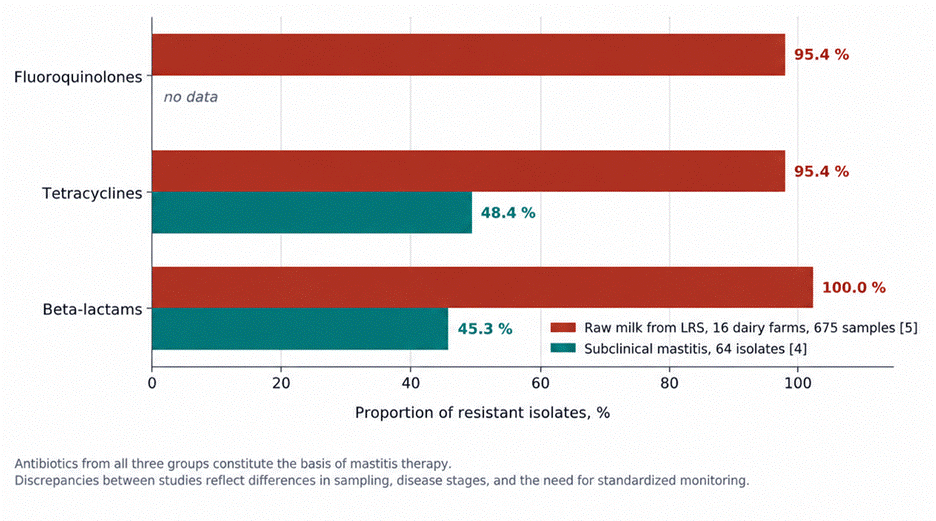
Figure 2. Resistance of Staphylococcus aureus isolated from dairy cattle in Northern Kazakhstan. Sources: [Rychshanova et al., 2022; Baymenov et al., 2023]
Antibiotic residues are systematically detected in food products. A nationwide study examined 1,026 meat samples across 14 regions of Kazakhstan. Drug residues were found in all categories of meat and feed, with several concentrations exceeding maximum residue limits. Poultry contained the highest levels. In individual beef samples, dapsone concentrations reached 285 ppb, which is significantly above the limit established by the EAEU technical regulations [Zhannara et al., 2025]. This indicates that the required withdrawal periods between animal treatment and slaughter are not always observed.
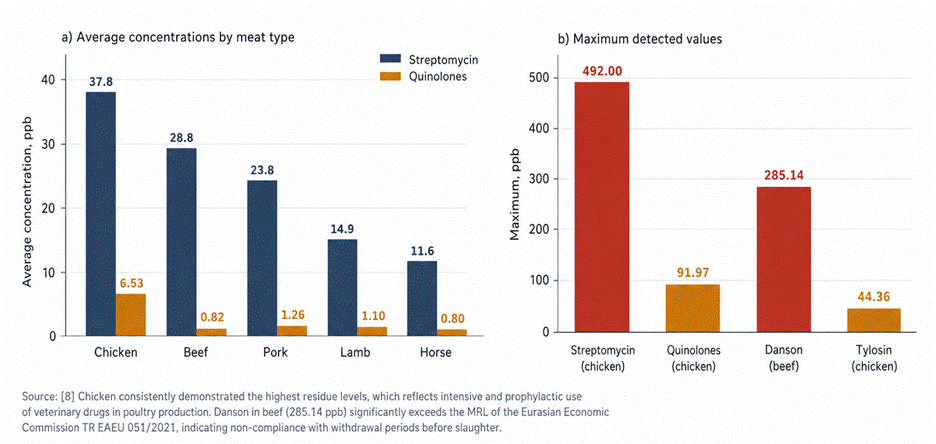
Figure 3. Antimicrobial residues in meat, Kazakhstan, 14 regions (n = 1,026). Source: [Zhannara et al., 2025]
The issue is not a lack of awareness among farmers. The largest study to date on antimicrobial use practices surveyed 3,012 individuals across Kazakhstan, Kyrgyzstan, and Tajikistan [Kovacs et al., 2026]. It uncovered several systemic problems simultaneously.
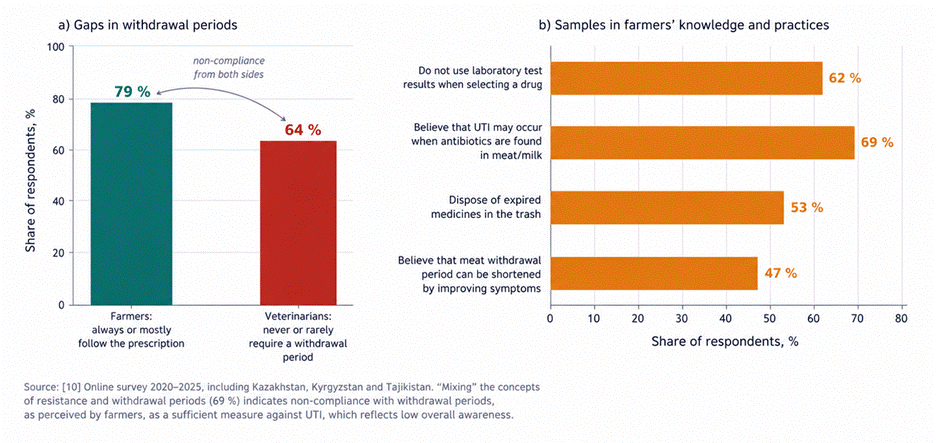
Figure 4. Survey data from 3,012 livestock sector participants. Source: [Kovacs et al., 2026]
• Prescriptions are often not required. 64% of veterinary pharmacy staff rarely or never ask for a prescription, even though 79% of farmers claim to have one. A regulation may exist on paper, but without enforcement, it fails to work.
• Decisions are not made by veterinarians. 62% of farmers do not use laboratory test results when choosing a medication. More often than not, they seek advice from a pharmacy salesperson rather than a veterinarian. Only about two-thirds of veterinarians have adequate access to a diagnostic laboratory.
• Drugs are used as a precaution. 22% of veterinarians recommend antibiotics for prevention, and 14% for growth promotion. Poultry farms regularly use drugs classified in medicine as critically important "last-resort" antibiotics that should be saved for extreme cases.
The Key Misunderstanding
One finding from the same study deserves special attention, as it explains why standard awareness campaigns fall short.
69 %
of farmers believe that resistance occurs when antibiotic residues are detected in meat or milk.
This is incorrect, and the distinction here is fundamental. Antibiotic residues in a product and bacterial resistance are two completely different phenomena. A farmer can strictly observe all pre-slaughter withdrawal periods and produce completely clean meat while still cultivating a colony of resistant bacteria on the farm that remains unaddressed.
For a farmer operating under this misconception, the logic seems complete: observe the withdrawal period, problem solved. That is why calls to "use antibiotics responsibly" fail to resonate with such an audience. First, it is necessary to explain that these are two fundamentally different concepts.
Other figures from the same study are equally telling: 47% of farmers consider it acceptable to discontinue treatment as soon as the animal shows improvement, while 53% dispose of expired medications in regular household waste [Kovacs et al., 2026].
An obvious answer comes to mind: ban and restrict. However, this answer is incomplete, which is perhaps the key practical takeaway.
Restrictions without developing preventative measures create a new problem. If a farmer's access to drugs is taken away without offering vaccination, proper housing conditions, and access to a veterinarian in return, animals will begin to fall ill and die. This will harm both food security and trust in the very idea of regulation.
On an encouraging note, farmers themselves are quite receptive to a preventative approach: 65% agree that vaccination eliminates the need for antibiotics, and 72% believe that early disease detection reduces their use [Kovacs et al., 2026]. The demand exists; the capacity is what is lacking.
Therefore, action must be taken across several directions simultaneously:
· Regulation backed by real enforcement. Prescription-only sales must not exist merely on paper, but be strictly enforced. Drugs critically important for human medicine must be safeguarded.
· Tracking and monitoring. Currently, official statistics on antibiotic use in Kazakhstan's livestock sector simply do not exist [Zhannara et al., 2025]. Without data, it is impossible to assess the scale or evaluate whether adopted measures are working.
· Prevention over treatment. Vaccination, farm biosecurity, proper housing conditions, and milking hygiene. An animal that does not get sick does not require treatment.
· Accessible diagnostics. Veterinarians must have the means to perform laboratory tests and prescribe targeted treatments rather than acting on guesswork.
· Waste management. Decontaminating manure prior to field application and establishing organized collection of expired medications instead of dumping them in regular waste.
· Clear and honest communication. Dialogue with farmers must begin by explaining the fundamental difference between antibiotic residues and bacterial resistance.
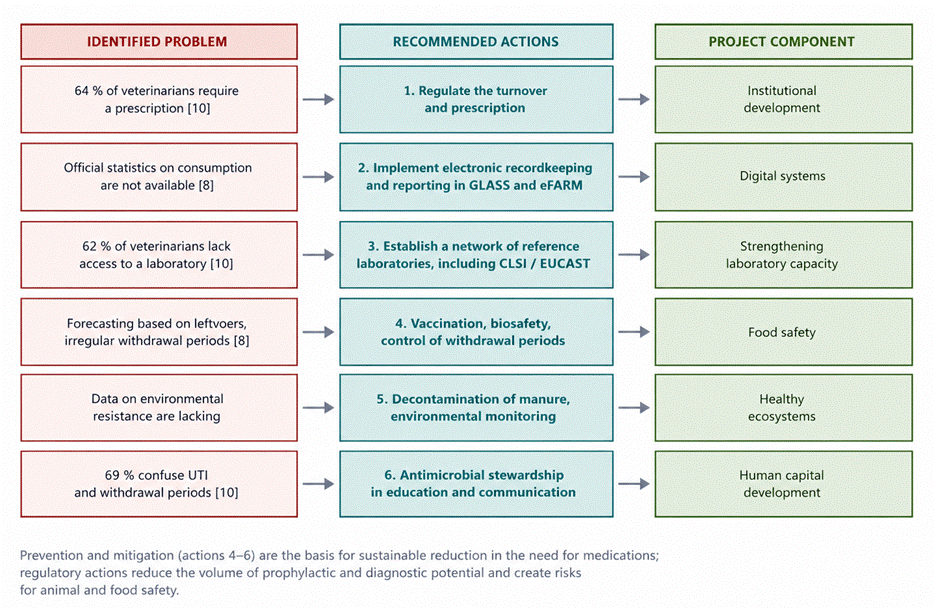
Figure 5. Priority Action Areas and Their Alignment with Identified Gaps
Resistant bacteria do not present a passport at the border. Pastoral livestock farming, seasonal herd migrations, and live animal trade link the region's countries into a single epidemiological landscape. Unilateral measures taken by any single country will yield only limited results.
This is precisely why efforts are conducted under the regional initiative "One Health for Pandemic Prevention, Food Systems Resilience, and Ecosystem Health in Central Asia," supported by the World Bank and the Pandemic Fund. The project encompasses all five countries and integrates veterinary, public health, and environmental services—matching the very nature of the challenge, which crosses sectoral boundaries and cannot be resolved within a single domain.
A notable gap highlighted by the literature review warrants special emphasis. The overwhelming majority of regional studies focus on Kazakhstan, while primary data for Uzbekistan and Turkmenistan are virtually non-existent in international peer-reviewed literature. This does not mean the problem does not exist there; it simply means it has yet to be quantified. Bridging this data gap is, in itself, a high-priority task.
Antibiotic resistance in the region's agricultural sector is not a future threat, but a measured fact. However, its root causes lie not in individual ignorance, but in system design: in how drugs are sold, who makes treatment decisions, and whether laboratory access is available. Consequently, solutions must also be systemic. Rather than starting with bans, efforts should focus on giving farmers the means to prevent animals from falling ill in the first place.
References
This material is based on peer-reviewed scientific publications. The full version of the article with page-by-page citations and an expanded reference list is available separately.
[1] GBD 2021 Antimicrobial Resistance Collaborators. Global burden of bacterial antimicrobial resistance 1990-2021: a systematic analysis with forecasts to 2050. Lancet. 2024 Sep 28;404(10459):1199-1226. doi: 10.1016/S0140-6736(24)01867-1.
[2] Zhazykhbayeva D, Kosherova Z, Turdalina B, Almazan J, Aljofan M, Semenova Y. From surveillance to stewardship: addressing antimicrobial resistance in Central Asia's healthcare. Clin Microbiol Rev. 2026 Jun 11;39(2):e0019825. doi: 10.1128/cmr.00198-25.
[3] Rychshanova R, Mendybayeva A, Miciński B, Mamiyev N, Shevchenko P, Bermukhametov Z, Orzechowski B, Miciński J. Antibiotic resistance and biofilm formation in Staphylococcus aureus isolated from dairy cows at the stage of subclinical mastitis in northern Kazakhstan. Arch Anim Breed. 2022 Dec 8;65(4):439-448. doi: 10.5194/aab-65-439-2022.
[4] Baymenov BM, Bulashev AK, Chuzhebayeva GD, Aliyeva GK, Beishova IS, Kokanov SK, Raketsky VA. Phenotypic and genotypic resistance to antibiotics in Staphylococcus aureus strains isolated from cattle milk in Northern Kazakhstan. Vet World. 2023 Sep;16(9):1815-1820. doi: 10.14202/vetworld.2023.1815-1820.
[5] Zhannara A, Zhenisgul A, Rashit U, Zhanbolat S, Galina S, Kymbat S, Orken A. Antibiotic residues in meat and feed in Kazakhstan: A nationwide surveillance study on food safety and antimicrobial resistance risks. Vet World. 2025 Sep;18(9):2839-2849. doi: 10.14202/vetworld.2025.2839-2849.
[6] Kovacs D, Raizman E, Deckert A, Aliyeva C, Angelovski D, Beglaryan Z, Charypkhan D, Ciria N, Khakimov T, Kichinebatyrova M, Maratova E, Nagy T, Sargsyan A, Yurchenko O, Beltran-Alcrudo D. Knowledge, Attitudes and Practices Related to Antimicrobial Use and Resistance Among Livestock Sector Stakeholders in Seven Former Soviet Countries: A Multi-Country Regional Analysis. Antibiotics (Basel). 2026 Apr 9;15(4):384. doi: 10.3390/antibiotics15040384.
This material was prepared for information and analytical purposes as part of CAREC's activities to raise awareness of the "One Health" principles in Central Asia.