

How is soil health connected to antimicrobial resistance? Why do environmental risks in Central Asia require joint action, and what role does the One Health approach play? We discussed these questions with Dr. Olga Shibistova, Research Staff at the Soil Science Section of the Institute of Earth System Sciences, Leibniz University Hannover, Germany.
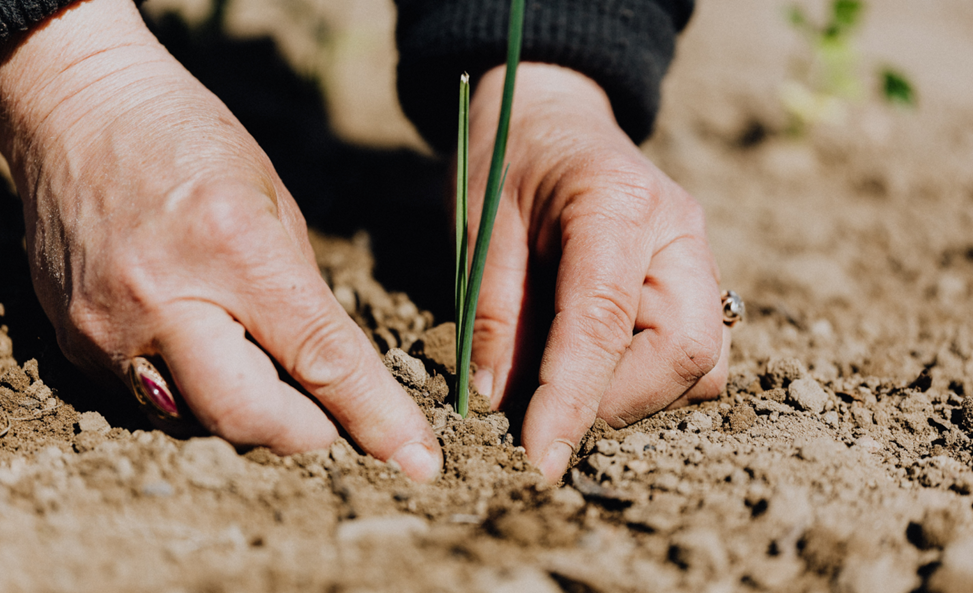
Soil is not merely the foundation for growing agricultural crops or an important reservoir of biodiversity. It also holds an enormous pool of genetic information, including antibiotic resistance genes. This is why soil health matters not only for agriculture and the environment, but also for public health.
Within the One Health framework, this connection becomes particularly important: microorganisms, contaminants and resistance genes can move between soil, water, animals, food and humans. Land degradation, salinization and environmental pollution can intensify these risks.
In this interview, Dr. Olga Shibistova explains why soil health should be considered an investment in human health and food security, which environmental threats extend beyond national borders, and why Central Asian countries need to strengthen joint research and monitoring systems.
At what point does soil degradation become a public health issue? Where does that line lie?
There is rarely a clear boundary between soil degradation and public health. Their relationship is continuous, shaped by a complex network of interconnected processes.
However, environmental changes can sometimes reach critical thresholds, triggering consequences that are difficult to reverse. The Aral Sea disaster is a striking example.

Soil is a living system, not merely a substrate for growing crops. Its physical, chemical, and biological functions are closely interconnected, forming a functional nexus between soil, water, food, ecosystems, and human health.
When these functions are disrupted, the consequences can cascade through the entire system — from declining food security and nutritional quality to deteriorating water quality, the mobilization of contaminants, and changes in microbial communities, including processes relevant to antimicrobial resistance.
In the Aral Sea basin, unsustainable water management led to the dramatic shrinking of the sea and the emergence of the Aralkum Desert. Wind erosion of the exposed sediments generates massive dust emissions, estimated by scientific modelling at approximately 27 million tonnes per year under the studied conditions.
Research has documented organochlorine pesticides and other contaminants in the surrounding waters and soils, as well as pesticide-laden airborne dust capable of crossing national borders, raising growing concerns about potential health impacts far beyond the affected region.
What began as a water-management crisis became a profound transformation of an entire ecosystem, creating multiple pathways of potential human exposure. The Aral Sea illustrates how environmental pressures can accumulate until a critical threshold is crossed, with consequences extending far beyond the original disturbance.
Yet many links between soil health and human health remain insufficiently understood or quantified. We are only beginning to understand how environmental stress influences the selection and persistence of antibiotic resistance genes in soils, or how changes in soil microbial communities may affect the human microbiome through food and other environmental pathways.
So where does the boundary lie?
For me, it lies where the loss of soil functions becomes a loss of protection for human health. And by the time we see the consequences in hospital statistics, we may already be far beyond that line.
Which connections within the One Health framework are particularly underestimated?
Perhaps the most underestimated dimension of One Health is the invisible biological network connecting soils, plants, animals, water, and humans.
Beneath our feet lies an extraordinarily diverse microbial world that regulates nutrient cycling, supports plant health, suppresses pathogens, and helps determine the quality and safety of our food.
But this biological network has another side. Soil is not only a reservoir of biodiversity — it is also a vast reservoir of genetic information, including antibiotic resistance genes.
And this brings us to one of the most urgent One Health challenges: antimicrobial resistance.
We tend to associate antibiotic resistance with hospitals and livestock production. Yet soils are also important reservoirs of antibiotic resistance genes. Manure and wastewater can introduce resistant microorganisms and resistance genes into agricultural soils, where they may persist, spread among microbial communities, and potentially enter food and water pathways.
Even more strikingly, antibiotics are not always required to maintain antibiotic resistance.
A recent metagenomic study from East Kazakhstan found associations between heavy-metal contamination and antibiotic resistance genes in soil microbial communities. This suggests that metal pollution may contribute to the co-selection of antibiotic resistance — an unexpected connection between industrial contamination and a major global health challenge.
But antimicrobial resistance is only part of the story.
Soil microbial communities also provide an essential biological defense for plants. When salinity, drought, or pollution disrupt these communities, we risk weakening natural disease suppression, nutrient cycling, and plant resilience — with consequences for food production and potentially food quality.
The paradox is that the same microbial world that helps protect our food systems can also become an environmental reservoir of resistance genes.
For Central Asia, where irrigation, livestock production, salinization, and water scarcity interact, understanding these connections is particularly important. Yet we continue to monitor soil, water, agriculture, animal health, and human health separately — while microorganisms, contaminants, and resistance genes move freely between them.
One Health cannot succeed while our science remains fragmented and the environmental processes we seek to understand are fundamentally interconnected.
Can the condition of soil serve as an early indicator of future public health risks? What signals or changes should specialists be able to identify before an environmental problem turns into a health crisis?
Absolutely. Soil health can provide early warning signals of risks to human health and well-being, long before their consequences become visible in public health statistics.
The key is to interpret established physical, chemical, and biological soil health indicators across the entire soil–environment–food–human health nexus, considering all the intermediate links and their implications for human health.
Key indicators include:
● Physical: soil structure and water infiltration.
● Chemical: organic carbon, pH, salinity, nutrient availability, and contaminant bioavailability.
● Biological: microbial biomass, biological activity, and functional diversity.
Their value for One Health lies in understanding how these properties jointly influence food quality, water safety, contaminant exposure, and microbial hazards along the entire soil-to-human health continuum.
We need to understand how soils regulate the availability of essential nutrients, water quantity and quality, and the mobility and bioavailability of contaminants — while also shaping microbial communities, pathogen survival and virulence, and antibiotic resistance.
For example, the availability of zinc and selenium in soils can influence their concentrations in crops and their contribution to human nutrition. Soil structure and filtration processes affect water quality, while the mobility and bioavailability of pollutants determine their potential transfer into food and water. Emerging contaminants, such as microplastics, may further modify these interactions.
Environmental stress can also alter microbial communities, influence pathogen behaviour, and promote the selection and persistence of antibiotic resistance genes. Monitoring these changes alongside conventional soil health indicators could provide additional early warning signals.
The essential step is to connect soil health indicators with measurements along the entire exposure pathway — from soil through water, crops, livestock, and food products to human populations. Detecting a hazard does not necessarily mean that people are exposed, but identifying these connections allows us to recognize where preventive action is needed.
For Central Asia, this requires integrated monitoring that brings together soil science, agriculture, environmental protection, food safety, and public health.
Ultimately, soil health monitoring should become an instrument of public health prevention — helping us recognize emerging risks, understand how they develop across environmental and food systems, and intervene before they become health crises.
Viewing Central Asia as a unified ecological system, which risks related to land degradation and environmental health cannot be addressed effectively solely at the national level?
Central Asia is divided by political borders, but its water, atmosphere, ecosystems, and environmental risks are interconnected. No country can protect its environmental health entirely on its own.
The Aral Sea disaster is perhaps the clearest demonstration. Decisions about water use across a shared river basin contributed to the transformation of an entire regional ecosystem. Today, exposed sediments of the Aralkum Desert are a source of airborne dust and associated pollutants that can be transported far beyond their place of origin.
Transboundary water systems present another challenge. The Amu Darya and Syr Darya connect upstream land and water management with downstream irrigation, soil salinization, water quality, agricultural productivity, and human well-being. Pollution or excessive water withdrawals in one part of a basin can create consequences elsewhere.
But the challenge extends beyond water and dust. Environmental contaminants, pathogens, and antibiotic resistance genes can also move through shared waterways, agricultural trade, and animal movements. These processes require coordinated surveillance rather than isolated national assessments.
Climate change adds another dimension, intensifying pressures on water resources, dryland ecosystems, and agricultural livelihoods across the region.
The fundamental problem is that we are dealing with interconnected ecological processes through fragmented national monitoring and management systems.
What Central Asia needs is a shared understanding of environmental risks, compatible monitoring methods, and mechanisms for exchanging data and coordinating preventive action.
Environmental health, including soil health, is a regional public good. Protecting it requires countries to act not only within their borders, but across the ecological systems they share.
Looking ahead a decade to a Central Asia with healthier soils, resilient ecosystems, and healthier communities, what solutions do you believe must begin implementation today?
Ten years is a realistic horizon for meaningful change — but only if we begin treating soil health as an investment in human health, food security, and the resilience of future generations.
The first priority is to establish a coordinated regional soil health monitoring system, based on harmonized physical, chemical, and biological indicators. This should be connected to water quality, food safety, environmental exposure, and public health data, allowing us to identify emerging risks and evaluate the effectiveness of interventions.
But monitoring alone will not restore soil functions. We need to translate scientific knowledge into practical land management: reducing erosion and salinization, improving soil organic carbon management, increasing water-use efficiency, and restoring the biological functioning of agricultural and degraded soils.
Equally important is building scientific capacity. Central Asia needs shared research infrastructure, comparable analytical methods, long-term experimental sites, and opportunities for young scientists to work across disciplinary and national boundaries.
This is precisely the direction we are pursuing through the ExSoil project — the development of a competence network for soil science in Central Asia and Mongolia. Our ambition is to connect scientific institutions, strengthen education and research capacity, and establish the foundations for a regional Virtual Institute for Soil Health.
However, scientific cooperation must ultimately translate into policy. Soil health should become part of agricultural planning, environmental protection, climate adaptation, and One Health strategies — supported by measurable targets and long-term institutional commitments.
And perhaps the most important change is conceptual: we must stop treating soil as an agricultural resource alone and recognize it as essential infrastructure for human and ecosystem health.
If we begin today, in ten years we should not simply have better data about our soils. We should have healthier landscapes, safer food and water, stronger scientific institutions, and communities better protected against environmental and health risks.
Shoira Toirova — PR Specialist, One Health Program
shoira.tajikistan@gmail.com
This publication was prepared by the Regional Environmental Centre for Central Asia (CAREC) within the framework of the regional One Health Program in Central Asia. The Program is implemented with financial support from the World Bank and the Pandemic Fund. The author bears sole responsibility for the content of this publication. The views expressed do not necessarily reflect the official position of the World Bank or the Pandemic Fund.
For further information:
Oksana Kravtsova — Regional Manager of the One Health Program, CAREC okravtsova@carececo.org