
Pandemic and transboundary risks, pasture degradation, and the latent threat of antimicrobial resistance are no longer perceived in Central Asia as isolated sectoral issues. Recent events have proven: biological threats do not recognize administrative or national borders.
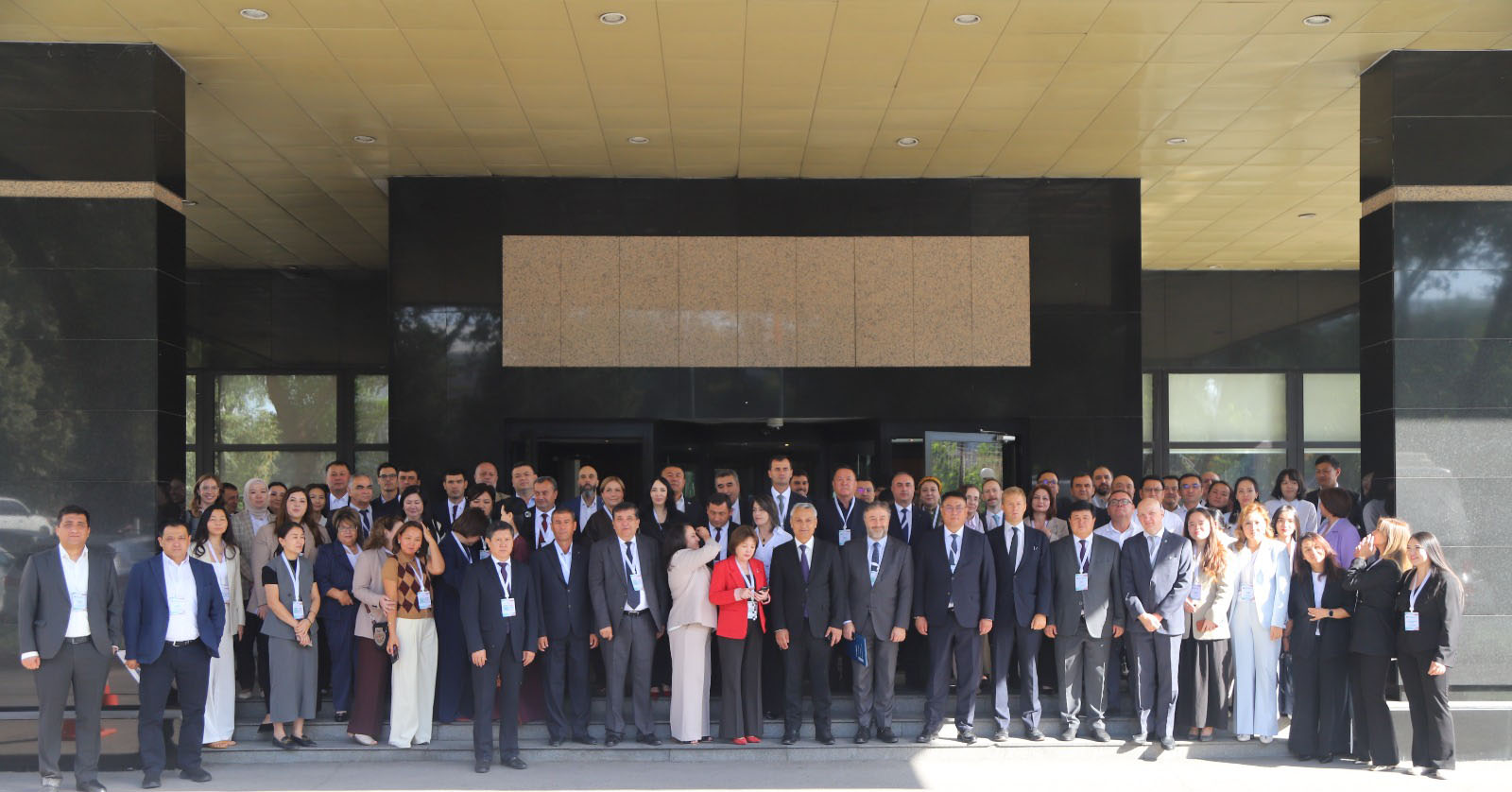
On September 14, 2026, the Second Regional Conference of the “One Health for Pandemic Prevention, Food Systems Resilience, and Ecosystem Health in Central Asia” Program opened in Bishkek. The central highlight of the forum was the official launch of the national component of the Kyrgyz Republic—the practical translation of years of multilateral negotiations into tangible financial and institutional mechanisms.
The Economics of Prevention: Investing Instead of Managing Consequences
The program demonstrates a fundamental reassessment of traditional approaches to financing epidemiological resilience. It relies on the World Bank’s Multiphase Programmatic Approach (MPA) with an implementation horizon through 2032 and an aggregate regional first-phase budget of USD 130 million. Kyrgyzstan is securing USD 31.79 million (USD 30 million in credit resources and USD 1.79 million in grant support).
.jpeg)
World Bank Division Director for Central Asia Najy Benhassine addressed the economic rationale behind these vital investments during the opening of the conference:
“Building prevention systems is a valuable investment. Globally, it is estimated that every $1 invested in tackling antimicrobial resistance yields between $11 and $14 in net returns. The annual cost of One Health-centered pandemic prevention is estimated at less than 1 percent of what COVID-19 cost the world in a single year.”
The head of the World Bank regional division emphasized that the initiative extends far beyond sanitary barriers—it directly drives employment and exports:
“One Health is an engine of economic development. Current investments under this MPA in the Kyrgyz Republic, Tajikistan, and Turkmenistan are estimated to support nearly 6,000 jobs, with a significant share in higher-skilled, better-paying roles: in veterinary services, food safety, public health services, laboratory diagnostics, and environmental and wildlife monitoring. Stronger food safety and traceability systems open doors to higher-value export markets, a healthier livestock sector raises productivity and farmer incomes, and healthier ecosystems provide greater services and support ecotourism.”
The Kyrgyz Component: Field Laboratory and Institutional Foundation
For the Kyrgyz Republic, the program is distinctly practical. As a country with extensive pastoral livestock farming and a critical transit hub in the region, the republic faces a direct threat from the spread of zoonoses and the erosion of agricultural sector productivity.
First Deputy Minister of Water Resources, Agriculture, and Processing Industry of the Kyrgyz Republic Marsbek uulu Ilich outlined the project structure and key national priorities in detail:
.jpeg)
“An infectious pathogen does not care whether it faces a human or a wild animal. That is why medical doctors, veterinarians, and ecologists must act synchronously: from rangers who are the first to detect disease outbreaks in wildlife to physicians in clinical centers. Our national program focuses on three tracks: the uncompromising fight against zoonoses, curbing antimicrobial resistance, and sanitary control across the food production chain from farm to fork.”
Regarding practical execution, the First Deputy Minister highlighted that Kyrgyzstan approached the launch not with abstract intentions, but with a fully formed intersectoral mechanism:
“An infectious pathogen does not care whether it faces a human or a wild animal. That is why medical doctors, veterinarians, and ecologists must act synchronously: from rangers who are the first to detect disease outbreaks in wildlife to physicians in clinical centers. Our national program focuses on three tracks: the uncompromising fight against zoonoses, curbing antimicrobial resistance, and sanitary control across the food production chain from farm to fork.”
Regarding practical execution, the First Deputy Minister highlighted that Kyrgyzstan approached the launch not with abstract intentions, but with a fully formed intersectoral mechanism:
“The institutional foundation is already laid. A dedicated One Health Committee has been established under the Public Health Coordination Council of the Cabinet of Ministers, uniting three ministries. In July 2026, we held a coordination meeting in the Kemin district, where we finalized concrete decisions: the preparation of end-to-end Standard Operating Procedures (SOPs), the creation of an emergency data exchange protocol, and the mainstreaming of One Health principles into national strategies.”
Among the practical transboundary steps noted was the preparation of the region’s first joint simulation exercises between Kyrgyzstan and Tajikistan, for which the regulatory framework is being established under a dedicated bilateral Memorandum of Understanding.
A Neutral Platform and Digital Integration: The Role of CAREC
.jpeg)
The success of the intersectoral model depends on the stability of connecting institutions. The functions of the Regional Secretariat are entrusted to the Regional Environmental Centre for Central Asia (CAREC), which has served as a neutral dialogue platform for the five states for over a quarter of a century.ками, научными центрами и международными партнерами Четырехстороннего альянса (ФАО, ВОЗ, ВОЗЖ, ЮНЕП)».
Executive Director of CAREC Batyr Mammedov outlined the core coordination challenges during the conference:
“Health threats in Central Asia are transboundary by nature, and an adequate response relies primarily on institutional trust among agencies and countries. The task of the CAREC Secretariat is not to erect parallel structures, but to connect disparate elements: aligning national and regional priorities and building bridges between public officials, research centers, and the international partners of the Quadripartite Alliance (FAO, WHO, WOAH, UNEP).”
Batyr Mammedov placed special emphasis on process continuity and an evidence-based approach:
“The sustainability of the tools being created after donor cycles conclude is fundamentally important. National laboratory networks, wildlife monitoring protocols, and the Central Asian One Health Information Portal we are developing must become an integral part of state systems. Policy decisions must be grounded in rigorous scientific facts. That is precisely why we integrated a research panel into the conference program and are opening pathways for regional authors to publish in peer-reviewed international publications, including the journal Science in One Health.”
From Political Will to Synchronized Protocols
|
Parameter |
Indicators and Institutional Solutions |
|
Geographic Scope |
Kazakhstan, Kyrgyzstan, Tajikistan, Turkmenistan, Uzbekistan |
|
Implementation Horizon |
2025–2032 (World Bank Multiphase Programmatic Approach MPA; political launch of the initiative from November 2022) |
|
Financing for Kyrgyzstan |
USD 31.79 million (USD 30 million World Bank credit, USD 1.79 million grant) |
|
Expected Economic Impact |
Approximately 6,000 skilled jobs in the region; USD 11–14 return per USD 1 invested in antimicrobial resistance containment |
|
Key Transboundary Initiatives |
Pilot cross-border simulation exercises between KR and RT; unified wildlife health monitoring network (IUCN / ZSL); Central Asian One Health Information Portal |
The 2026 Bishkek conference marks a qualitative turning point. The phase of signing framework communiqués has concluded: the region has transitioned to building shared epidemiological security infrastructure. Synchronizing the work of veterinarians, healthcare providers, and environmental specialists is ceasing to be a theoretical concept, becoming a functional tool for protecting populations and a foundational pillar for the economic sovereignty of Central Asia.
Shoira Toirova
PR Specialist, “One Health” Program