

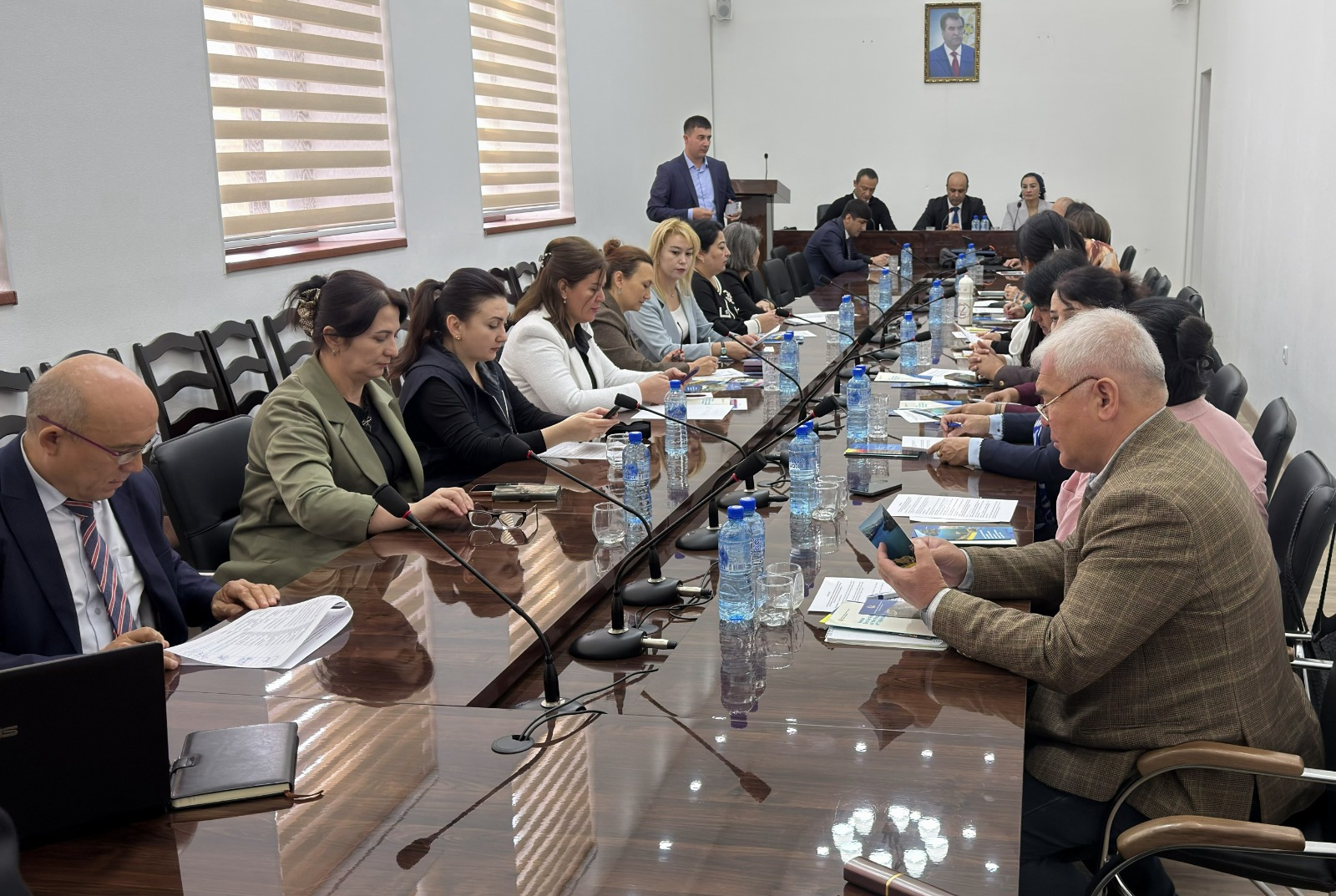
From 21 to 23 October 2026, women members of the Zarafshan River Basin Council (Uzbekistan) took part in an exchange visit to Dushanbe and the Hisor District of the Republic of Tajikistan. The visit aimed to learn from the experience of the Kafirnigan River Basin Women's Forum, strengthen women's participation in integrated water resources management, and explore practical approaches to water conservation and climate-resilient agriculture.
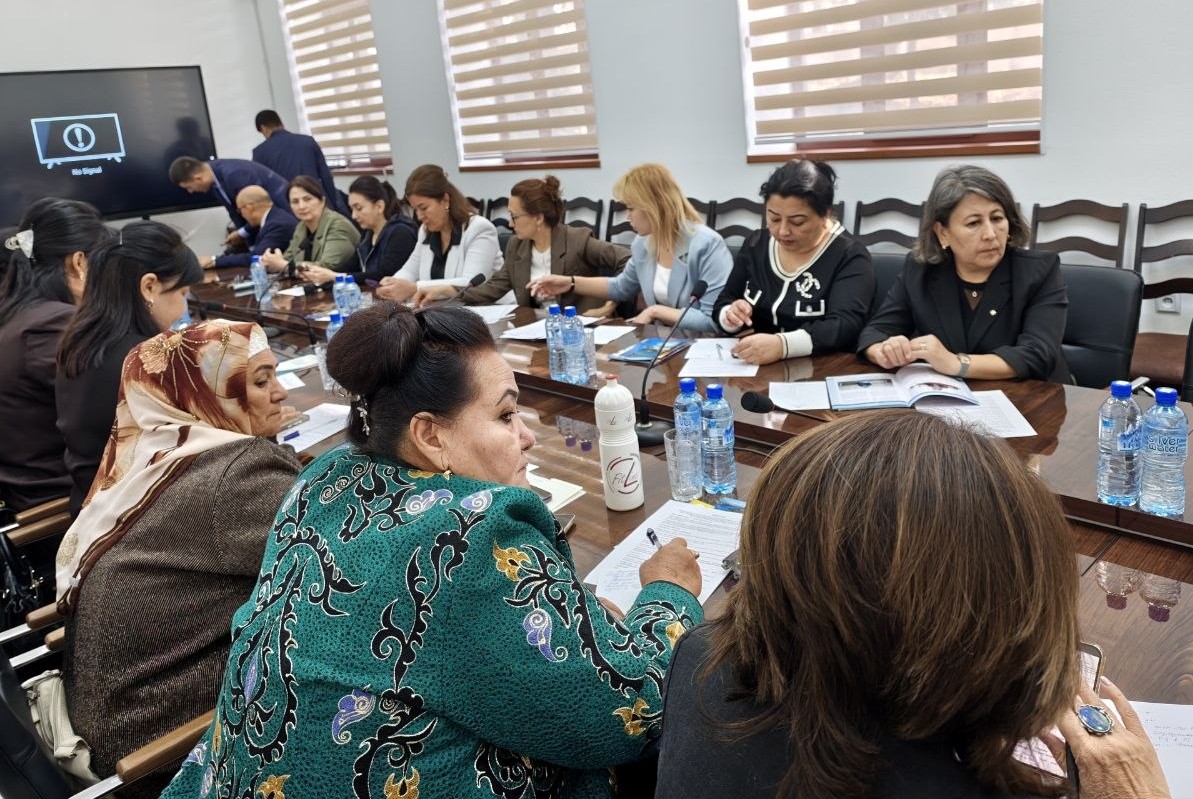
The visit brought together 14 participants and specialists, including women members of the Zarafshan River Basin Council, representatives of water management organisations, farmers, educational institutions and other relevant organisations in Uzbekistan, as well as experts from the Regional Environmental Centre for Central Asia (CAREC) and Caritas Switzerland.
The exchange visit was organised within the framework of the project Climate-Resilient Integrated Water Resources Management in the Zarafshan River Basin, implemented by CAREC with the support of the Swiss Agency for Development and Cooperation (SDC).
Learning from the Kafirnigan River Basin Women's Forum
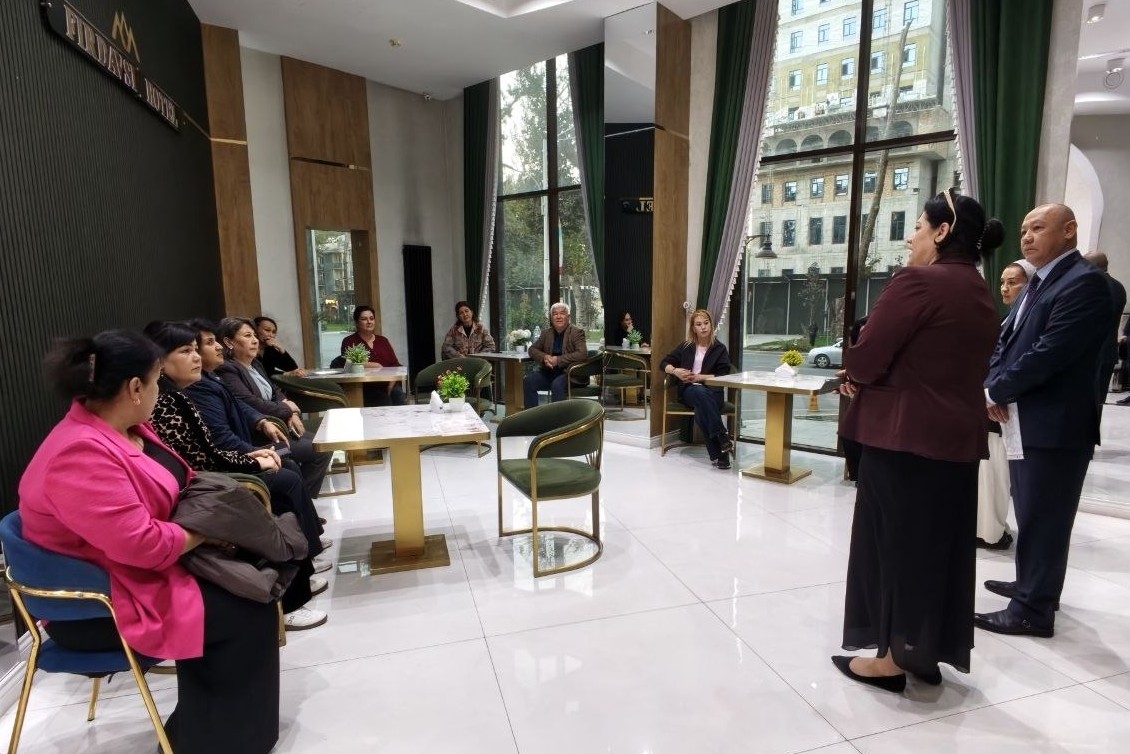
In Dushanbe, participants learned about the activities of the Women's Forum under the Kafirnigan River Basin Council. Particular attention was given to the establishment and development of the platform, its institutional status, cooperation with government water management organisations, and opportunities to involve women in decision-making processes.
Tajik colleagues presented their approaches to organising the Women's Forum's activities, engaging with basin management structures and local communities, and supporting initiatives led by women working in agriculture and the water sector.
Participants discussed the role of women in implementing Integrated Water Resources Management (IWRM) principles, developing basin plans, adapting to climate change, and addressing issues related to water allocation and use.
The exchange of practical experience between representatives of the two countries was particularly valuable. Women working in farming, water management organisations, research and educational institutions had the opportunity to discuss common challenges, share approaches to addressing them, and explore ways to strengthen cooperation between women's initiatives in the Zarafshan and Kafirnigan river basins.
The experience gained during the visit may inform further efforts to strengthen women's participation in the work of the Zarafshan River Basin Council and create more opportunities for women to contribute to discussions and decisions on water management.
Visit to the Educational Cluster at the Tajik Agrarian University
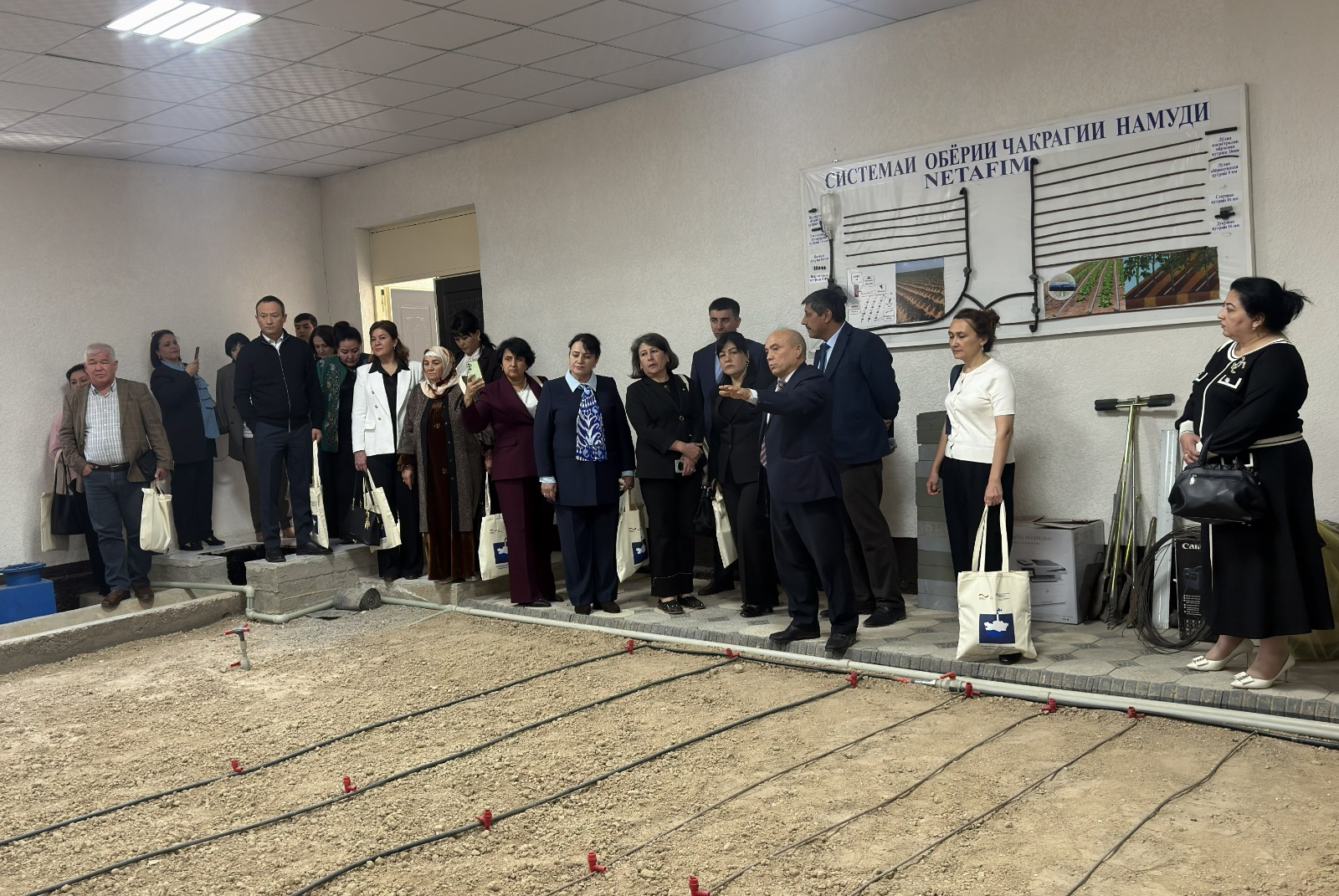
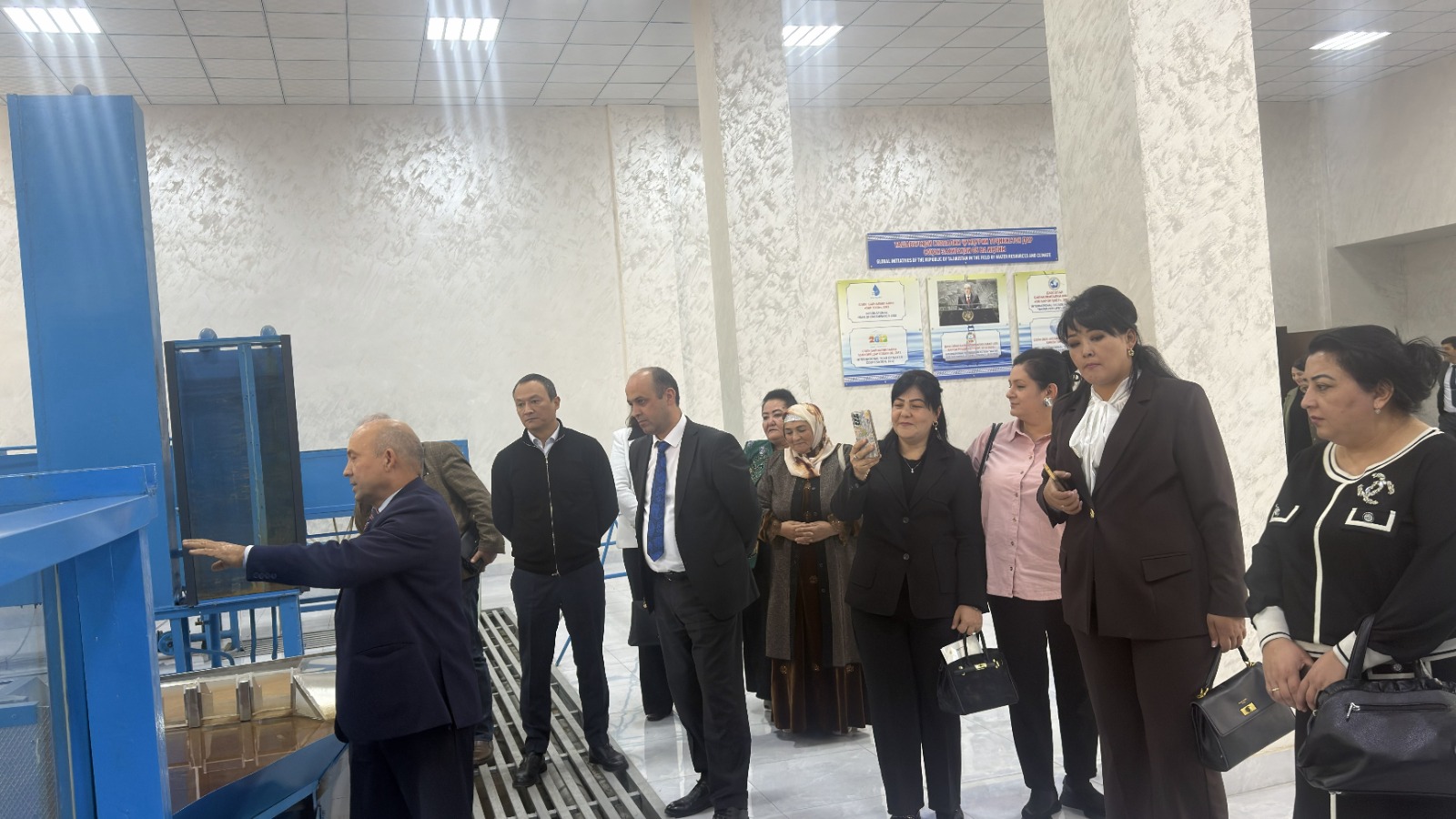
An important part of the programme was a visit to the educational cluster at Shirinsho Shotemur Tajik Agrarian University in Dushanbe. Participants learned about its facilities for practical training, technology demonstrations, and the study of modern approaches to water resources management and more efficient agricultural production.
The Hydrology and Agrometeorology Cluster was established with support from Government of Switzerland. It brings together educational and research facilities designed to strengthen professional skills in the sustainable use of water resources and the provision of meteorological, hydrological and climate services.
During the visit, participants explored a demonstration site featuring solutions designed to improve water-use efficiency in agriculture. These included examples of drip irrigation systems, models of pumping stations and other demonstration materials illustrating how relevant water infrastructure operates.
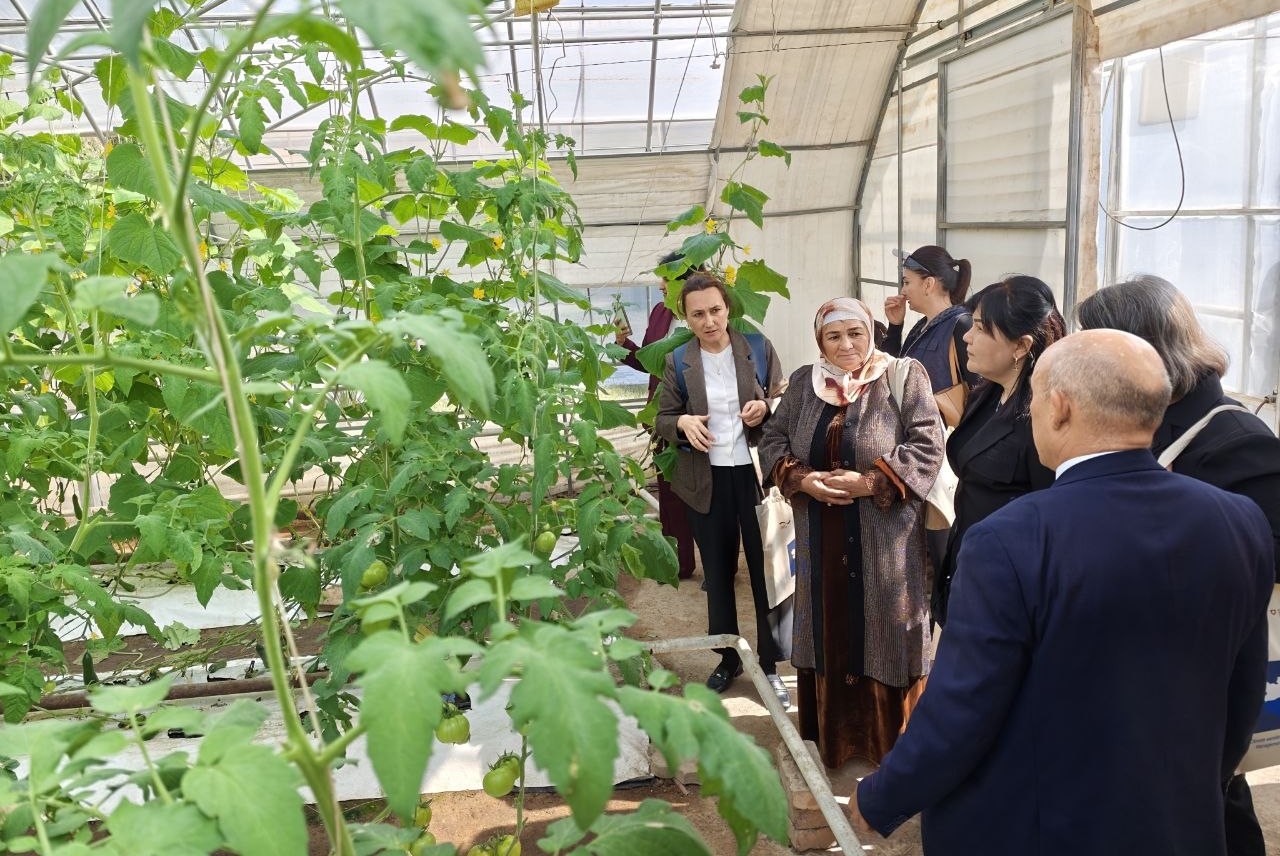
The greenhouses equipped with water-saving technologies attracted particular interest. Participants observed how modern irrigation approaches are applied in protected cultivation and how such solutions can contribute to more efficient water use in crop production.
The visit demonstrated the potential of combining scientific research, professional education and the practical application of technology. For women representing farming communities and water management organisations, this experience was especially relevant, providing an opportunity to consider how water-saving solutions could be introduced into agricultural practices.
Dialogue with the Ministry of Energy and Water Resources of Tajikistan
As part of the programme, participants also learned about the work of the Ministry of Energy and Water Resources of the Republic of Tajikistan. The visit provided an opportunity to gain a better understanding of institutional approaches to water resources management and cooperation between relevant government bodies and other stakeholders.
This engagement complemented the experience gained through the Women's Forum and the educational cluster. It also helped participants consider women's involvement in the water sector not only in the context of local initiatives, but also in relation to the work of government institutions and basin management structures.
An Intensive Apricot Orchard in Hisor: An Example of Cooperation between Uzbekistan and Tajikistan
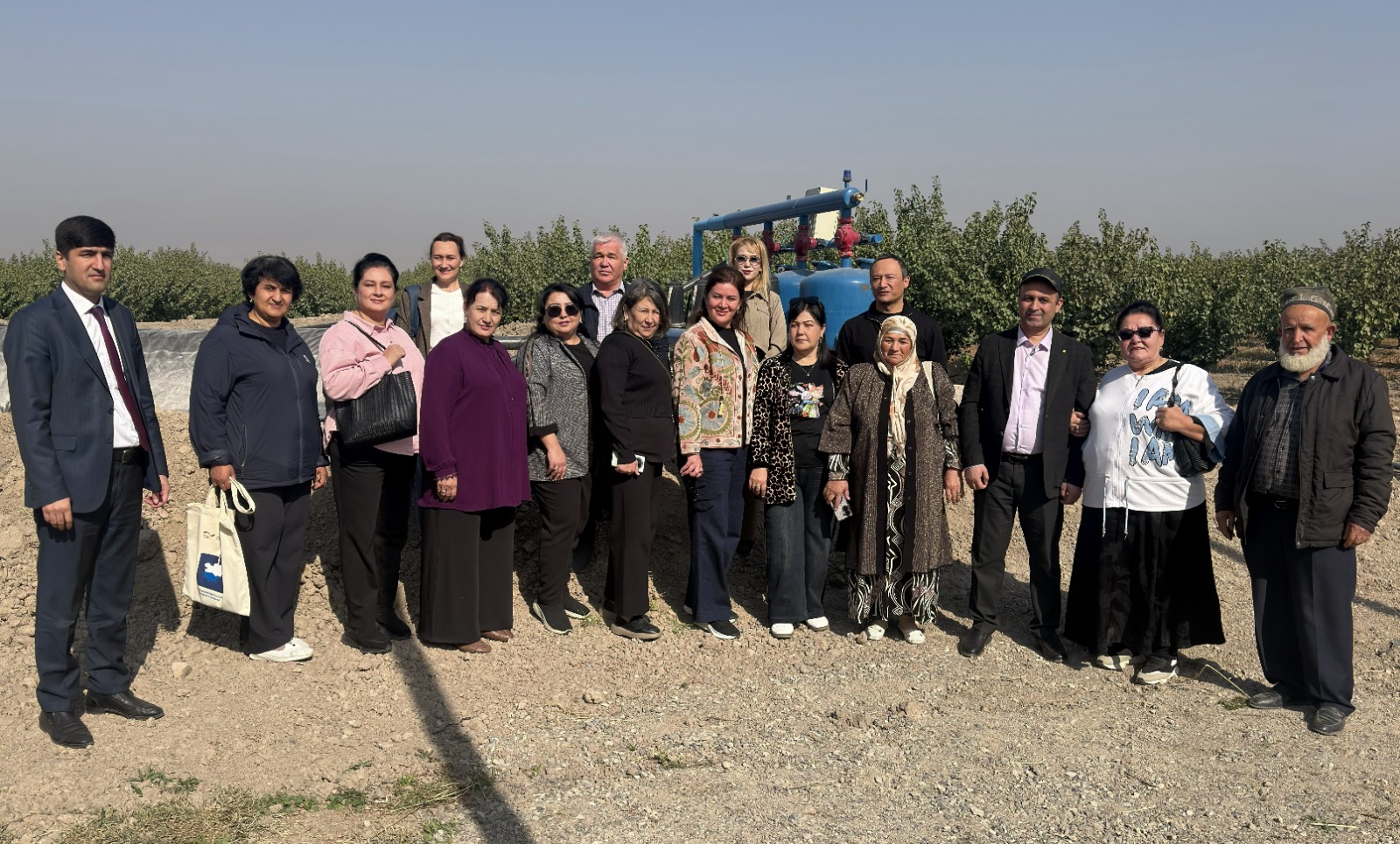
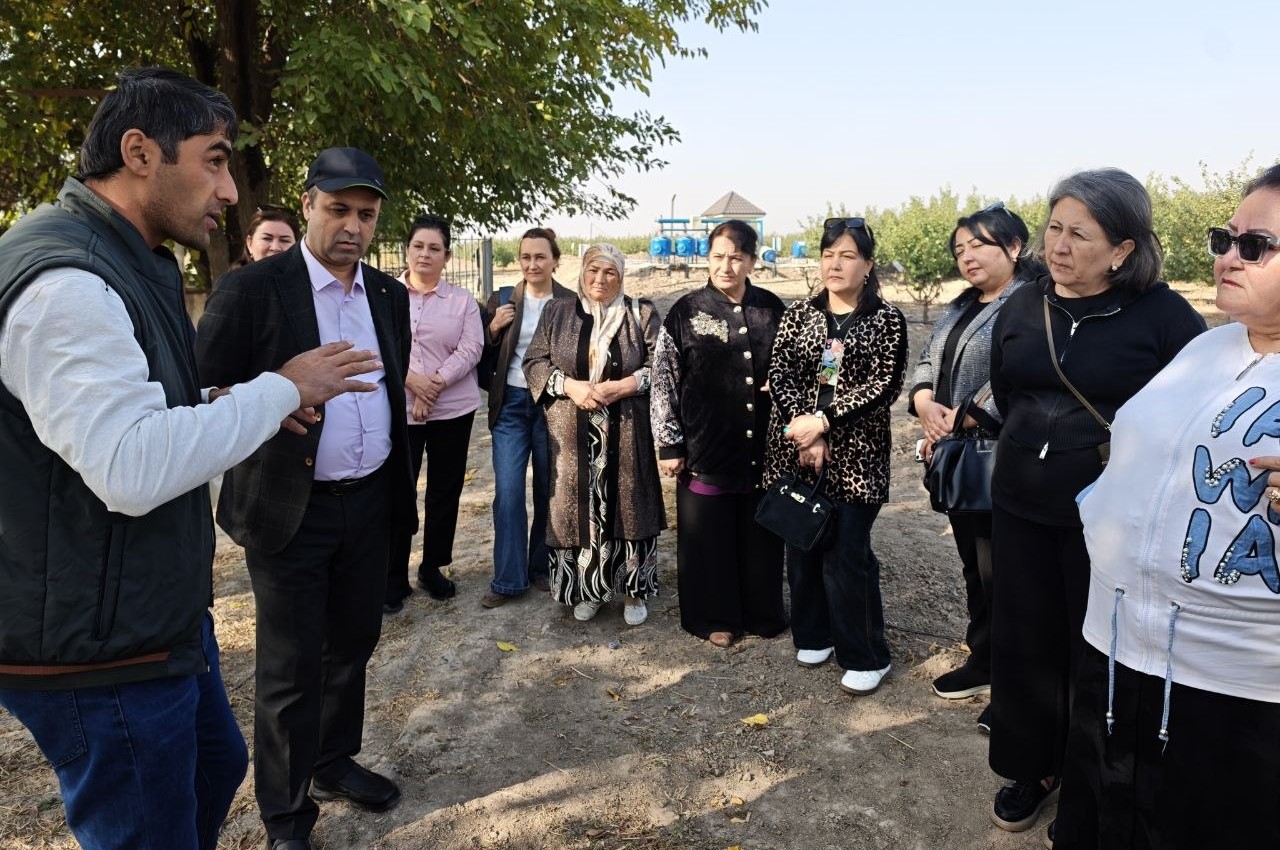
The practical part of the exchange visit continued in Hisor District, where participants visited an intensive orchard established approximately three years ago as a symbol of friendship and good-neighbourly relations between Uzbekistan and Tajikistan.
Covering an area of 20 hectares, the orchard contains four varieties of apricot. It represents an example of modern horticulture and provides opportunities to strengthen scientific and practical cooperation in agriculture.
Participants explored the orchard, learned about its organisation and discussed its potential for practical and research activities. According to the information provided by the hosts, the orchard is operated with the involvement of a research unit of Tajik Agrarian University and the Ministry of Energy and Water Resources of the Republic of Tajikistan.
One of the orchard's notable features is its availability for scientific research. Researchers interested in conducting relevant studies can seek opportunities to carry out research on the site. The orchard therefore serves not only as an agricultural production facility but also as a platform for studying intensive horticulture and promoting scientific cooperation.
For the participants from Uzbekistan, the visit provided an opportunity to see a practical example of cooperation between the two neighbouring countries and explore prospects for exchanging knowledge in agriculture. Such facilities can foster collaboration among specialists, research institutions, government organisations and farmers, while supporting the exchange of practical experience.
The cultural programme also included a visit to the Hisor Fortress, one of Tajikistan's well-known historical and cultural landmarks. The visit offered participants an opportunity to learn more about the country's history and cultural heritage, complementing the professional activities.
Key Outcomes and Prospects for Further Cooperation
The exchange visit provided a valuable platform for professional dialogue, knowledge-sharing and stronger connections between women working in water resources management and agriculture in Uzbekistan and Tajikistan.
Three areas of experience were particularly valuable:
- Strengthening women's platforms in the water sector. The experience of the Kafirnigan River Basin Women's Forum may inform further efforts to increase women's participation in the Zarafshan River Basin Council and promote their involvement in integrated water resources management.
- Promoting practical water-saving technologies. The demonstration site, drip irrigation systems and water-efficient greenhouse technologies offered practical examples relevant to agricultural producers and water users.
- Expanding scientific and practical cooperation. Visits to the educational cluster and intensive orchard highlighted opportunities for collaboration among research institutions, government organisations, farmers and water sector professionals.
At the conclusion of the visit, participants expressed their satisfaction with the programme, the informative meetings and the opportunity to exchange experiences directly with their Tajik colleagues. They thanked the organisers and host institutions for their warm welcome, open dialogue and the opportunity to learn about practical approaches in the water and agricultural sectors.
The Regional Environmental Centre for Central Asia (CAREC) expresses its sincere gratitude to the representatives of the Ministry of Energy and Water Resources of the Republic of Tajikistan for their support in organising the visit, coordinating meetings and facilitating the necessary inter-institutional arrangements. CAREC also thanks its Tajik colleagues and all participating organisations for their valuable contributions to the professional exchange.
CAREC will continue to support knowledge-sharing among Central Asian countries, strengthen transboundary cooperation and promote greater participation of women in water resources management. Initiatives of this kind help build professional networks, share practical solutions and lay the groundwork for more sustainable and collaborative water management across the region.
For further information
Nodirbek Rakhimjonov - Director of the CAREC Branch in Uzbekistan, uzbekistan@carececo.org