

Two regional workshops in Samarkand brought together government representatives from Central Asia, the Caucasus and Europe, international organizations and forestry experts. The central question was how to turn forest restoration into a source of food, income and climate resilience for people in dryland regions.
The regional workshop on 13–14 October gathered representatives of Central Asian and Caucasus countries. It was organized by the FAO Subregional Office for Central Asia, the European Forest Institute (EFI) and the European Forest Genetic Resources Programme (EUFORGEN). Participants noted that climate change is increasing pressure on forests, while limited genetic information, weak monitoring and a shortage of specialists constrain sustainable forest management.
• Jarkko Koskela (FAO) presented the global assessment of forest genetic resources and the updated Global Plan of Action.
• Ekrem Yazici and Iffet Cengiz (FAO SEC) highlighted the importance of technical cooperation and the links between genetic resources, climate adaptation and biodiversity conservation.
• Michele Bozzano and Magda Bou Dagher Kharrat (EFI) explained how the regional networks EUFORGEN and MedForGen help coordinate conservation and knowledge exchange.
• Experts from Switzerland, France and Spain shared experience in long-term genetic conservation, species and provenance trials, and the choice of forest reproductive material.
• Aziz Nurbekov, National Project Coordinator of the FAO FOLUR-Uzbekistan project, showed how rainwater harvesting allows local communities to establish pistachio, almond and mulberry orchards without depleting groundwater. He stressed that conserving forest genetic resources and climate-smart management are vital for resilient landscapes.
Countries agreed on shared priorities: genetic inventories and monitoring, conservation of priority species, stronger seed and gene banks, training of specialists, and integrating genetic considerations into restoration programmes. These priorities will guide further technical cooperation with FAO, EFI and EUFORGEN.
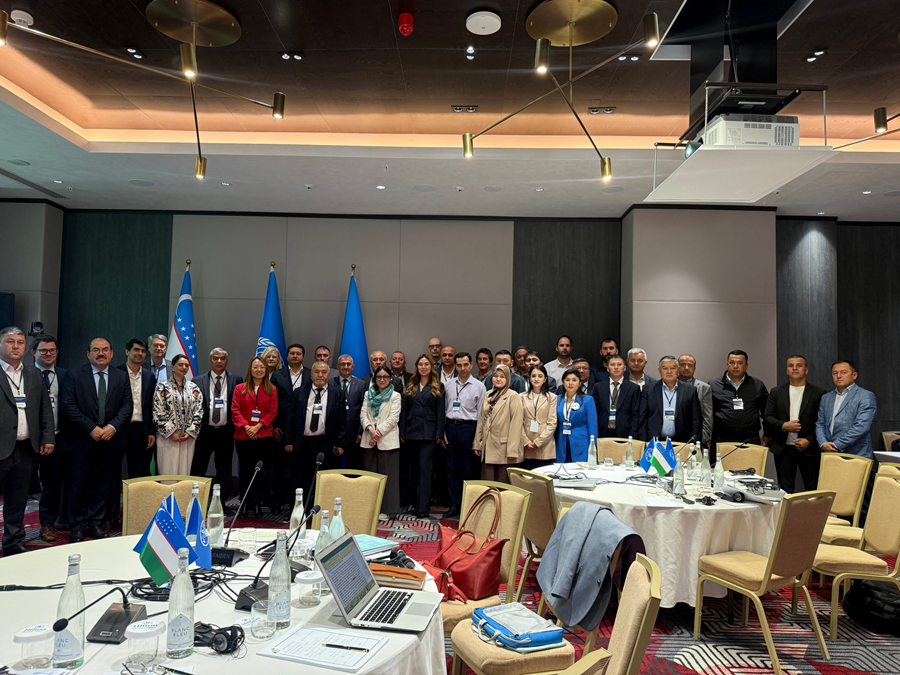
Participants of the workshop “Forests, Trees and Resilient Agrifood Systems”, Samarkand, October 2026.
Liliana Annovazzi-Jakab, Chief of the UNECE Forests and Bioeconomy Section, noted that forests and forest foods are still insufficiently recognized in food security, agriculture and rural development policies. She said that data gaps, fragmented governance, weak market linkages and limited investment hold back non-wood forest product (NWFP) value chains, and that these can only be overcome through joint efforts by countries of the region.
She stressed the particular importance of forests for Uzbekistan. In a country where most forest fund land is desert, forests are not only a natural asset but the main tool for addressing environmental problems.
According to Ms Annovazzi-Jakab, forests and protective plantings help Uzbekistan:
• halt desertification and land degradation;
• reduce dust and salt blown from the dried Aral Sea bed;
• protect soil and water resources and shield farmland from erosion;
• adapt to climate change and conserve biodiversity.
She noted that Uzbekistan’s large-scale greening programmes also lay a foundation for food security: restored forests provide nuts, fruit, medicinal plants and honey, and therefore income and jobs for rural people.
Opening the workshop, Erkin Mukhitdinov, Director General of the Agency, said its theme reflects a practical priority for Uzbekistan.
“Forests and trees contribute to food security through the products they provide and through their influence on the conditions in which agriculture takes place. For Uzbekistan, these connections are particularly important in dryland areas. Restoring degraded land needs to be accompanied by opportunities for local people to earn a sustainable income,” Erkin Mukhitdinov highlighted.
He outlined the scale of national greening programmes:
• since 2021, more than 1 billion trees and shrubs have been planted under the nationwide “Yashil Makon” initiative;
• between 2018 and 2025, more than 2 million hectares of protective forest plantations were established on the dried Aral Sea bed, and a further 194,000 hectares in 2026;
• the national greening level rose from 8% in 2020 to 14.3% by the end of 2025, with a target of 30% by 2030;
• pistachio plantations cover 500 hectares in Nurobod district, with plans to expand to 50,000 hectares by 2036; in Bobotog forestry, more than 3,500 of a planned 5,000 hectares have been established with the Chinese company Sinoway Forest.
Erkin Mukhitdinov paid particular attention to the quality of planting material: 18 state forestry enterprises specialise in seedling production, and nine modern nurseries are being developed with World Bank support under the RESILAND CA+ project.
“The national roadmap should provide a basis for joint projects that expand production, strengthen food security and increase rural incomes. These projects should strengthen local food supply and enable communities to retain a greater share of the value they create,” Erkin Mukhitdinov said.
He proposed four areas of cooperation to partners:
1. Turn pistachio projects into a programme combining plantations, processing and market access, and prepare restoration projects for international carbon markets.
2. Develop the “desert economy”: cultivating licorice, capers, ferula and other valuable dryland plants with water-saving methods and primary processing.
3. Establish a donor-supported small-grants programme for local communities, for nurseries, medicinal plants, beekeeping and processing, with particular attention to women and young people.
4. Develop forestry enterprises into suppliers of high-quality seeds and seedlings, with reliable records of origin, for national and regional restoration programmes.
The countries of Central Asia face the same challenges: drought, desertification, land degradation and the decline of wild pistachio, walnut and juniper populations. The Samarkand workshops gave them a platform to address these challenges together:
• participants discussed and validated two regional policy briefs by FAO and UNECE on forests, food security and NWFP value chains;
• priority actions were identified for a regional action plan for 2027–2030;
• Uzbekistan, Kyrgyzstan and Tajikistan shared experience in developing national NWFP roadmaps, while Georgia, Albania and Switzerland shared practices in nutrition and agroforestry;
• regional initiatives were reviewed, including RESILAND CA+, the Green Shield of Central Asia, ECCA30 and the Rio Conventions;
• countries exchanged experience with EUFORGEN and were introduced to EUFGIS, the European information system on forest genetic resources.
Samarkand, 15–16 October: regional workshop “Forests, Trees and Resilient Agrifood Systems: From Policy to Action” (FAO and UNECE), including a national workshop on non-wood forest product (NWFP) value chains in Uzbekistan.
The workshops were hosted by the Agency for Afforestation, Expansion of Green Areas and Combating Desertification of the Republic of Uzbekistan. Representatives of the World Bank’s RESILAND CA+ project took an active part, alongside staff of state forestry enterprises, scientists, producers and the media.
Daniel Griswold (UNECE) presented the experience of Kyrgyzstan, where forest lands increasingly serve as a source of food through non-wood forest products such as walnuts, pistachios, fruit and berries. The example showed how a neighbouring country with similar natural conditions is turning NWFPs into a real contribution to food security.
Participants of the national workshop worked in groups to identify the main problems of Uzbekistan’s forest sector and then developed solutions using the “solution tree” method. The groups’ proposals will feed into Uzbekistan’s national NWFP roadmap.
Representatives of the World Bank’s RESILAND CA+ project were among the most active participants in both workshops. They took part in plenary sessions, group work on the NWFP roadmap and discussions of the regional action plan. RESILAND CA+ was presented as one of the key regional opportunities for landscape restoration in Central Asia.
In Uzbekistan, the project is directly linked to the workshops’ themes: it is developing nine modern nurseries that will supply planting material for forest restoration, protective plantings and productive tree-based systems. The quality and genetic origin of this material was exactly the focus of the workshop on forest genetic resources.
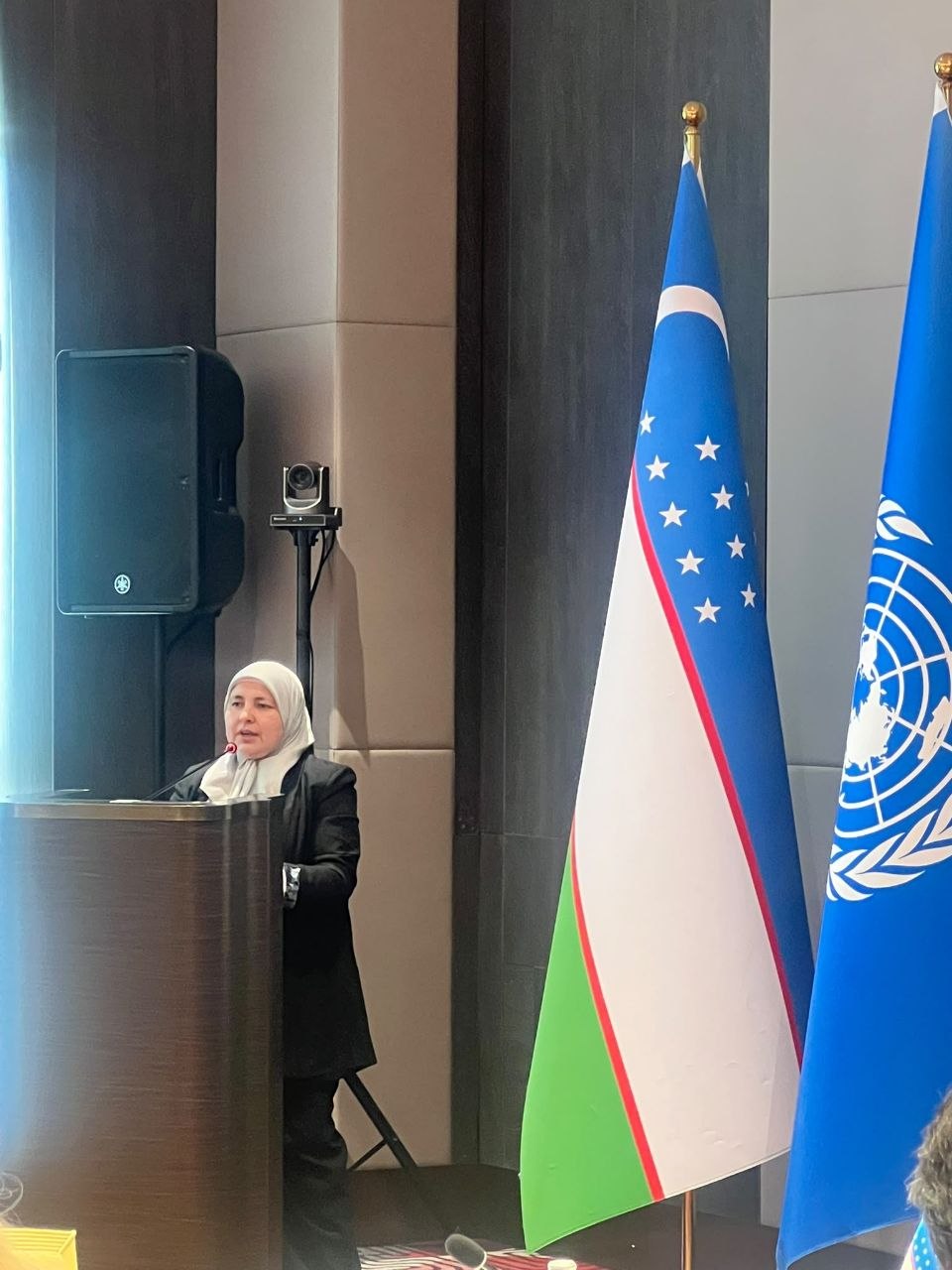
Dildora Aralova delivered the presentation “Non-wood Forest Products: Overview of National Priorities in Uzbekistan” and, together with Dominique Reeb (UNECE), presented the draft national roadmap for strengthening NWFP value chains. She showed that in Uzbekistan, where 84% of forest fund land is desert, the main value of forests lies not in timber but in food, medicinal raw materials, honey and income for rural families.
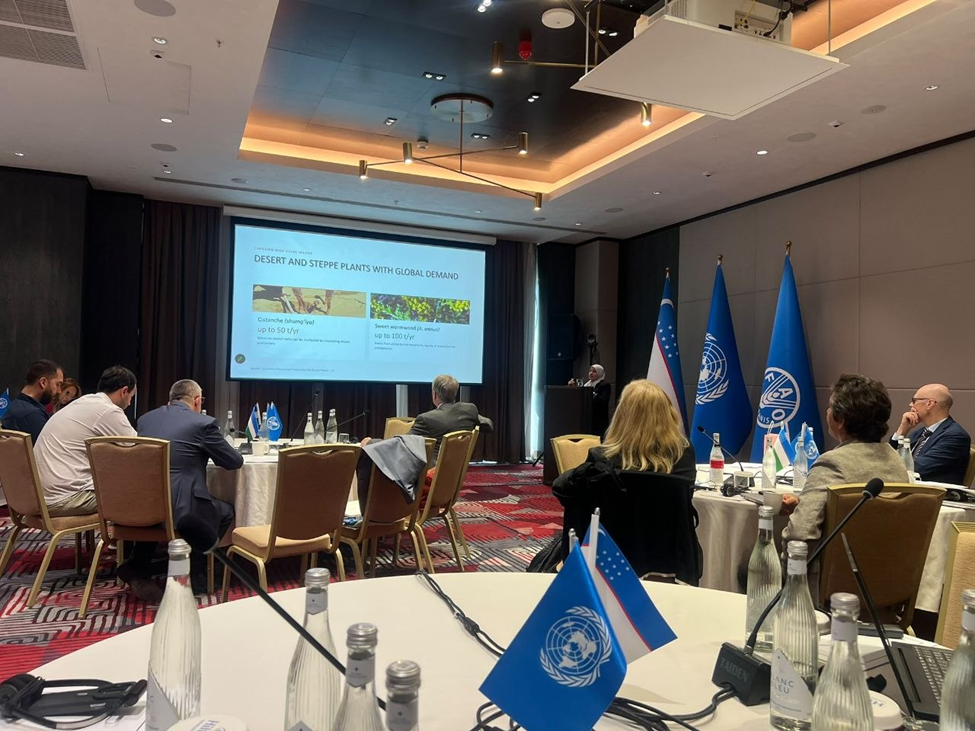
Key points of her presentation:
• Priority NWFPs. Pistachio, ferula, capers, oleaster (jiyda), licorice and medicinal plants; forestry enterprises grow 61 medicinal species, and forest fund lands host 220,000 bee colonies.
• Forest genetic resources underpin every programme. The success of pistachio plantations and “Yashil Makon” depends on the quality of seeds and seedlings of known origin.
• Declining wild populations. Wild pistachio forests have shrunk by about two-thirds, and young stands cover only 548 hectares, putting the gene pool of valuable species at risk.
• A regional forest genetic resources database. Central Asian countries share the same species, such as pistachio, walnut, juniper and saxaul, and need a common recording system modelled on EUFGIS.
• Gaps to close. Planting material, water, long payback periods, lease rights, processing and market access.
Following the meetings, the Agency and FAO reached practical agreements to:
• establish 30 nurseries in the Republic of Karakalpakstan and the Khorezm and Kashkadarya regions under the FAO FOLUR-Uzbekistan project;
• train nine forestry specialists in Türkiye under the FRIENDS project;
• upgrade phytosanitary laboratories in forestry enterprises, after an assessment of current conditions, to prevent tree diseases and control them with biological methods;
• cooperate on a new FAO biodiversity project in Pop forestry enterprise, Namangan region.
The results of the group work will inform the finalization of Uzbekistan’s national NWFP roadmap and the regional action plan for 2027–2030.
• Non-wood forest products (NWFPs) are nuts, fruit, berries, mushrooms, medicinal and aromatic plants, honey and other forest products other than timber.
• Forest genetic resources (FGR) are the heritable diversity of tree species, which determines their ability to adapt to climate change and the quality of planting material.
• RESILAND CA+ is the World Bank’s regional programme for landscape restoration in Central Asia.
• EUFORGEN is the European Forest Genetic Resources Programme, hosted by the European Forest Institute (EFI).
Д
By Dildora Aralova, Environmental Safety Specialist, Agency for Afforestation, Expansion of Green Areas and Combating Desertification under the Ministry of Ecology, Environmental Protection and Climate Change of the Republic of Uzbekistan
Environmental Safety Specialist, Agency for Afforestation, Expansion of Green Areas and Combating Desertification under the Ministry of Ecology, Environmental Protection and Climate Change of the Republic of Uzbekistan, RESILAND Uzbekistan
Shakhlo Amanbaeva
Social and Gender Specialist, Agency for Afforestation, Expansion of Green Areas and Combating Desertification, RESILAND Uzbekistan
Sources: Agency news on gov.uz, 15 October 2026; FAO Uzbekistan news, 15 October 2026