

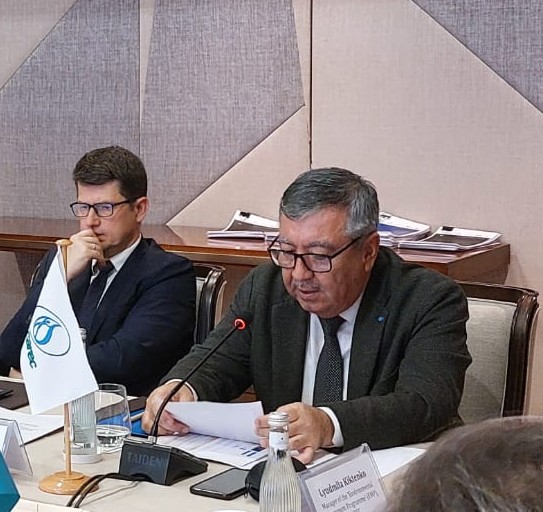
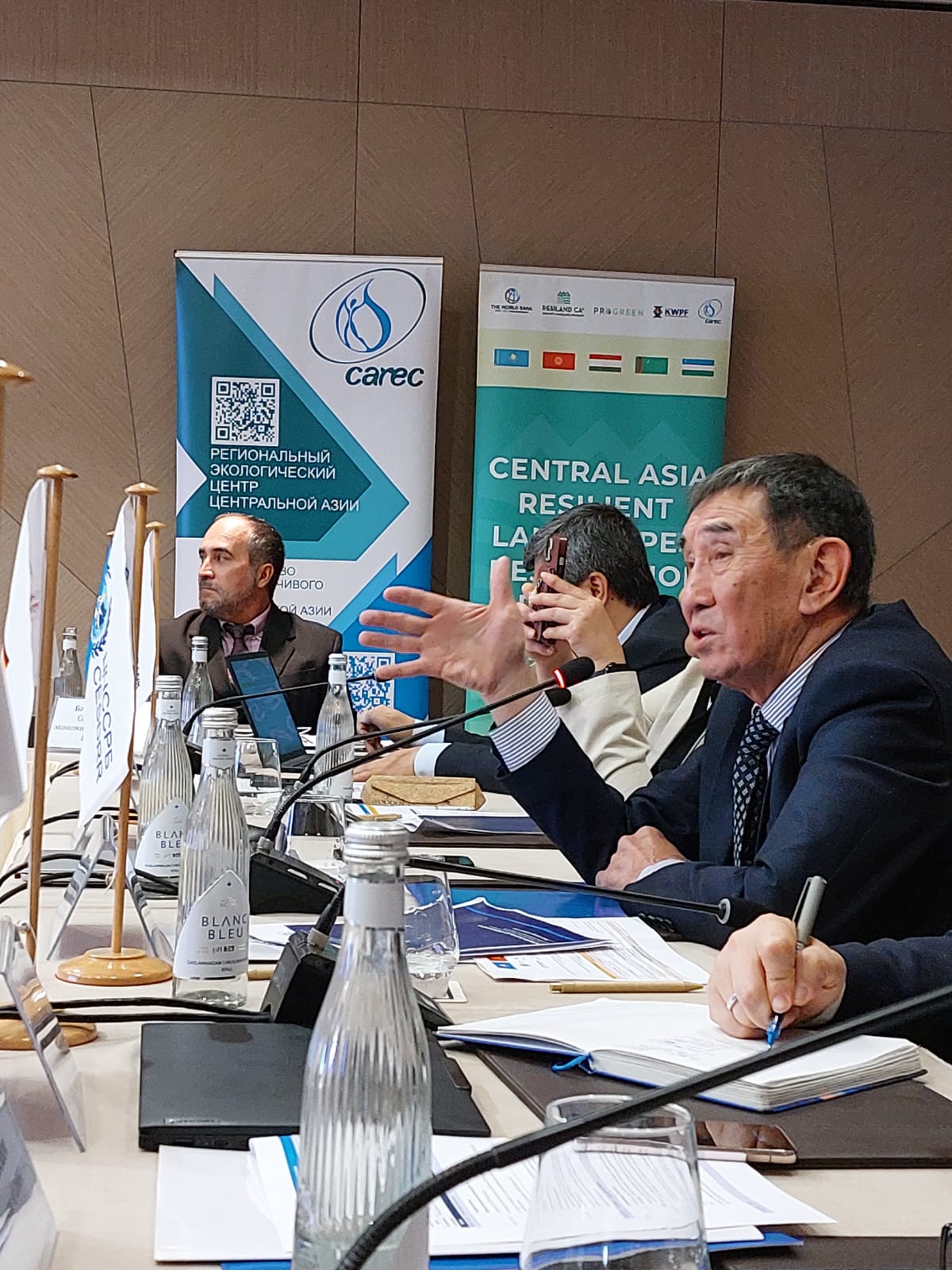
Tashkent, October 19, 2026 — Heads and representatives of national hydrometeorological services and national mudflow and flood protection agencies from Central Asian countries are discussing joint approaches to the safe management of transboundary water resources and the reduction of natural disaster risks at the Regional Dialogue on Strengthening Capacity for the Safe Management of Transboundary Water Resources in Central Asia and Mitigating Transboundary Mudflow and Flood Risks.

The Dialogue is organized by GIZ, the RESILAND Kyrgyzstan project, the Regional Environmental Centre for Central Asia (CAREC), and the Central Asia Centre for Disaster Response and Risk Reduction. The event brings together 25 representatives from countries across the region. It is held as part of the Regional Forum — Meeting of Heads of Emergency Management Agencies of Central Asian Countries.
The discussions focus on harmonizing regional approaches to mitigating transboundary mudflow and flood risks, improving the exchange of hydrometeorological information, and strengthening cooperation among relevant national agencies.
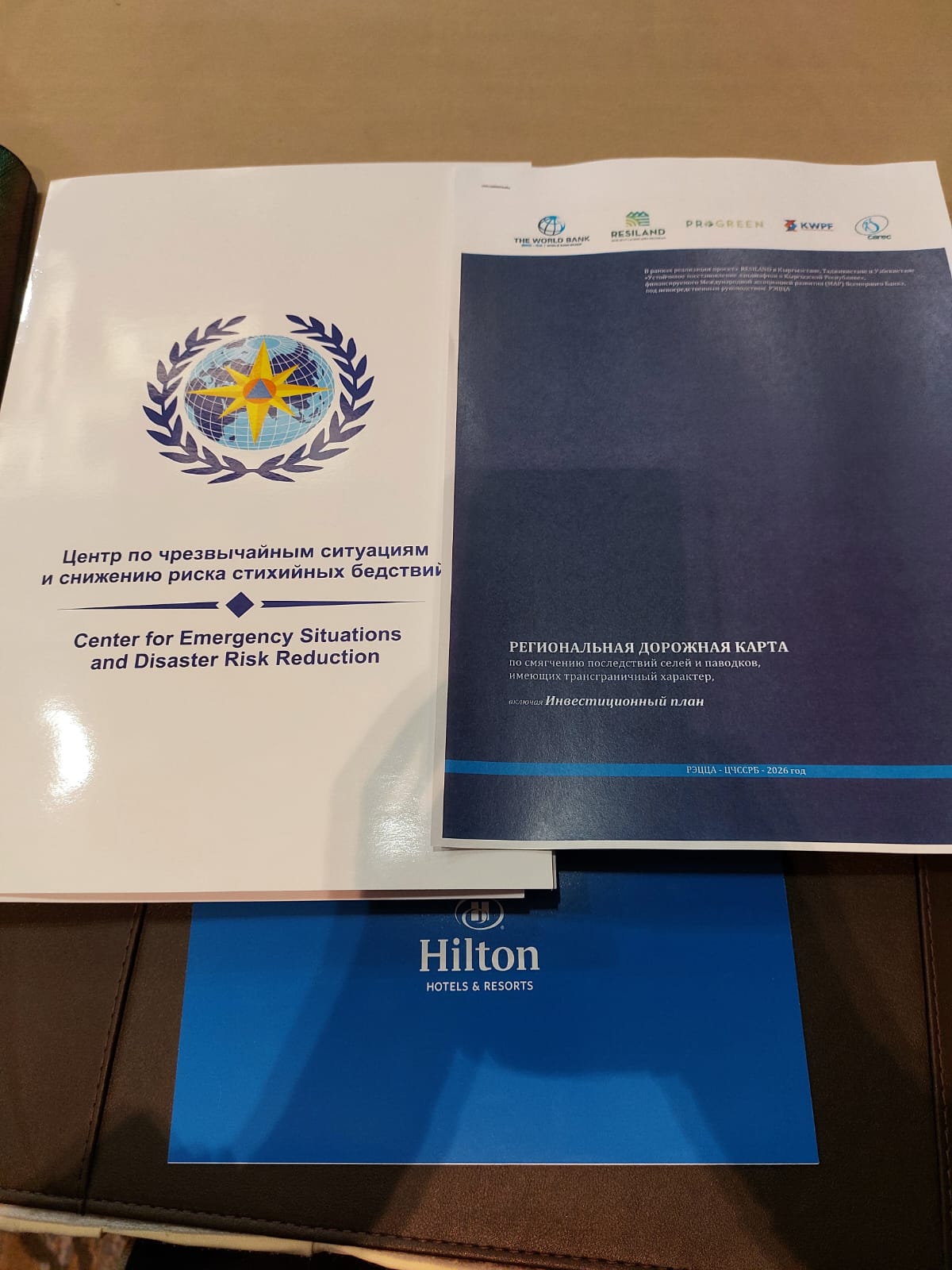
A key item on the agenda is the review and approval of the Regional Roadmap for Mitigating Transboundary Mudflow and Flood Risks, including an investment plan. These documents are being developed with support from the Kyrgyzstan Resilient Landscape Restoration Project: RESILAND CA+ Program.
Participants are also discussing the initial steps toward implementing the Roadmap, including data digitalization. In particular, the architecture and structure of a Regional Online Catalogue of Transboundary Mudflows and Floods will be presented.
Landscape degradation, the loss of vegetation cover, and soil erosion on mountain slopes and in foothill areas directly affect mudflow intensity. Landscape restoration and the adoption of nature-based solutions (NBS) are important for reducing the vulnerability of areas to natural hazards. Incorporating these solutions into protection planning supports a comprehensive approach to risk management that takes local environmental conditions into account.
Combining green solutions (NBS) with conventional “grey” solutions, including engineering and technological measures, to mitigate mudflow and flood risks is an approach being developed under the RESILAND Kyrgyzstan project. It is expected to be extended to other Central Asian countries through planned RESILAND program activities over the coming year.
The Dialogue also places particular emphasis on developing a regional early warning system for hydrological hazards under GIZ’s Climate Risk Management in Central Asia program. Participants are reviewing the results of the first phase of the joint project implemented by CACDRRR and GIZ, Strengthening Capacity for the Safe Management of Transboundary Water Resources in Central Asia through Innovative Information and Communication Technologies, as well as plans for the second phase in 2026–2027.
Another topic is a draft protocol of intent to establish a regional early warning system for hydrological hazards and mechanisms for exchanging information on hazardous hydrometeorological phenomena whose impacts may extend into the territories of other countries. The session includes the planned signing of the protocol by national hydrometeorological services.
The Regional Dialogue provides a platform for exchanging experience and agreeing on next steps to strengthen cooperation among Central Asian countries on transboundary water resource management, improve early warning systems, and reduce natural disaster risks.

For more information:
Deputy Director, Project Implementation Department under the Ministry of Emergency Situations of the Kyrgyz Republic / Project Manager, RESILAND Kyrgyzstan
Deputy Team Leader, “The Kyrgyz Republic Resilient Landscape Restoration Project: Regional Component” Project, CAREC