

On 11–12 November 2026, the regional conference “One Health, One Region, One Network” was taking place in Bishkek, focusing on strengthening regional cooperation and laboratory capacity in the fields of biosafety and public health. The Regional Environmental Centre for Central Asia (CAREC), which serves as the Regional Secretariat of the One Health in Central Asia Program, is participating in the event
.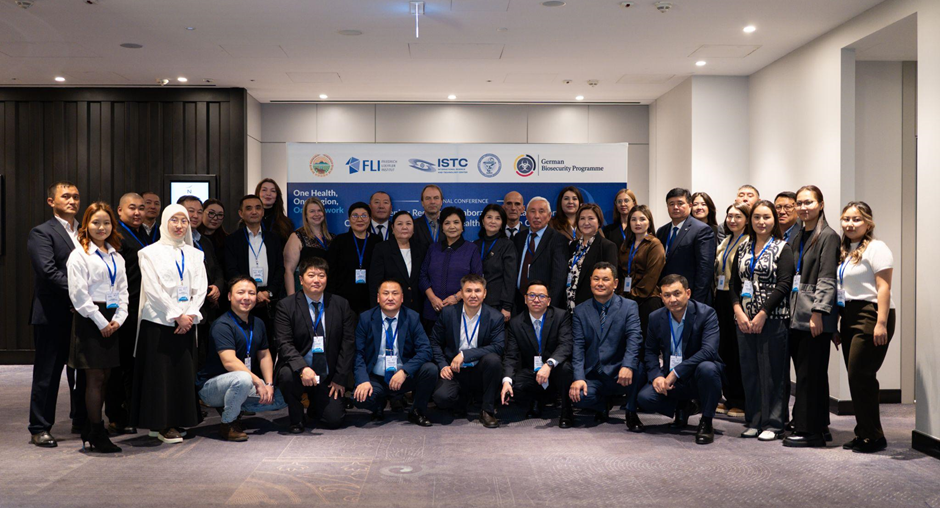
The conference is organised within the framework of cooperation between the Friedrich Loeffler Institute (FLI, Germany) and scientific, veterinary and medical institutions across Central Asia. It has brought together representatives of government agencies, national laboratories, research institutions and international organisations to discuss practical approaches to the prevention, diagnosis and surveillance of zoonotic diseases, with a particular focus on brucellosis.
Key topics include the development of laboratory diagnostics, improvement of epidemiological surveillance, strengthening of biosafety measures and enhanced cooperation between veterinary services and public health systems. Particular emphasis is placed on scientific data exchange, harmonisation of laboratory methods and the establishment of sustainable professional networks among countries in the region.
One of the key topics of the conference was the experience of cooperation between the Friedrich Loeffler Institute and institutions in the Kyrgyz Republic under a project aimed at establishing a supra-regional laboratory network for handling
highly pathogenic bacterial agents in Central Asia.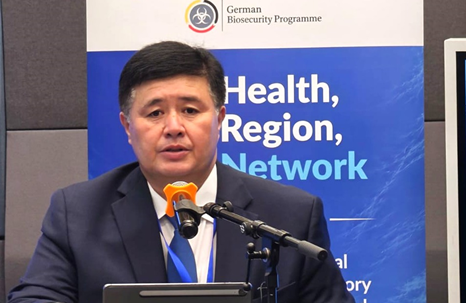
Dr Falk Meltzer, representing FLI, presented the project's main areas of work, including strengthening diagnostic capacity, enhancing the skills of laboratory specialists and conducting joint research on brucellosis.
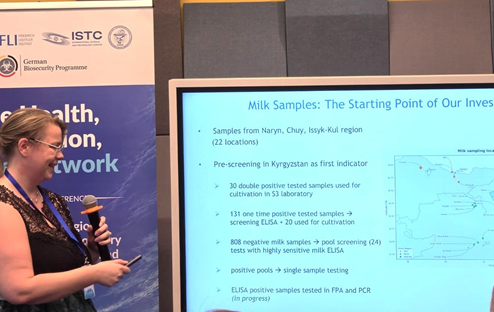
FLI researcher Marie Harpke presented the results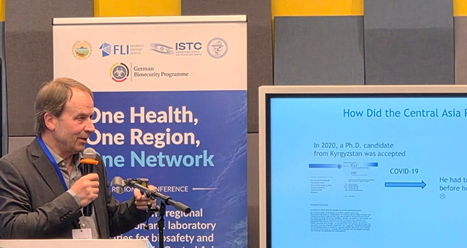 of cooperation between Kyrgyz and German laboratories on brucellosis research in livestock and wildlife. The joint work involved advanced serological and molecular genetic methods, including whole-genome sequencing of pathogens.
The research findings demonstrate the practical value of international cooperation in improving diagnostic capabilities, studying the spread of infectious diseases and strengthening laboratory capacity. At the same time, they highlight the need to harmonise diagnostic protocols, facilitate knowledge exchange and strengthen links between medical and veterinary institutions.
The conference program also features contributions from representatives of the Food and Agriculture Organization of the United Nations (FAO), the World Health Organization (WHO), the World Organisation for Animal Health (WOAH), the International Science and Technology Center (ISTC), the International Union for Conservation of Nature (IUCN) and other partners.
Discussions address both laboratory-based approaches to combating zoonotic diseases and broader issues of cross-sectoral cooperation within the One Health approach.
During the thematic session “Beyond Individual Projects: Cooperation in Practice”, Oksana Kravtsova, Coordinator of CAREC’s Regional One Health Program in Central Asia, delivered a presentation entitled “From Fragmented Projects to Coordinated Action: The Role of the Regional Secretariat in Building a Sustainable Regional Network.”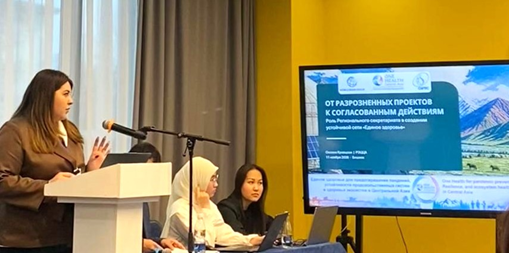
In her presentation, she outlined the work of the Regional Secretariat, established within CAREC under the program “One Health for Pandemic Prevention, Food Systems Resilience and Ecosystem Health in Central Asia,” implemented with the support of the World Bank and its partners.
The program aims to strengthen the capacity of five Central Asian countries — Kazakhstan, Kyrgyzstan, Tajikistan, Turkmenistan and Uzbekistan — in the prevention, early detection and response to zoonotic diseases, antimicrobial resistance (AMR) and food safety threats.
Oksana Kravtsova noted that a significant number of initiatives in biosafety, laboratory surveillance and infectious disease prevention are already being implemented across the region. However, differences in methodological approaches, data collection systems and cooperation mechanisms may limit the potential for individual project results to be applied at the regional level.
“Our task as the Regional Secretariat is not to replace existing projects or national institutions, but to bring their efforts together, facilitate knowledge exchange and create the conditions for sustainable cooperation among countries, government agencies and research institutions,” Oksana Kravtsova emphasised, outlining the Secretariat’s main areas of work.
Particular attention was given to the Regional One Health Coordination Council, which brings together representatives of government authorities responsible for health, agriculture, veterinary services and environmental protection from all five Central Asian countries.
The Regional Secretariat provides organisational and technical support to this mechanism, facilitates the alignment of priorities, promotes expert collaboration and coordinates joint activities.
One of the promising areas of the Regional Secretariat’s work is supporting the development of a regional laboratory network under the One Health approach.
The presentation highlighted the findings of a preliminary assessment of laboratory capacity in Central Asia and identified key areas for further action: harmonising diagnostic approaches, strengthening quality assurance systems, developing human resource capacity, improving laboratory data exchange and fostering cooperation among institutions across different sectors.
The objective is not to establish a single centralised laboratory structure, but rather to develop a network of existing national laboratories capable of working together on the basis of comparable methodologies, harmonised procedures and mutual trust in research results.
The cooperation between the Friedrich Loeffler Institute and the Kyrgyz Republic was highlighted as an example of this approach. Joint research, specialist training and the development of laboratory guidelines demonstrate how the outcomes of bilateral initiatives can provide a foundation for expanding cooperation at the regional level.
Looking ahead, Oksana Kravtsova outlined the Regional Secretariat’s priority areas for 2027. These include the development of a regional laboratory strategy, strengthening mechanisms for joint biological risk assessment, conducting cross-border simulation exercises between Kyrgyzstan and Tajikistan, and expanding cooperation with international scientific and expert organisations.
The second day of the conference focuses on brucellosis surveillance in the countries of the region, biosafety, laboratory cooperation and prospects for further collaboration. The program also includes a panel discussion featuring representatives of CAREC, FLI and international organisations, aimed at identifying practical opportunities to strengthen the regional network.
CAREC’s participation in the conference reflects the Regional Secretariat’s commitment to moving beyond individual scientific and technical initiatives towards long-term cooperation mechanisms that bring together government authorities, laboratories, research institutions and international partners.
The development of such a network will enable Central Asian countries to exchange expertise more effectively, improve systems for the early detection of biological threats and strengthen their joint preparedness to respond to transboundary risks in line with the principles of the One Health approach.
For further information:
Oksana Kravtsova Coordinator of CAREC’s Regional One Health Program okravtsova@carececo.org