

Samarkand – Uzbekistan. Climate change is placing growing pressure on forest ecosystems across Central Asia and the Caucasus. Against this backdrop, conserving and sustainably using forest genetic resources is becoming increasingly important for protecting biodiversity, strengthening ecosystem resilience and supporting effective forest restoration.
These issues were the focus of the Regional Workshop on Forest Genetic Resources and Climate-Responsive Forest Management, held in Samarkand on 13–14 October 2026. The event was organized by the Food and Agriculture Organization of the United Nations (FAO), through its Subregional Office for Central Asia (FAO SEC), in collaboration with the European Forest Institute (EFI) and the European Forest Genetic Resources Programme (EUFORGEN). Representatives of the RESILAND Uzbekistan project also participated in the workshop.
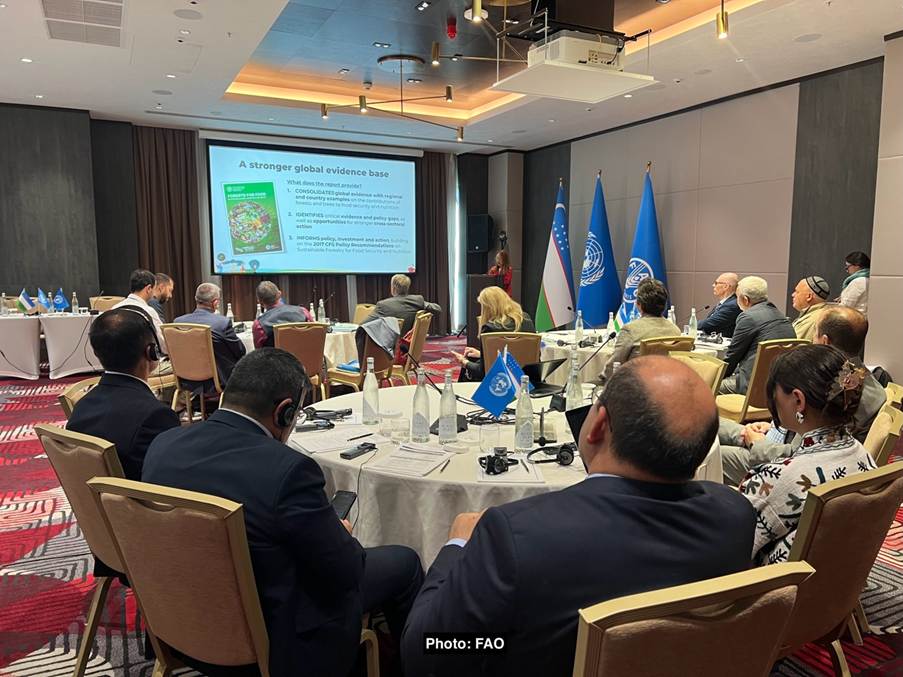
The discussions highlighted the role of genetic diversity in helping forest tree populations adapt to changing environmental conditions and ensuring the long-term sustainability of forest ecosystems. Participants examined existing challenges, including gaps in genetic resource inventories, limited monitoring, and insufficient national capacities for conservation and the sustainable management of forest genetic resources.
International and regional experts shared experience in genetic conservation, species and provenance trials, and the selection of appropriate forest reproductive material for climate-responsive forestry. Presentations also explored how international cooperation networks, including EUFORGEN and MedForGen, can facilitate knowledge exchange, strengthen technical capacities and support coordinated conservation efforts.
Country representatives and forestry experts identified several shared priorities for the region: improving genetic inventories and monitoring systems, conserving priority tree species, strengthening seed and gene bank capacities, and developing specialized expertise. Discussions also emphasized the importance of integrating genetic considerations into forest restoration and management planning, supported by common methodologies, research collaboration and accessible information systems.
-----------------------------------------
The Uzbekistan Resilient Landscape Restoration Project (RESILAND Uzbekistan) is part of the World Bank’s RESILAND CA+ program, aimed at strengthening landscape resilience across Central Asian countries. Similar national and regional activities are also being implemented in Kyrgyzstan and Uzbekistan.
RESILAND Uzbekistan is implemented by the Agency for Increasing Forests and Green Areas and Combating Desertification under the National Committee on Ecology and Climate Change of the Republic of Uzbekistan, with financial support from the World Bank, PROGREEN, and KWPF.
The Regional Environmental Centre for Central Asia (CAREC) implements the regional component of the Uzbekistan Resilient Landscape Restoration Project.
Contact information:
Dildora Aralova – Environmental safety specialist, the Agency for Afforestation, Expansion of Green Areas, and Combating Desertification under the Ministry of Ecology, Environmental Protection, and Climate Change of the Republic of Uzbekistan
Azamat Kauazov – Deputy Team Leader of Uzbekistan Resilient Landscape Restoration project: regional component, CAREC