

Central Asia today stands on the front line of the global climate challenge, facing critical land degradation affecting up to 80% of its territories. Landscape degradation is no longer a narrow environmental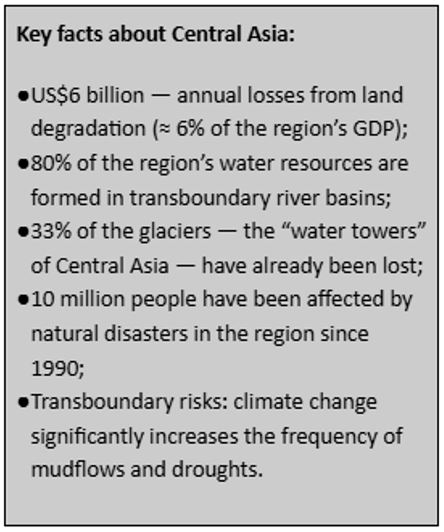 issue — it is a systemic challenge that causes the region direct economic losses equivalent to 6% of its combined GDP each year. It is time to recognize the scale of the threats hidden behind the destruction of natural systems, because without healthy landscapes, the sustainable social and economic development of Central Asia will be in question.
Anthropogenic pressure (31–40% contribution):
Unsustainable land-use practices remain the key drivers of degradation. Their scale ranges from severe overgrazing in the foothill regions of Kyrgyzstan and Tajikistan—where pressure on pastures exceeds sustainable norms by 3–5 times—to inefficient irrigation systems in the Amu Darya and Syr Darya river basins. In Uzbekistan and Turkmenistan, this has resulted in secondary salinization of nearly half of irrigated lands, while in Kazakhstan irrational use of forest resources has led to the degradation of 36% of forest areas. As a result of accumulated damage, crop yields on degraded lands across the region are already 10–20% below their natural potential.
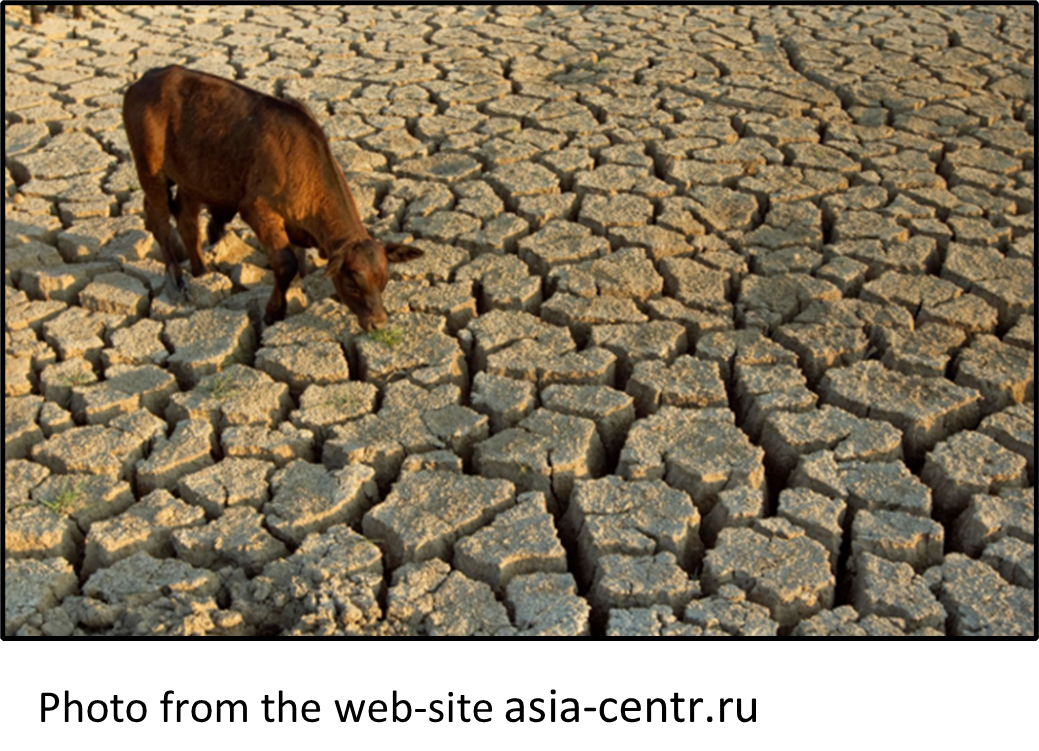
Climate trigger (up to 69% contribution):
Natural factors such as the sharp reduction of snow cover and abnormal droughts are becoming the dominant drivers of desertification across the region. In Uzbekistan and Kyrgyzstan, temperature increases—reaching up to 0.34°C per decade—significantly exceed the global average, accelerating glacier melt and reducing water resources. In Turkmenistan, the number of extremely hot days has risen critically, extreme heat and dry winds burns out and dries vegetation even under regular irrigation. In Tajikistan, the combined degradation of glaciers and declining snow cover in high mountain areas disrupts the flow regimes of rivers that supply water to the entire region. In Kazakhstan, large-scale desertification and intensifying droughts have already caused soil fertility to decline by 30–60% across vast territories.
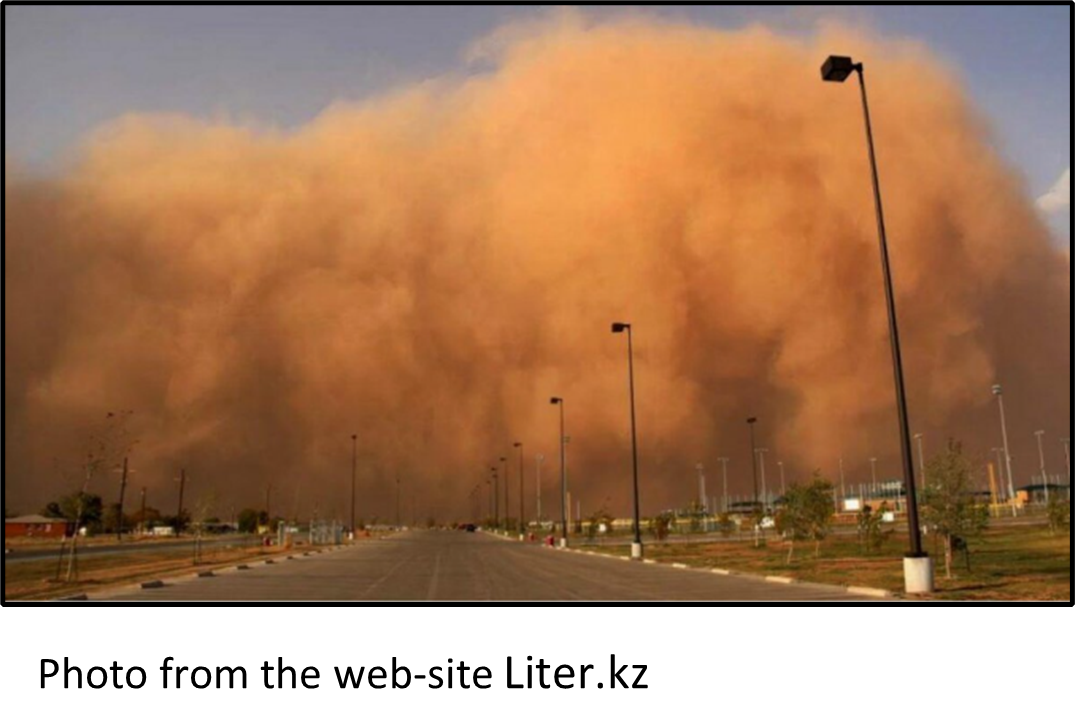
Erosion and dust storms (both trigger and consequence):
About 85 million hectares in the region are classified as high-risk zones for sand and dust storms, which annually carry away fertile soil layers across enormous areas. In Kazakhstan this has contributed to a 30–60% decline in soil fertility. In Uzbekistan, the main source of saline dust has become the dried seabed of the Aral Sea (the Aralkum desert), whose toxic plumes suppress crop growth for hundreds of kilometers around it. In Turkmenistan, the advance of sands from the Karakum Desert threatens oases and infrastructure. In Tajikistan and Kyrgyzstan, “dust haze” is increasingly recorded—the transport of fine dust particles from plains that settle on glaciers, contaminating them and accelerating their melting.
The RESILAND CA+ Program is the World Bank’s flagship initiative implemented with financial support from the Global Environment Facility (GEF) and the PROGREEN Multidonor Trust Fund. The program serves as a strategic platform for large-scale restoration of degraded landscapes, the introduction of sustainable natural resource management practices, and the systematic strengthening of the region’s climate resilience.
The program is implemented through national projects in Tajikistan, Kyrgyzstan, and Uzbekistan, with active expert and political engagement from Kazakhstan and Turkmenistan, giving the initiative a region-wide scope and linking national priorities with the global climate agenda. The program’s main focus is restoring natural capital through Nature-based Solutions (NbS), reducing transboundary risks of mudflows and droughts, supporting rural communities through green employment, and promoting deep legislative transformation—including regional policy harmonization and the development of new regulatory frameworks.
The Regional Environmental Centre for Central Asia (CAREC) is a regional non-profit organization established in 2000 by the governments of Central Asian countries, the European Union, and UNDP. The Centre’s mission is to support solutions to environmental protection and sustainable development challenges across Central Asia.
CAREC’s role in RESILAND CA+ is to ensure the strategic connectivity of national projects under the program, transforming country-level actions into a unified regional framework. Acting as a key catalyst for cooperation, CAREC moderates processes for harmonizing environmental policies, introduces shared digital monitoring systems and knowledge bases, and facilitates the development of practical guidelines and roadmaps for reducing climate risks. Through the coordination of regional dialogues, study tours, and seminars, CAREC promotes continuous exchange of information and knowledge.
Attention!
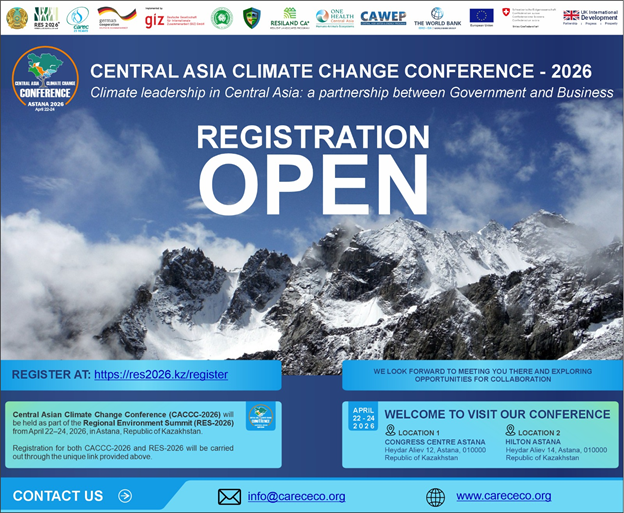
! On April 24, within the framework of the Central Asian Climate Change Conference (CACCC 2026), we will hold a special
session 1.3 “Transboundary Landscape Restoration.”
We will discuss breakthrough achievements by countries and international partners in joining efforts and resources to conserve, restore, and ensure the prosperity of Central Asia’s landscapes.
Stay informed about the changes. We have something worth protecting!
Author: Ludmila Kiktenko, Program Manager for Environmental Management, Regional Environmental Centre for Central Asia (CAREC)
#CentralAsia #Environment #Climate #CACCC2026 #RESILAND #GreenEconomy #Landscapes #SustainableDevelopment