

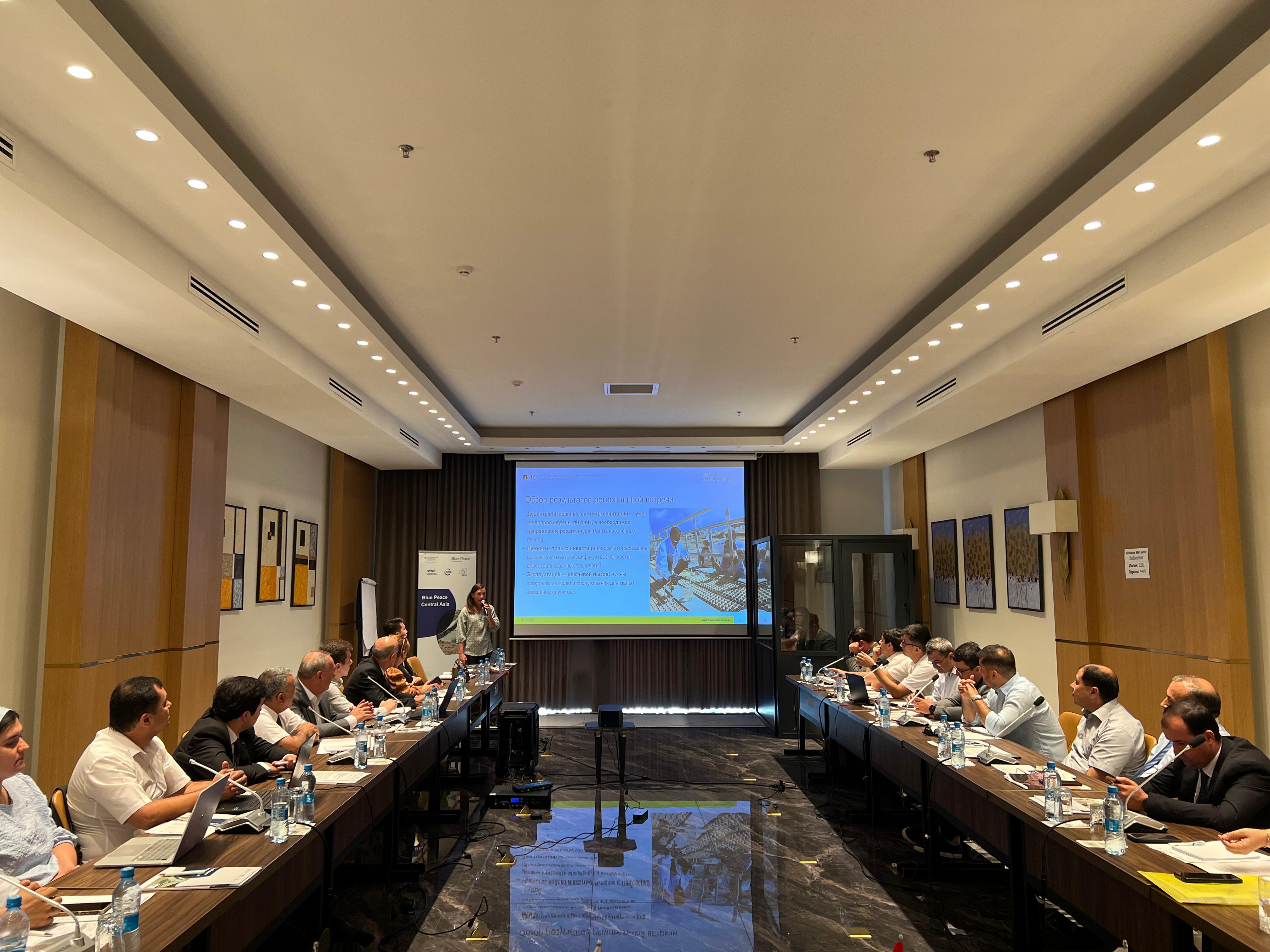
On August 21, 2026, a national seminar on water quality standards, wastewater treatment regulations, and wastewater reuse was held in Dushanbe. The seminar was organized by the Regional Environmental Centre for Central Asia (CAREC) in collaboration with the International Union for Conservation of Nature (IUCN) as part of the “Blue Peace Central Asia” (BPCA) project, with support from the Swiss Agency for Development and Cooperation (SDC).
.jpeg)
The workshop brought together representatives from government agencies, scientific and educational institutions, international organizations, as well as experts and specialists in the fields of water supply, sanitation, and hygiene.
The seminar’s objectives included discussing priority local sanitation systems for rural areas in Tajikistan and identifying limitations in existing national standards regarding the reuse of wastewater and sludge.
Given the underdevelopment of centralized sewer systems in rural areas of Tajikistan, on-site sewage facilities (OSSFs), including constructed wetlands, are the most practical and economically viable solutions, as they allow wastewater to be treated directly at the point of generation.
.jpeg)
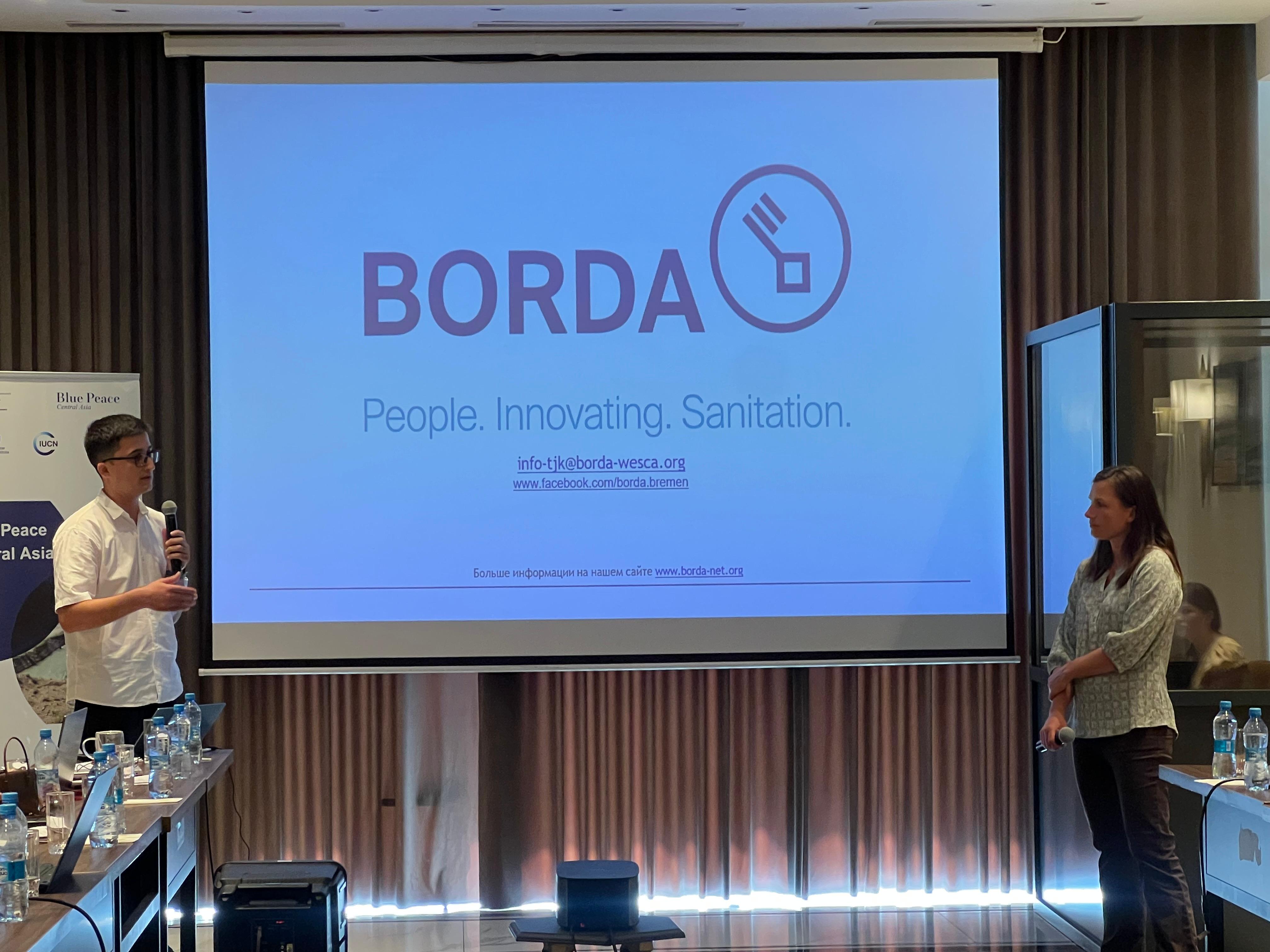
Currently, seven pilot projects are operational in the country at schools, medical facilities, and small settlements in Sughd Province and districts under republican jurisdiction. Representatives of the International Secretariat for Water (ISW) Office in Tajikistan, as well as the non-profit organizations BORDA and EQUIDEV—which are implementing these sanitation infrastructure projects with support from the SDC—shared their practical experience in operating phytotechnical systems. Among the key advantages of these systems, participants noted low operating costs, minimal energy consumption, no need for complex infrastructure, and the ability to adapt the technologies to local conditions.
The main obstacle to scaling up such OSSFs is the absence of specific design requirements in national building codes and regulations, as well as a clearly defined procedure for acceptance and commissioning.
Current sanitary requirements also do not fully account for the specific characteristics of modern decentralized wastewater treatment systems. In particular, according to experts, the established standards for ammonium content in treated wastewater are difficult to meet for a number of nature-based technologies. At the same time, such systems can ensure high efficiency in removing organic pollutants and offer other operational and environmental advantages.
In this regard, participants emphasized the need to improve the regulatory and technical framework, including the development of differentiated requirements that take into account the type of treatment technology used, the scale of the facility, the intended use of the treated water, and the system’s operating conditions. The issue of reusing treated wastewater for agricultural irrigation requires separate regulatory oversight. It is necessary to establish water categories based on the degree of treatment and to set corresponding requirements for its use, including a list of permissible crops, irrigation methods and frequency, required waiting periods before harvest, water quality indicators, as well as procedures for sanitary control and monitoring.
“It is necessary not only to update the regulatory framework but also to work toward a modern understanding of sanitation and water resources. We have inherited a Soviet-era approach, whereas in Western practice, the concept of sanitation is interpreted more broadly. Therefore, it is important to train specialists, develop a common understanding of terms and approaches, and improve existing regulatory documents in line with modern requirements,” noted Sharifzoda Gul Vahob, Deputy Head of the Water Resources Department at the Ministry of Energy and Water Resources of the Republic of Tajikistan.
Participants also discussed the implementation of monitoring programs that include not only laboratory analyses but also simple on-site rapid tests (assessment of turbidity, odor, and sludge levels in septic tanks). It was proposed to create a national OSSF monitoring database, to which all pilot projects would submit their data to form a unified evidence base.
“I think that if we continue to advance sanitation issues, we will have solutions across all areas within the next two to three years. Over the past four years (note: during the implementation of the first phase of the BPCA project), a tremendous amount of work has been done. I don’t think this will be the last such seminar—we look forward to continued cooperation,” noted Iftikhor Kalandarbekov, dean of the Faculty of Engineering and Technology at The Tajik Technical University named after academician M.S. Osimi.
The main outcome of the workshop was the preparation of proposals for a national roadmap on the formalization of wastewater treatment and the reuse of treated water and composted sludge, with clearly defined safety criteria. Participants agreed that Tajikistan needs a single document—a national guide on decentralized sanitation—that would facilitate the transition to more flexible and adapted wastewater treatment solutions for rural areas, thereby reducing the environmental impact through the safe and rational use of water and organic resources. To this end, an interagency group must be established to develop the relevant construction and sanitation standards.
The workshop served as a platform for building a shared understanding of the challenges and for identifying further practical steps to advance decentralized wastewater management at the national level.
Background
The Blue Peace Central Asia initiative (2025–2029) aims to support sustainable water resources management and promote water diplomacy in the region’s transboundary basins.
The project includes three main areas: hydro-diplomacy, implementation of projects for basin and investment planning on small transboundary rivers, and capacity building for young professionals and women.
Blue Peace promotes a multi-level and multi-stakeholder approach to water governance in Central Asia. Special attention is given to equitable distribution and efficient management of water resources in close connection with the region’s socio-economic development and stability.
The project is implemented by a consortium of International Water Management Institute and International Union for Conservation of Nature in partnership with Regional Environmental Centre for Central Asia.
Additional Information:
Irina Yugay
Project Manager
Acting Manager of the Water Initiatives Support Program CAREC i.yugay@carececo.org