

On August 18–19, 2026, a national seminar on water quality standards, wastewater treatment standards, and wastewater reuse was held in the village of Chok-Tal, Kyrgyz Republic.
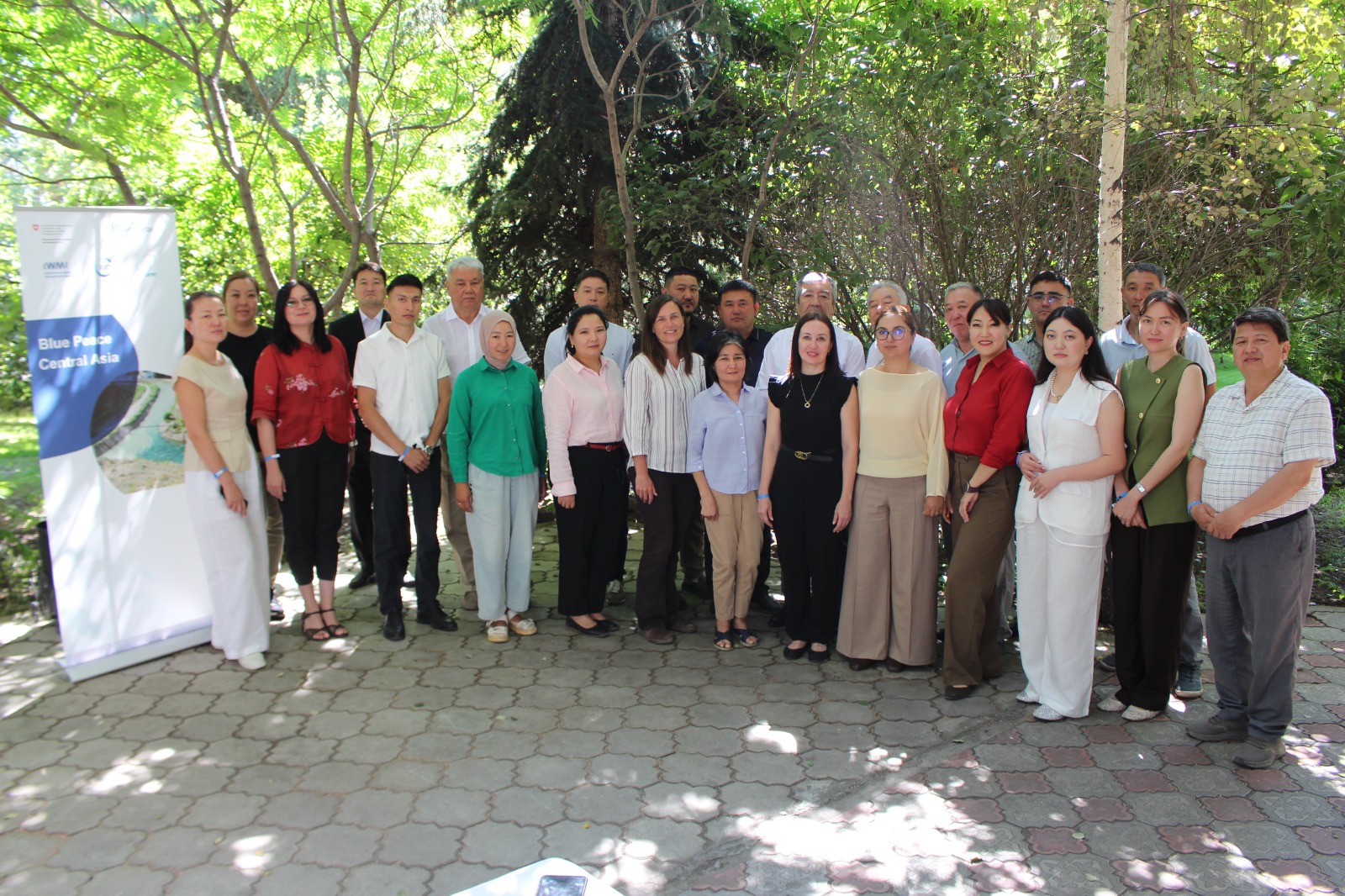
The seminar was organized as part of the “Blue Peace Central Asia” project (BPCA) by the Regional Environmental Centre for Central Asia (CAREC) and the International Union for Conservation of Nature (IUCN), in partnership with the Kyrgyz State Technical University named after I.Razzakov, with financial support from the Swiss Agency for Development and Cooperation (SDC).
The first day of the seminar focused on practical knowledge sharing. Participants, together with representatives of the Regional workshop, visited wastewater treatment facilities in the Issyk-Kul region and familiarized themselves with centralized and decentralized wastewater treatment technologies.
.jpeg)
The site visits allowed participants to compare theoretical approaches with practical applications, discuss the effectiveness of various solutions, and explore the potential for their implementation in other Central Asian countries.
On the second day, the seminar featured a lecture session during which participants examined various technical sanitation solutions—ranging from septic tanks and aerobic systems to membrane bioreactors. Particular attention was paid to the need to consider various factors, such as treatment efficiency, operational reliability, maintenance costs, availability of maintenance personnel, and local conditions.
Separately, participants discussed simple and reliable nature-based solutions, including vertical phytoremediation structures (wetlands), compact systems based on coconut filters, and stabilization ponds, which are successfully used in France for small communities. Such systems utilize natural biological processes to treat wastewater and may be particularly relevant for rural areas due to their relatively simple maintenance and low operating costs.
.jpeg)
The site visits allowed participants to compare theoretical approaches with practical applications, discuss the effectiveness of various solutions, and explore the potential for their implementation in other Central Asian countries.
On the second day, the seminar featured a lecture session during which participants examined various technical sanitation solutions—ranging from septic tanks and aerobic systems to membrane bioreactors. Particular attention was paid to the need to consider various factors, such as treatment efficiency, operational reliability, maintenance costs, availability of maintenance personnel, and local conditions.
Separately, participants discussed simple and reliable nature-based solutions, including vertical phytoremediation structures (wetlands), compact systems based on coconut filters, and stabilization ponds, which are successfully used in France for small communities. Such systems utilize natural biological processes to treat wastewater and may be particularly relevant for rural areas due to their relatively simple maintenance and low operating costs.
.jpeg)
.jpeg)
Фото: IWMI
“It is very important that today we were able to bring together representatives of ministries and agencies, the scientific community, and experts in one place. Such collaboration is truly necessary to find practical solutions and develop approaches that will be applicable in our republic...Furthermore, such discussions should not be limited to a single seminar. A national program for the development of drinking water supply and wastewater management through 2035 is currently being developed, under which a permanent working group is planned to be established. I hope that both the scientific community and representatives of all relevant ministries and agencies will be involved in this work,” said Gulnara Saryeva, a general hygiene physician at the Department of Disease Prevention and State Sanitary and Epidemiological Surveillance of the Ministry of Health of the Kyrgyz Republic.
The workshop served as a platform for the joint development of a national roadmap for further work on the implementation of modern water treatment technologies, the improvement of the regulatory framework, the development of monitoring systems, and the promotion of the safe reuse of water and sanitation products. The results will be used in the BPCA project’s future work, including to prepare proposals for improving the national regulatory framework, developing pilot solutions, and strengthening the evidence base in the field of sustainable wastewater management.
Background
The Blue Peace Central Asia initiative (2025–2029) aims to support sustainable water resources management and promote water diplomacy in the region’s transboundary basins.
The project includes three main areas: hydro-diplomacy, implementation of projects for basin and investment planning on small transboundary rivers, and capacity building for young professionals and women.
Blue Peace promotes a multi-level and multi-stakeholder approach to water governance in Central Asia. Special attention is given to equitable distribution and efficient management of water resources in close connection with the region’s socio-economic development and stability.
The project is implemented by a consortium of International Water Management Institute and International Union for Conservation of Nature in partnership with Regional Environmental Centre for Central Asia.
Additional Information:
Irina Yugay — Project Manager, Acting Manager of the Water Initiatives Support Program, CAREC, i.yugay@carececo.org