

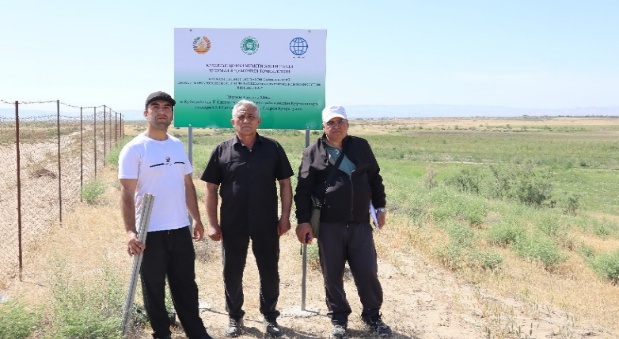
In May 2026, a comprehensive assessment of pasture conditions was conducted in the districts of Shahritus, Qubodiyon, and Nosiri Khusrav of Khatlon Region within the framework of the “Tajikistan Resilient Landscapes Restoration project”.
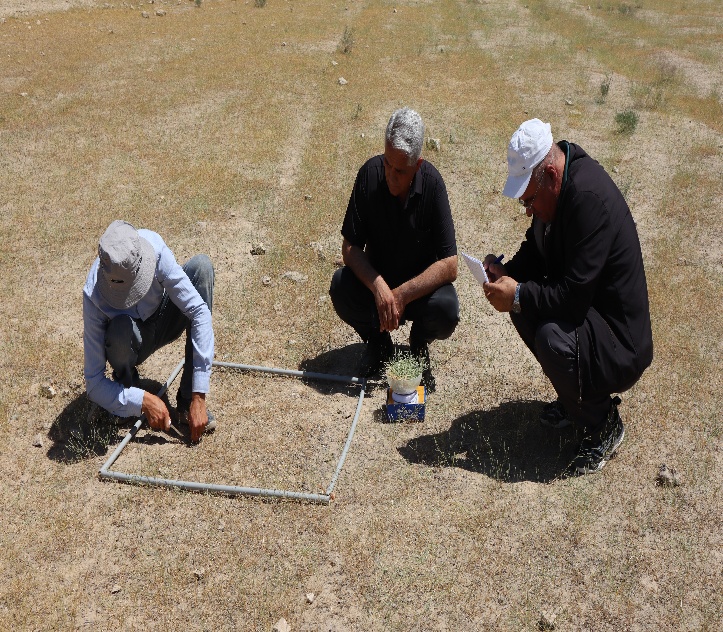
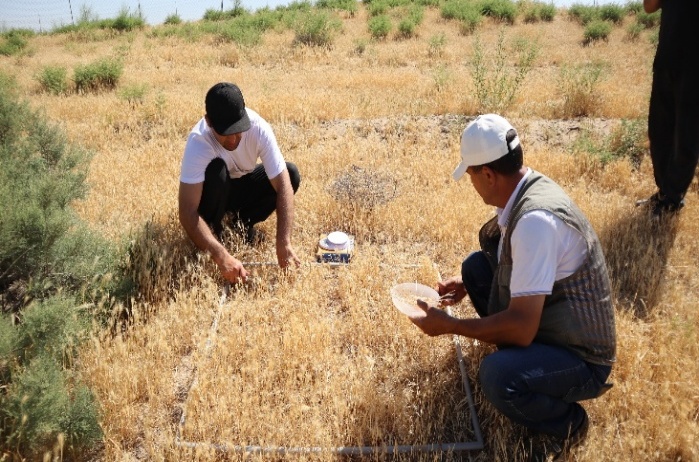
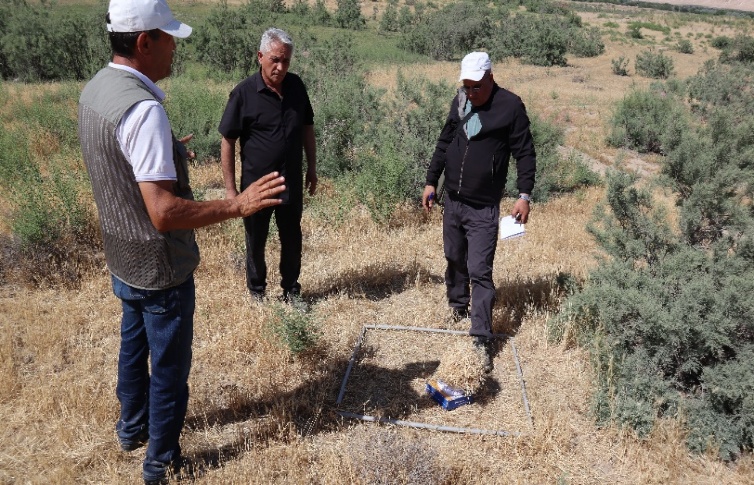
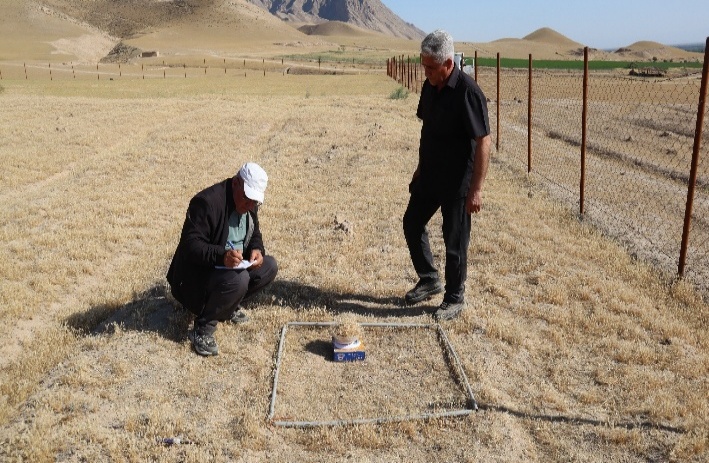
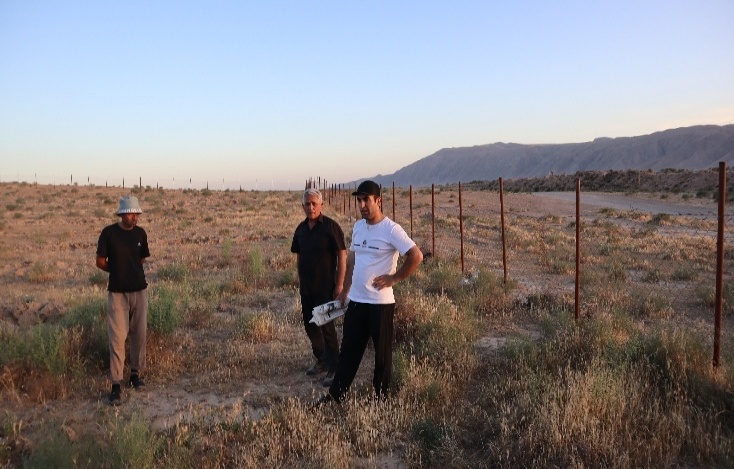
The monitoring mission brought together specialists from the Institute of Livestock and Pastures of the Academy of Agricultural Sciences of Tajikistan, project technical experts from target districts, and pasture management specialists. The primary objective was to evaluate the condition of pasture ecosystems, assess the effectiveness of fenced restoration sites, measure forage productivity, and analyze the impact of project interventions on natural resource recovery.
Restoring Pastures for Sustainable Development
The pastures of Shahritus, Qubodiyon, and Nosiri Khusrav are classified as winter grazing lands, where livestock are kept during the cold season and breeding activities take place. Their productivity is highly dependent on annual precipitation. Favorable spring rainfall can increase the yield of natural forage resources by two to three times, while drought conditions significantly reduce feed availability for livestock.
The monitoring findings demonstrate that the introduction of sustainable pasture management practices, rotational grazing systems, and the establishment of Pasture User Unions (PUUs) have contributed significantly to improving pasture conditions and increasing land productivity.
Qubodiyon District: Visible Results of Restoration Efforts
Qubodiyon District contains more than 89,000 hectares of pastureland. With project support, seven Pasture User Unions (PUU) have been established, managing over 10,000 hectares of grazing land.
All unions have developed pasture maps, introduced grazing calendars, and received training on sustainable natural resource management. By 2026, rotational grazing systems had been implemented across 8,145 hectares.
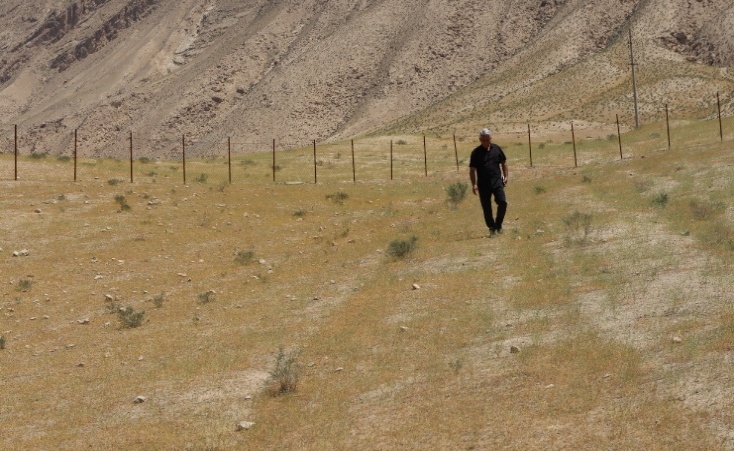
Particular attention was given to demonstration sites where degraded pasturelands were fenced to allow natural regeneration. At the Chirik site, managed by the “Takhti Sangin” PUU, a three-hectare fenced area produced an average yield of 2.5 centners of dry forage mass per hectare. Additional studies of saltwort (Salsola) vegetation communities recorded approximately 4.5 centners of dry biomass per hectare.
The monitoring confirmed that temporary exclusion of livestock from grazing areas enables vegetation recovery, improves the botanical composition of pastures, and promotes the natural spread of valuable forage species.
Another important site was Kurjalolqum, where protective saxaul plantations were established across 200 hectares. Research findings showed that vegetation productivity near young saxaul stands was two to three times higher than in adjacent open areas. Saxaul helps retain soil moisture, reduces wind erosion, and creates favorable conditions for the restoration of desert ecosystems.
Pasture productivity at this site reached 8–9 centners of dry forage mass per hectare, representing one of the highest yields recorded during the monitoring mission.
Shahritus District: Productivity Increased by Up to 40 Percent
Shahritus District contains more than 107,000 hectares of pastureland. The project has supported the establishment of seven PUUs covering over 8,000 hectares.
Rotational grazing has been introduced on 6,585 hectares, resulting in a 15–25 percent increase in pasture productivity compared to previous years.
At the Sayyod demonstration site, a two-hectare fenced area achieved a yield of 9.5 centners of dry forage mass per hectare. Compared with the previous year, productivity increased by 30–40 percent. Vegetation height reached 25–30 centimeters, while plant cover exceeded 70 percent of the soil surface.
At the “Obshoron” PUU site, productivity reached 5.2 centners of dry forage mass per hectare. Specialists noted healthy vegetation growth and successful recovery of natural forage resources.
In addition to pasture restoration activities, the project provided PUUs with office facilities, computer equipment, agricultural machinery, tractors, and other technical resources. These investments have strengthened local management capacity and created additional opportunities for income generation within rural communities.
Nosiri Khusrav District: Successful Rehabilitation of Degraded Lands
Nosiri Khusrav District includes more than 55,000 hectares of winter pastures. The project has established six PUUs managing more than 2,100 hectares of land.
Rotational grazing systems have been introduced across 1,727 hectares, contributing to an approximately 15 percent increase in pasture productivity compared with the previous year.
Special attention was given to the “Istiqlol” PUU, where three hectares of degraded land were fenced for restoration. Through responsible management and regular monitoring by local pasture users, natural vegetation has successfully recovered even on sandy and gravelly soils.
An additional example of successful local initiative is the establishment of pistachio plantations within the restoration area. More than 500 pistachio seedlings were planted by a local land user to improve microclimatic conditions, enhance soil moisture retention, and create a future source of income.
Research findings showed that natural forage productivity at the site ranged from 6.5 to 7.8 centners of dry forage mass per hectare—15–20 percent higher than in previous years.
Landscape Restoration Delivers Tangible Results
The monitoring results clearly demonstrate that the implementation of the “Tajikistan Resilient Landscapes Restoration” Project is generating positive environmental and socio-economic impacts across Khatlon Region.
The establishment of PUUs, introduction of rotational grazing systems, provision of technical equipment, and rehabilitation of degraded lands have all contributed to more sustainable pasture management and improved productivity.
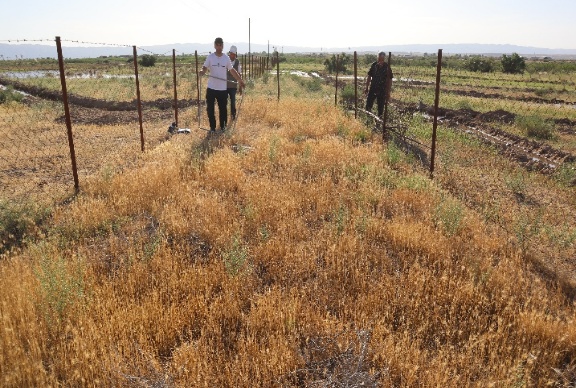
One of the most effective interventions has been the fencing of selected pasture areas. Temporary protection from grazing allows vegetation to regenerate naturally, improves species diversity, increases forage availability, reduces soil degradation, and strengthens ecosystem resilience.
The successful establishment of saxaul plantations further highlights the importance of integrated landscape restoration approaches. Beyond improving pasture productivity, saxaul contributes to combating desertification, conserving soil moisture, reducing wind erosion, and restoring ecological balance in arid environments.
Overall, the project is creating favorable conditions for sustainable pasture use, increased livestock productivity, improved rural livelihoods, and strengthened food security in Tajikistan, while supporting the long-term restoration of degraded landscapes and ecosystems.
-------------------
The Tajikistan Resilient Landscapes Restoration Project is part of the World Bank’s RESILAND CA+ program, aimed at strengthening landscape resilience across Central Asian countries. Similar national and regional activities are also being implemented in Kyrgyzstan and Uzbekistan.
The Regional Environmental Centre for Central Asia (CAREC) implements the regional component of the Tajikistan Resilient Landscape Restoration Project.
Additional Information:
Solijon Mirzoev — RESILAND Tajikistan Project Manager, Center for the Implementation of Investment Projects under the Committee for Environmental Protection of the Government of the Republic of Tajikistan.
Dilovarsho Dustzoda — Deputy Team Leader of the Project Implementation Group for “Sustainable Landscape Restoration in the Republic of Tajikistan: Regional Component”, CAREC