

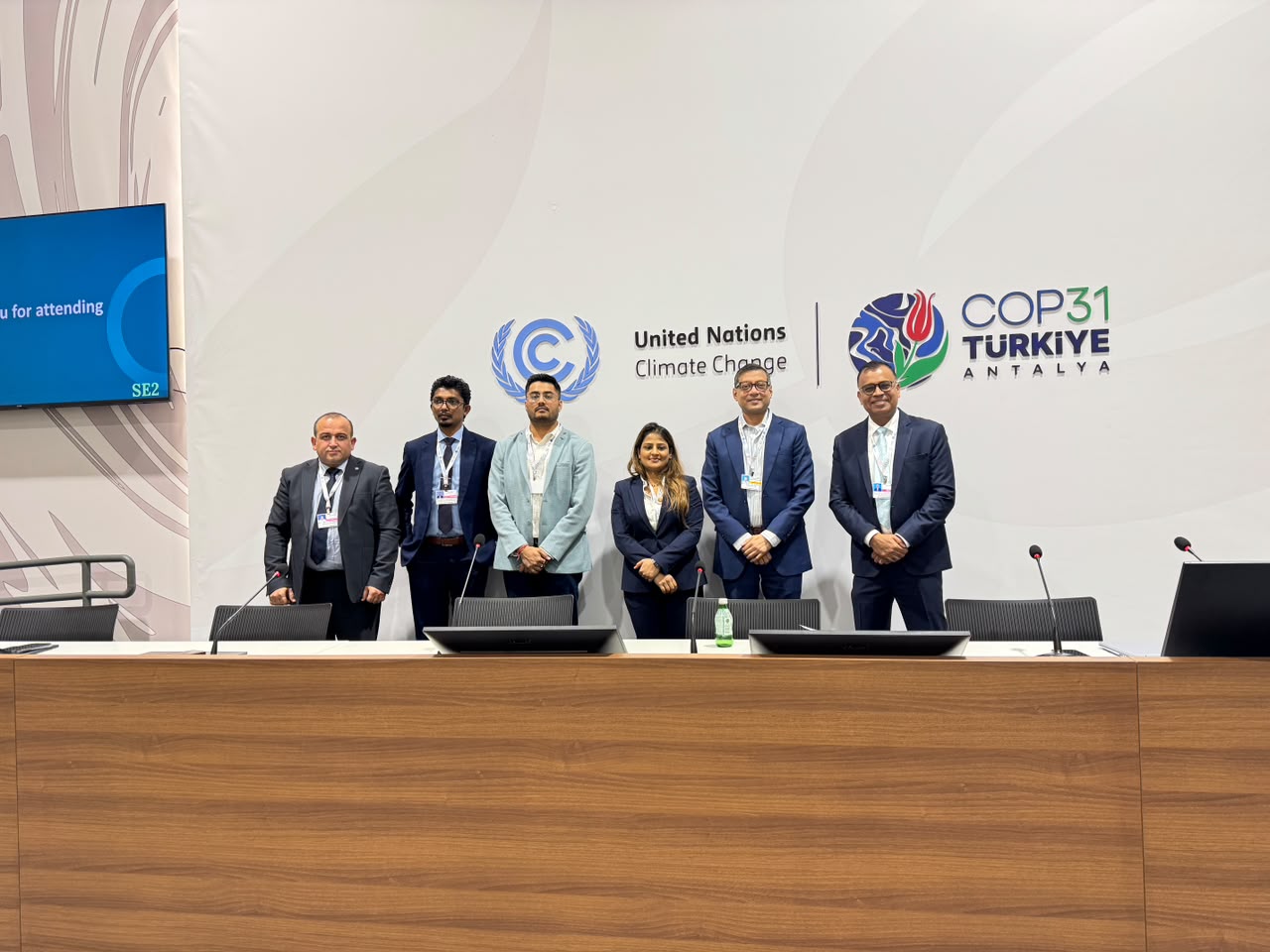
Antalya – Turkey – 12 November 2026 – The Regional Environmental Centre for Central Asia (CAREC) took part in the COP31 side event “Enabling Policy Action for the Climate & Circular Economy Nexus in NDC Implementation”, held on 12 November 2026 in Antalya, Turkey. The discussion focused on translating circular economy solutions into policy action, advancing the implementation of Nationally Determined Contributions (NDCs) and mobilising climate finance, with particular attention to South Asia and Central Asia.
Dilovarsho Dustzoda, Advisor to the Executive Director of the Regional Environmental Centre for Central Asia (CAREC), spoke at the event, sharing the regional perspective on linking circular economy legislation with national climate commitments and identifying investment opportunities in Central Asia. His remarks highlighted the importance of regulatory frameworks, regional cooperation and investment-ready projects in accelerating the transition towards a circular economy.
Linking circular economy legislation with climate commitments
“Central Asia is now at a very important stage, where we need to move from climate commitments and policy discussions towards practical implementation.”
Highlighting three key entry points for connecting circular economy legislation with NDC implementation, Dilovarsho Dustzoda emphasised the need to integrate circular economy measures into national climate implementation frameworks, create regulatory conditions for circular markets, and strengthen regional cooperation and parliamentary engagement.
“Legislation alone is not sufficient. We also need economic incentives and functioning markets.”
He noted that extended producer responsibility (EPR), standards for secondary raw materials, green public procurement and incentives for businesses can stimulate demand for recycled products and help establish sustainable financing mechanisms for waste collection, sorting and recycling.
He also highlighted the importance of connecting circular economy measures with national climate transparency systems and NDC monitoring and reporting, drawing on CAREC's experience in supporting countries through its Regional Climate Transparency Hub (ReCATH).
Mobilising investment and strengthening regional cooperation
Addressing investment opportunities in Central Asia, Dilovarsho Dustzoda identified construction and building materials, industrial resource efficiency, including textiles, and mining and industrial waste management as areas with considerable potential for circular economy investments.
“Central Asia does not lack circular economy opportunities. What we need now is to transform these opportunities into coordinated, investment-ready projects that contribute directly to national climate goals.”
He stressed that regional cooperation can help identify common investment priorities, develop regional project pipelines, harmonise technical approaches and connect project preparation with national climate commitments.
Country Platforms, he noted, offer an opportunity to bring governments, development partners, financial institutions and the private sector together around these priorities. Moving from investment concepts to bankable projects, however, requires feasibility studies, realistic business models, clear environmental impacts and transparent monitoring frameworks.
Concluding his remarks, Dilovarsho Dustzoda highlighted CAREC's role in bridging the gap between regional policy dialogue, technical expertise and investment preparation, helping Central Asian countries turn circular economy opportunities into practical projects that contribute to national climate goals.
Additional information:
Dilovarsho Dustzoda Advisor to the CAREC Executive Director