

OVOP Product Lookbook: How Traditional Crafts Find a Place in Homes in Almaty and Tashkent
Traditional crafts are an important part of the cultural heritage of the peoples of Central Asia, reflecting their history, way of life, and artistic traditions. The production of carpets, felt items, and wooden objects is based on knowledge and skills that have been developed over many generations. Preserving this heritage means not only documenting examples in collections but also ensuring conditions under which craftsmanship remains in demand and is passed on to future generations.
The threat of losing these skills is very real. In 2012, UNESCO inscribed the Kyrgyz art of making traditional felt carpets—shyrdak and ala-kiyiz—on the List of Intangible Cultural Heritage in Need of Urgent Safeguarding. Among the reasons cited are the declining number of practitioners and young people’s waning interest in learning the craft, as well as competition from mass-produced goods. Therefore, preserving traditions is closely linked to the economic viability of workshops: artisans must be able not only to teach but also to sell their creations.
The “One Village, One Product” (OVOP) initiative fosters this connection between culture and entrepreneurship. The model assumes that local residents transform available resources and their own knowledge into products capable of competing in the market. To this end, support is provided not only for production but also for quality, design, packaging, promotion, and finding buyers. The initiative is also spreading to other Central Asian countries: according to data from the Ministry of National Economy of the Republic of Kazakhstan, in 2025, 821 producers participated in twenty regional OVOP exhibitions, 1,058 consultations were held, 53 new businesses were established, and 236 jobs were created. These figures cover various product categories, not just interior design items; however, they provide insight into the scale of market development for small local manufacturers.
Special attention should be given to how ethnic design is incorporated into contemporary interiors. The use of traditional patterns, natural materials, and handmade items helps emphasize a space’s cultural identity and create a unique atmosphere. Even a small detail—such as a decorative panel, a felt rug, or a textile item featuring a national pattern—can serve as a striking focal point in an interior while blending seamlessly with contemporary design trends. The value of such items lies in their uniqueness, as each handmade piece embodies the craftsmanship, traditional knowledge, and cultural heritage of a specific region.
The potential of this combination is clearly evident in the products presented by OVOP participants.
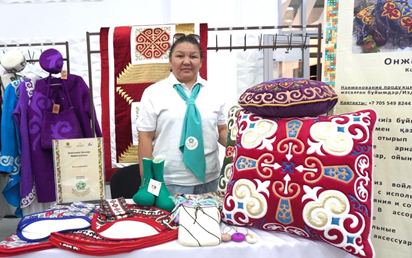
For example, at an exhibition held at the “Atameken” Regional Chamber of Entrepreneurs in Taldykorgan, visitors could see handmade items crafted from natural local wool, including wall hangings, home decor, toys, accessories, and jewelry. These items combine traditional felting techniques with modern design solutions, allowing this national craft to take on new forms and become a sought-after part of everyday life.
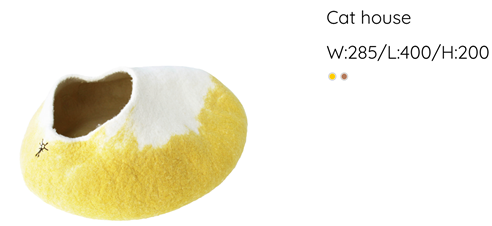
The same trend is evident in the OVOP Kyrgyzstan collection, which features a variety of items adapted to the modern lifestyle. Among them, you can find small shyrdaks, decorative pillows, felt chair covers, dish coasters, and even cozy little houses for pets. This diversity demonstrates that traditional craft techniques can be used not only to create familiar items of national daily life but also to produce modern, functional products.
Marketplaces play an important role in the preservation and development of traditional crafts, allowing artisans to find buyers and city residents to learn about national culture. In Almaty, the Nomad Bazaar—opened in October 2025 in the central pavilion of the Green Bazaar—has become such a space. The venue helps OVOP producers promote and sell their products. Similar initiatives are active in other Central Asian countries: the OVOP Business & Shopping Center operates in Bishkek, Issyk-Kul Brand in Karakol, and in Uzbekistan, crafts from the Aral region are showcased through OVOP ARAL. Such venues are becoming not just places of commerce, but also spaces for discovering the region’s cultural heritage, while simultaneously supporting local producers.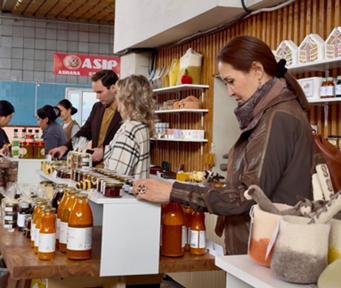
Thus, ethnic design in urban interiors is evolving at the intersection of cultural continuity and actual consumer demand. A modern apartment does not necessarily replicate traditional ways of life: sometimes a single item is enough to signify a connection to the region’s history and craftsmanship. But behind that item, there must remain the opportunity to learn who created it and how. This is precisely why specialized stores and OVOP’s collective retail spaces are just as important as exhibitions: they make engagement with local culture part of everyday consumer choices
This material was prepared by CAREC intern Alyona Shlyonskaya 
To learn about unique examples, useful recommendations, and expert advice on the OVOP approach, subscribe to the OSOP Kyrgyzstan YouTube channel and read the blog of the Japan International Cooperation Agency (JICA).
To learn more about other topics and the results of the RESILAND CA+ program—a flagship initiative of the World Bank that supports government afforestation programs—visit the CAREC website.
You can join our expert community by scanning the QR code.
© 2026 Regional Environmental Center for Central Asia (CAREC). Reproduction, copying, or other use of materials is permitted only with an active hyperlink to the original source. This material was prepared with informational and analytical support from AI tools.
#RESILANDCA #WorldBankGroup #RESILANDKyrgyzstan #OneVillageOneProduct #CAREC #CentralAsia