
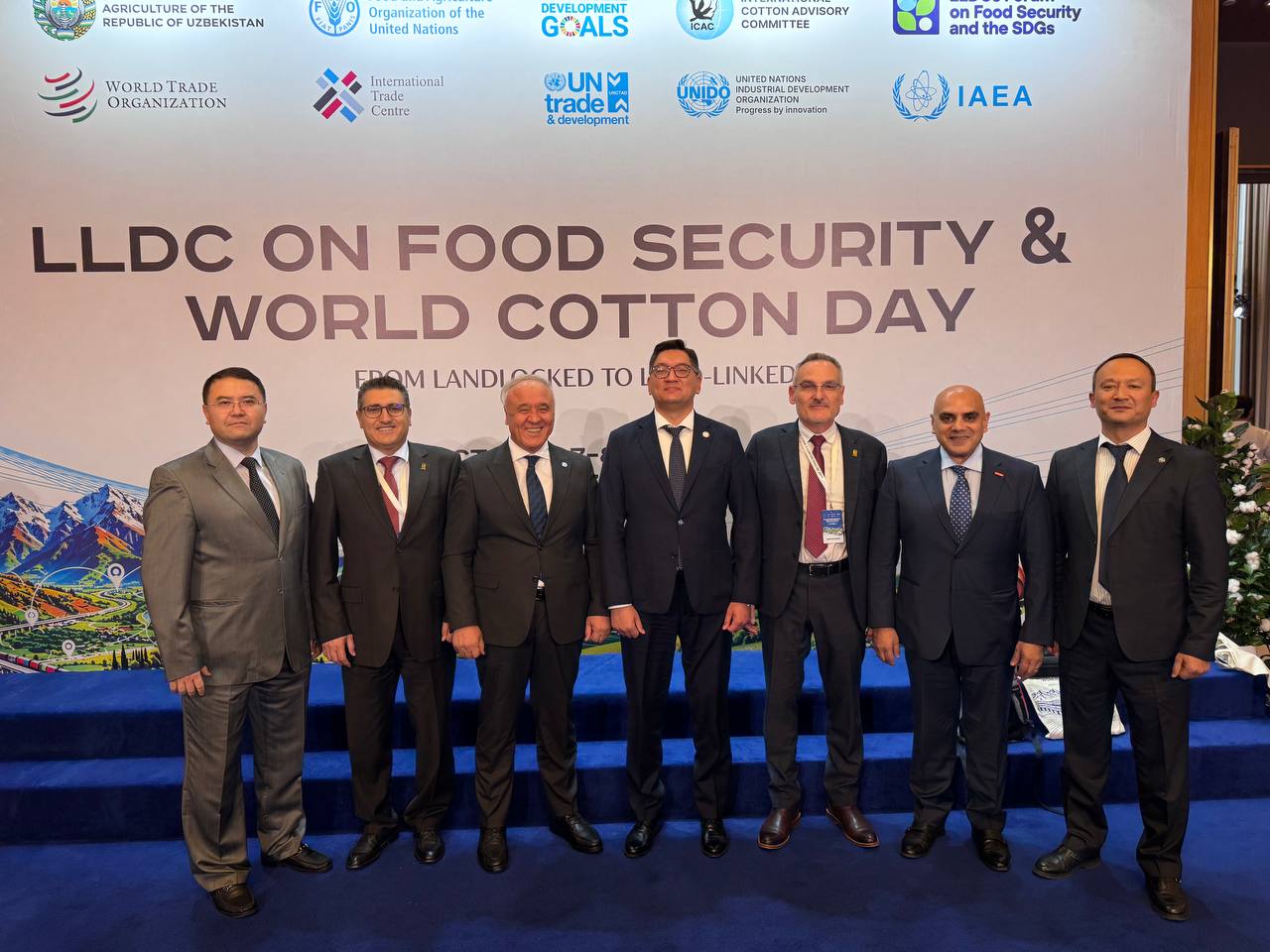
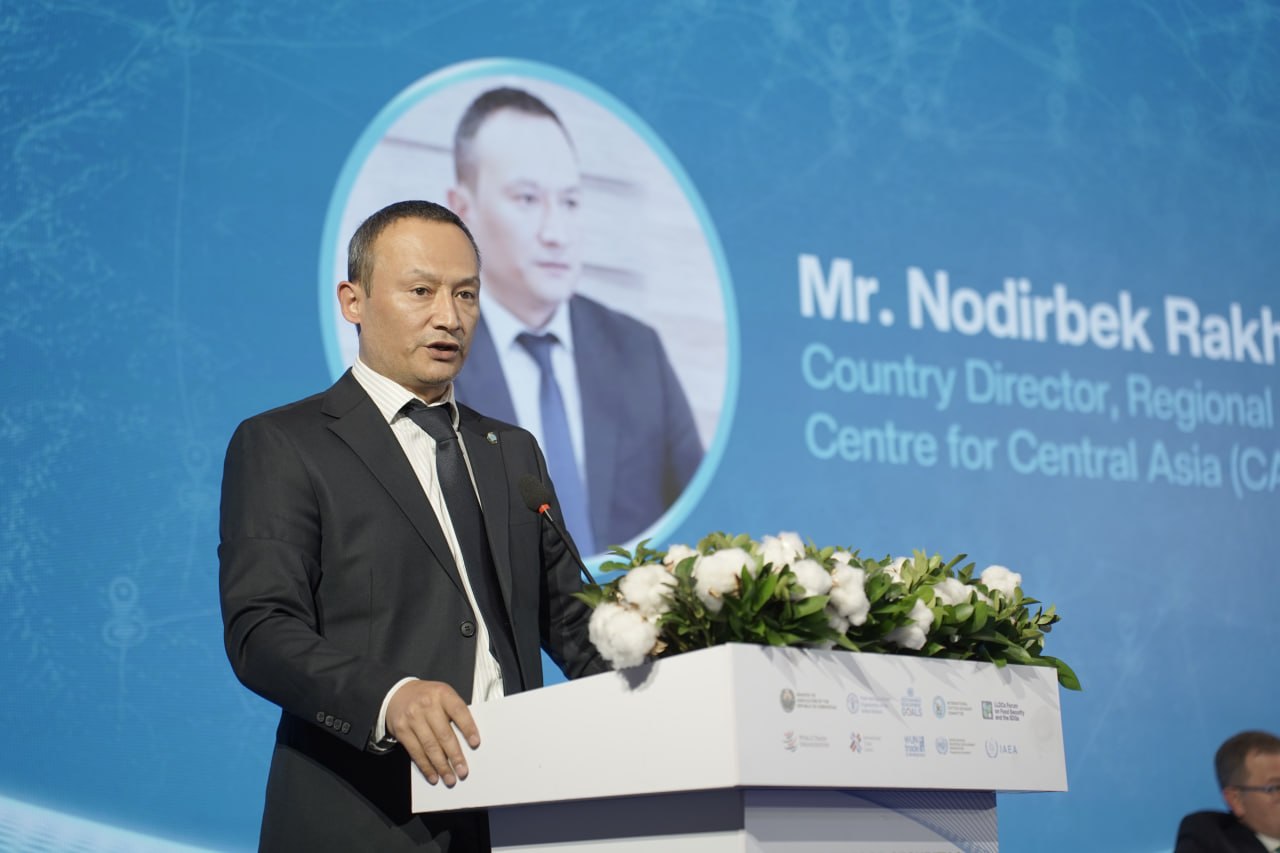
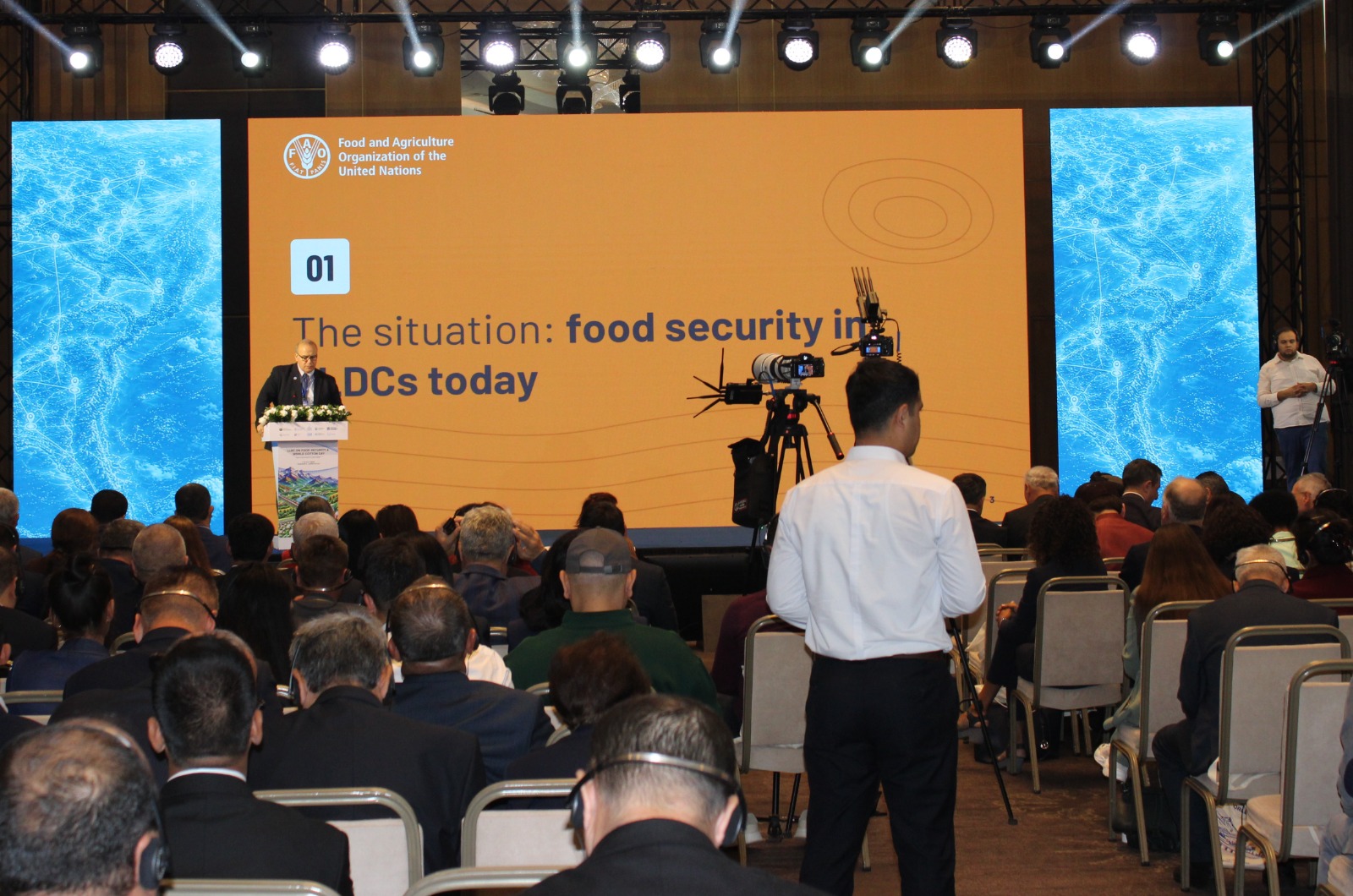
7 October 2026, Tashkent — Nodirbek Rakhimjonov, Country Director of the Regional Environmental Centre for Central Asia (CAREC) Branch in the Republic of Uzbekistan, participated in the Global Technical Forum of Landlocked Developing Countries on Food Security and the Sustainable Development Goals (SDGs), held in Tashkent on 7–8 October 2026.
The Forum brought together representatives of governments, international organizations, financial institutions, academia, the private sector and expert organizations to discuss practical solutions for sustainable development in landlocked developing countries. The Forum was organized around the theme “Weaving Prosperity: Land-linked Agrifood Systems for Landlocked Countries.”
The discussions focused on food security, sustainable agriculture, climate change, sustainable use of land and water resources, innovation, market access and sustainable financing.
CAREC at the Technical Session on Climate Change
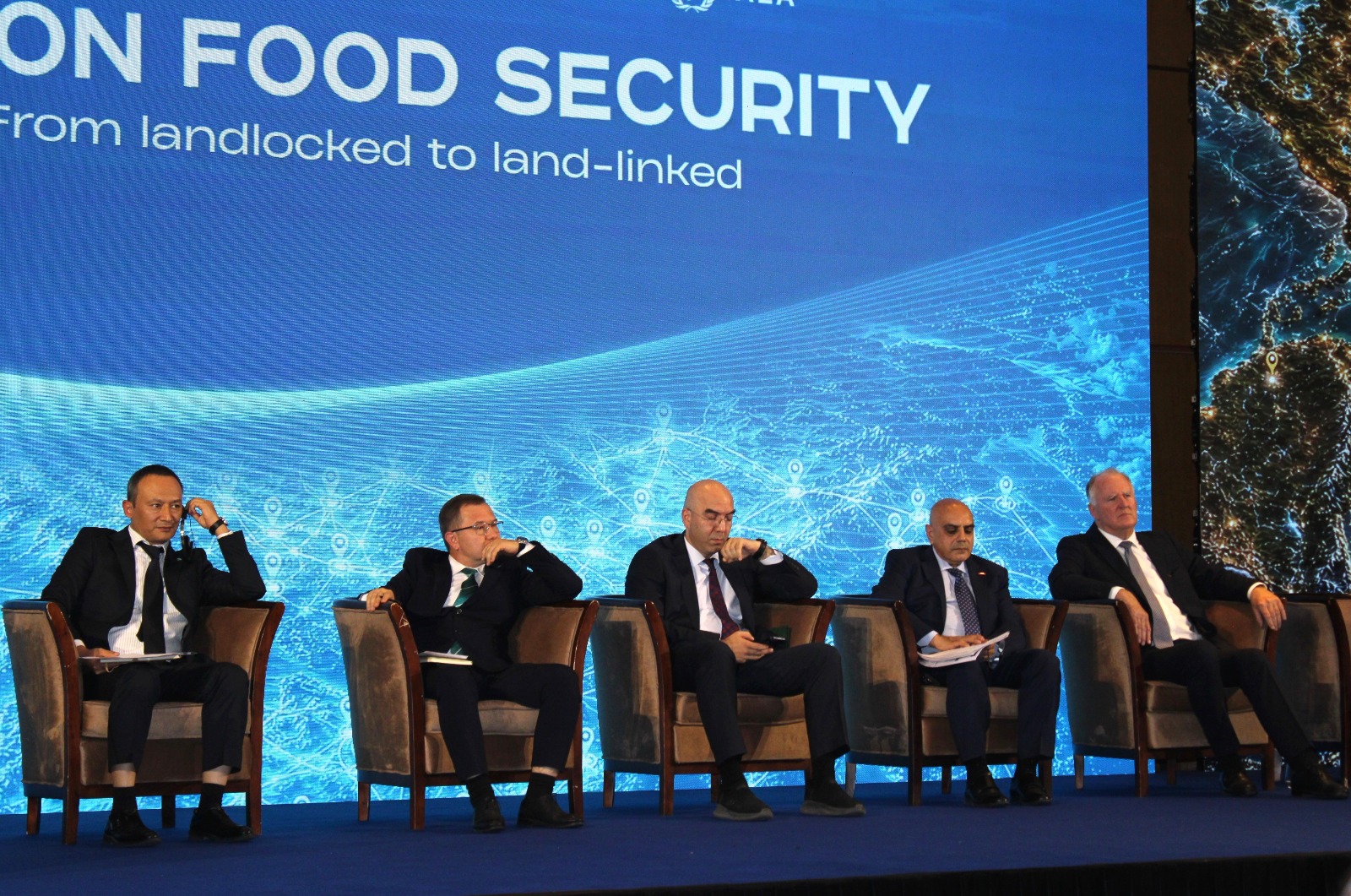
Nodirbek Rakhimjonov spoke at the first technical session, “Combating Climate Change and Environmental Vulnerability,” which focused on climate risks and environmental vulnerability in landlocked developing countries.
He shared the panel with:
- Bahtiyor Rajabov, Senior Officer, Global Green Growth Institute (GGGI);
- Dr. Bakhtiyor Pulatov, Rector, Central Asian Green University;
- Dr. Shinan Kassam, Regional Director for Central Asia, Caritas Switzerland;
- Roger Rabbat, Partner, Strategy& Middle East;
- Ingolf Sonnleitner, MBA, CEO of SolidGreen and NUMY.
The session was moderated by Xiangjun Yao, Director of the FAO Office for Small Island Developing States (SIDS), Least Developed Countries (LDCs) and Landlocked Developing Countries (LLDCs).
The panel brought together different perspectives on climate resilience, including regional cooperation, community-level adaptation, science and education, private-sector solutions and international support.
Central Asia’s Regional Experience
In his intervention, Nodirbek Rakhimjonov presented the Central Asian perspective on addressing common environmental challenges.
He noted that the countries of Central Asia have developed significant experience in cooperation on water resources, land restoration and climate action. At the same time, water scarcity, land degradation and the consequences of the Aral Sea crisis remain major challenges, which are becoming more difficult in the context of rising temperatures and increasing pressure on natural resources.
A key point of the discussion was that many environmental challenges in Central Asia do not stop at national borders. Transboundary rivers, connected ecosystems, land degradation and the consequences of the Aral Sea crisis require cooperation between countries.
As practical examples, Rakhimjonov highlighted CAREC’s work on transboundary water cooperation, including the Blue Peace Central Asia initiative, climate-resilient management of the Zarafshan River Basin, and regional cooperation on landscape restoration under RESILAND CA+.
He also highlighted the importance of reliable climate data and information exchange for effective decision-making.
In this area, cooperation between CAREC and FAO is particularly relevant. In Uzbekistan, CAREC is working with FAO to strengthen the country’s climate transparency system and its capacity to track national climate actions and the support received.
From Dialogue to Practical Action
During his intervention, Rakhimjonov highlighted four areas that regional cooperation mechanisms in Central Asia should focus on to strengthen climate resilience:
— improving the exchange of climate and environmental data;
— strengthening joint work on transboundary water resources and connected ecosystems;
— developing and scaling up projects that can attract climate and international financing;
— increasing the involvement of local communities, farmers and other users of natural resources.
From CAREC’s perspective, Central Asia already has a number of regional platforms and practical experience that can support further cooperation. The next step is to make better use of these existing mechanisms and move from individual projects and exchange of experience towards larger-scale joint solutions.
About the Forum
The Global Technical Forum builds on the International Forum of Landlocked Developing Countries on Food Security and the SDGs, held in Tashkent in September 2024. The 2026 Forum focuses on four interconnected areas: combating climate change and environmental vulnerability; science, technology and innovation; trade, market access and regional integration; and sustainable financing.
The programme also included technical sessions on science, technology and innovation in agriculture, evidence-based policymaking and sustainable financing, followed by a closing session and adoption of the Forum Communiqué.
CAREC’s participation in the Forum provided an opportunity to present Central Asia’s experience in regional environmental cooperation and to exchange views with international and regional partners on practical approaches to strengthening the climate resilience of landlocked developing countries.
Clarify the participation and speaking rolesReduce repetition about climate resilience
.jpg)
For further information
Nodirbek Rakhimjonov - Director of the CAREC Branch in Uzbekistan, uzbekistan@carececo.org