

Uzbekistan is scaling up its forest landscape restoration efforts under the Central Asia Resilient Landscapes Restoration Program (RESILAND CA+). This was highlighted during the Regional Dialogue on Restoring Sustainable Landscapes in Central Asia, held in late June in Bishkek, Kyrgyz Republic.
According to Davronbek Gulom ugli Ravshanov, the Forest Protection and Border Affairs Department of the Forestry Agency under the National Committee on Ecology and Climate Change of the Republic of Uzbekistan, Uzbekistan continues to implement the Uzbekistan Resilient Landscape Restoration Project (RESILAND Uzbekistan). The project is being implemented under the regional RESILAND CA+ Program with financial support from the World Bank, PROGREEN, the Global Partnership for Sustainable and Resilient Landscapes, and the Korea–World Bank Partnership Facility (KWPF).
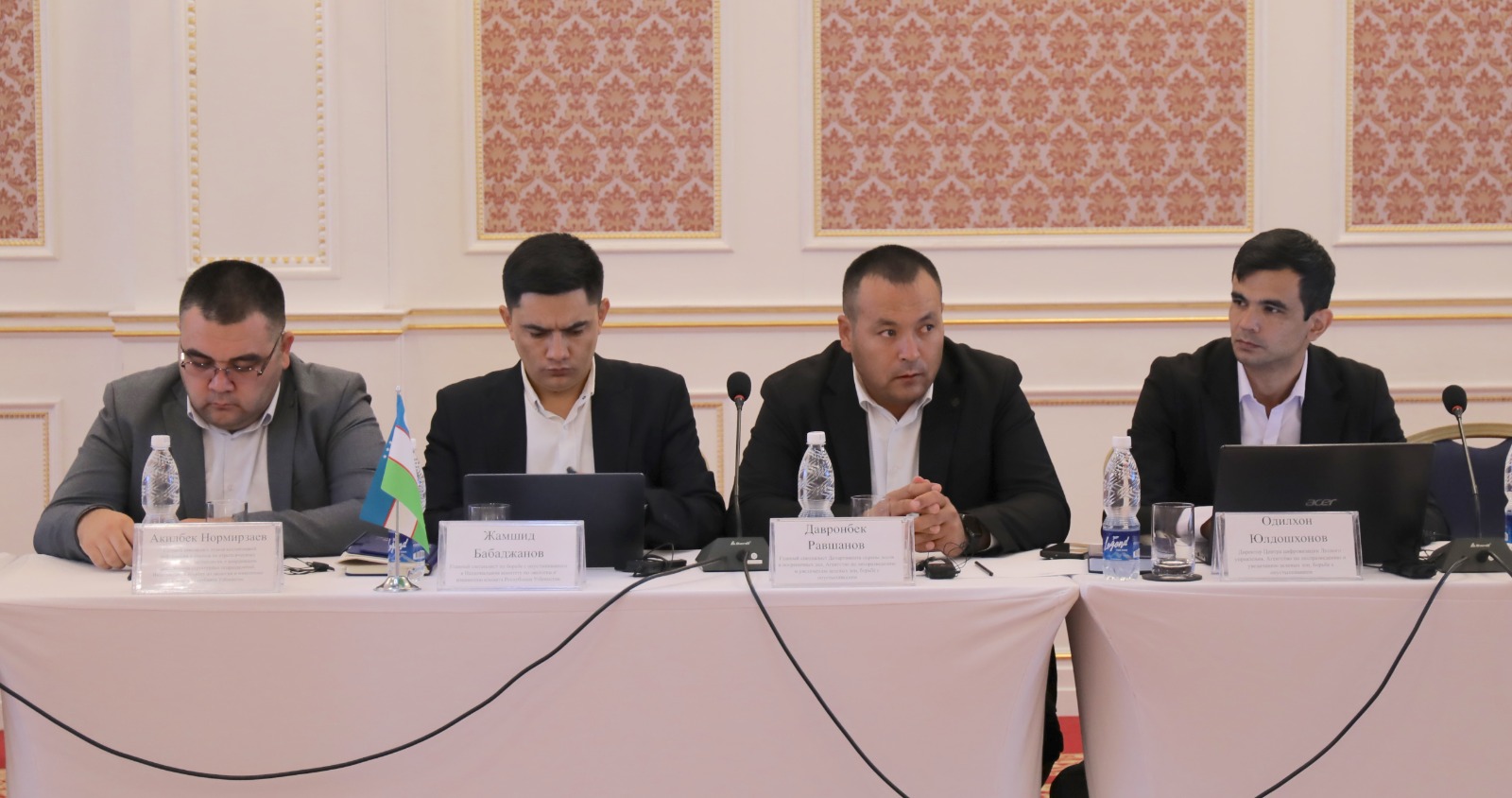
He emphasized that Uzbekistan's participation in the RESILAND CA+ Program represents a strategic step toward advancing the country's national environmental agenda.
According to Davronbek Gulom ugli Ravshanov, international cooperation enables Uzbekistan to combine global knowledge and best practices with national initiatives, including the nationwide Yashil Makon initiative.
The significance of the RESILAND Uzbekistan Project extends beyond tree planting. The project aims to establish a foundation for sustainable socio-economic development in rural areas while strengthening transboundary cooperation across Central Asia.
The project is currently being implemented in the Jizzakh, Namangan, Samarkand, Kashkadarya, Syrdarya, and Surkhandarya regions of Uzbekistan.
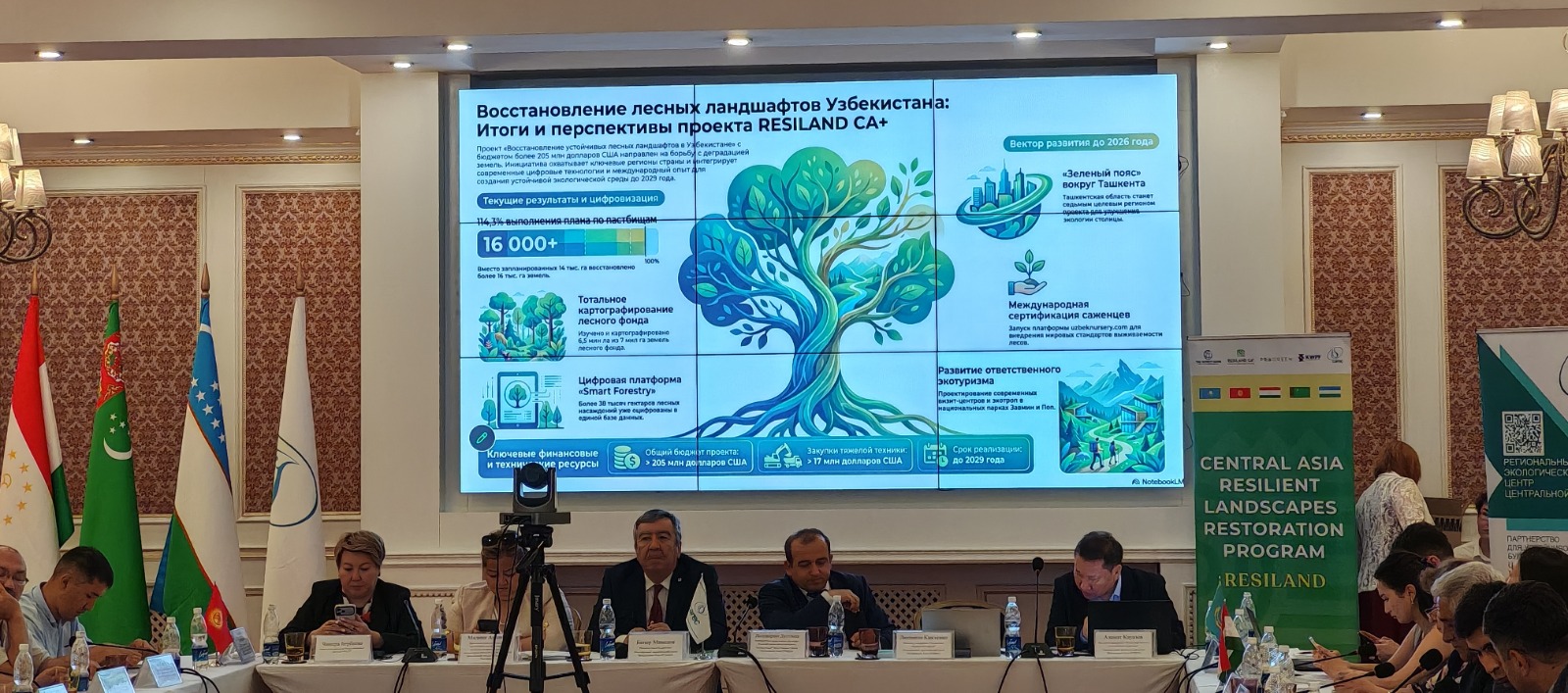
ВAs part of project implementation, the initial stages of international procurement have been completed. In October 2025, the first 39 units of modern forestry equipment, including tractors, were delivered to forestry enterprises. Evaluation of major procurement packages for heavy machinery and all-terrain vehicles is currently nearing completion. This equipment will support operations in remote mountainous areas, including terrace construction activities.
Furthermore, three-year agrotechnical management plans have been developed. To date, pasture restoration has exceeded project targets: restoration activities have been completed on more than 16,000 hectares, surpassing the original target of 14,000 hectares by 114 percent. In addition, terracing to prevent soil erosion has been completed across 5,000 hectares.
In cooperation with the Uzbekcosmos Agency, a comprehensive geospatial database has been established on the Smart Forestry platform. To date, more than 38,000 hectares of forest plantations have been digitized.
In addition, the Republican Aerogeodesy Center has surveyed and mapped more than 6.5 million hectares of forest fund land out of a total area of 7 million hectares, significantly improving the accuracy of forest management and forest resource planning.
The project also plans to launch the uzbeknursery.com platform, which will integrate internationally recognized seedling certification standards into Uzbekistan's national system. This initiative is expected to improve the survival rate of forest plantations under changing climate conditions.
Within the framework of cooperation with the Regional Environmental Centre for Central Asia (CAREC), Uzbekistan intends to continue harmonizing its national legislation with regional priorities while expanding knowledge exchange and practical cooperation with neighboring countries across Central Asia.
"The RESILAND CA+ Program serves as a bridge between our countries. Environmental challenges such as land degradation, dust storms, and soil salinization do not recognize national borders. Therefore, our success in Uzbekistan contributes to the resilience of the entire region," said Davronbek Gulom ugli Ravshanov.
Participants in the Regional Dialogue reaffirmed that the RESILAND CA+ Program provides an important platform for joint action among Central Asian countries, as environmental challenges such as land degradation, dust storms, and soil salinization transcend national borders.
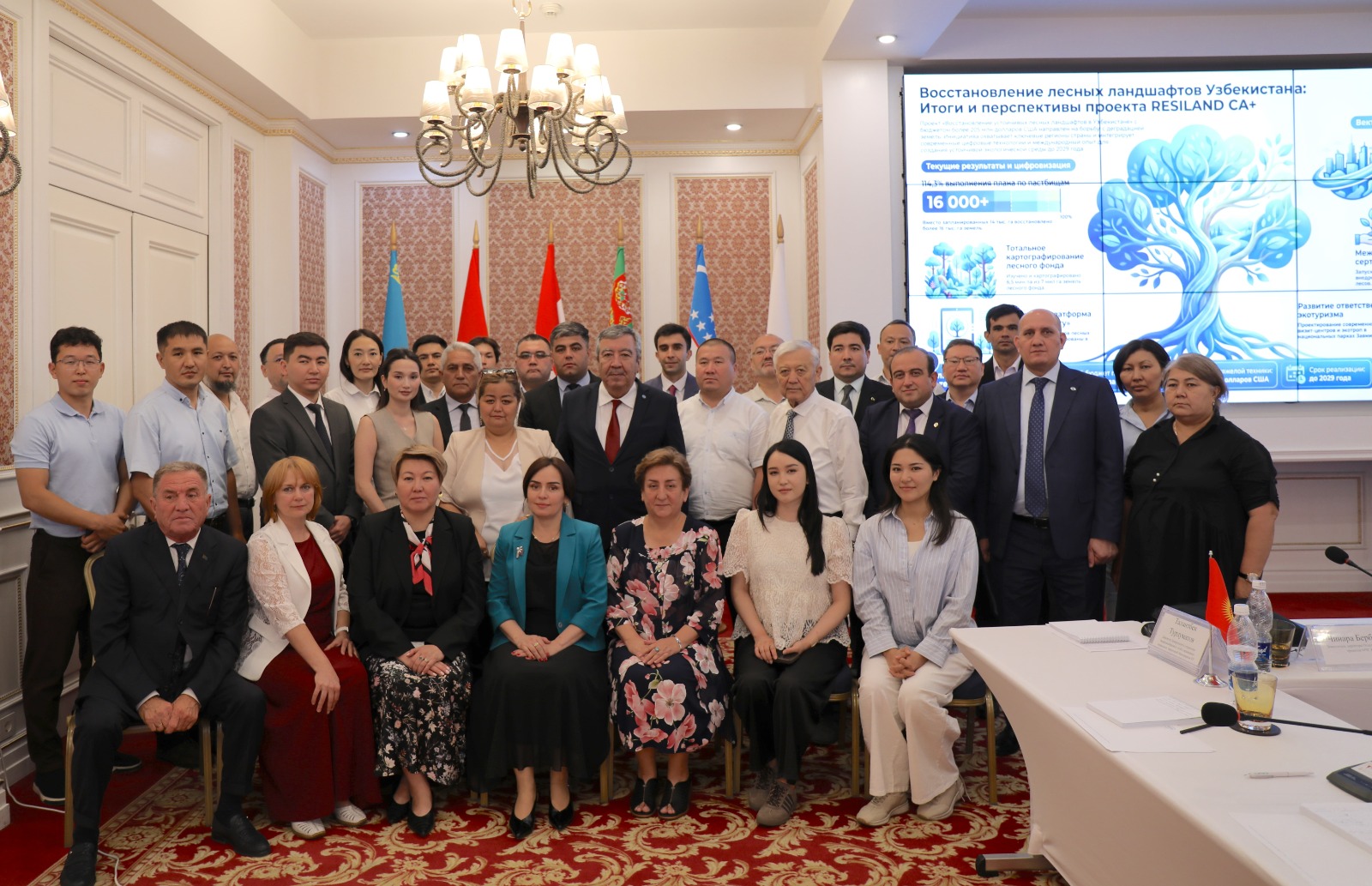
They expressed their appreciation to the World Bank for its effective partnership and continued support for projects implemented under the RESILAND CA+ Program, noting their confidence that the joint efforts of participating countries and development partners will ensure the timely and effective achievement of the Program's objectives.
Recall, from June 24 to 26, representatives of Central Asian countries gathered in Bishkek, Kyrgyz Republic, to discuss joint solutions for reducing the risks of mudflows and floods, improving natural hazard monitoring systems, and strengthening regional cooperation in response to climate change.
The Regional Dialogue, "Policy Harmonization, Roadmap Development, and Digital Tools for Coordinating Joint Action," was organized under the Central Asia Resilient Landscapes Restoration Program (RESILAND CA+), supported by the World Bank. The event was hosted by the Ministry of Emergency Situations of the Kyrgyz Republic in partnership with the Regional Environmental Centre for Central Asia (CAREC).
Prepared by Zhanna Khusainova, Media Consultant, CAREC, pr@carececo.org
---------------------------
About the RESILAND CA+ Program
The Central Asia Resilient Landscapes Restoration Program (RESILAND CA+) is financed by the World Bank with support from the PROGREEN, Global Partnership for Sustainable and Resilient Landscapes, and the Korea–World Bank Partnership Facility (KWPF).
The Resilient Landscape Restoration Project in Uzbekistan (RESILAND Uzbekistan) is part of the World Bank's regional RESILAND CA+ Program, which aims to strengthen the resilience of landscapes across Central Asia. Similar projects are also being implemented in the Kyrgyz Republic and Tajikistan, pursuing complementary national and regional objectives.
The project is implemented by the Forestry Agency under the National Committee on Ecology and Climate Change of the Republic of Uzbekistan, with financial support from the World Bank, PROGREEN, and KWPF.
The Regional Environmental Centre for Central Asia (CAREC) is responsible for implementing the regional component of RESILAND Uzbekistan.
Contact information:
Dildora Aralova – Environmental safety specialist, the Agency for Afforestation, Expansion of Green Areas, and Combating Desertification under the Ministry of Ecology, Environmental Protection, and Climate Change of the Republic of Uzbekistan
Azamat Kauazov – Deputy Team Leader of Uzbekistan Resilient Landscape Restoration project: regional component, CAREC