

Tajikistan continues to implement initiatives under the Regional Program “One Health for Pandemic Prevention, Food Systems Resilience, and Ecosystem Health in Central Asia.” In this interview, Abdullo Guliyev, Project Coordinator in the Republic of Tajikistan, discusses how the country is building collaboration among medical professionals, veterinarians, agricultural specialists, and environmentalists, why laboratory equipment cannot deliver results without human capacity building, and what role every citizen plays in containing antimicrobial resistance.
— What are the main results achieved in implementing the One Health project in Tajikistan at this stage, and what systemic changes have already been launched under the coordination of your center?
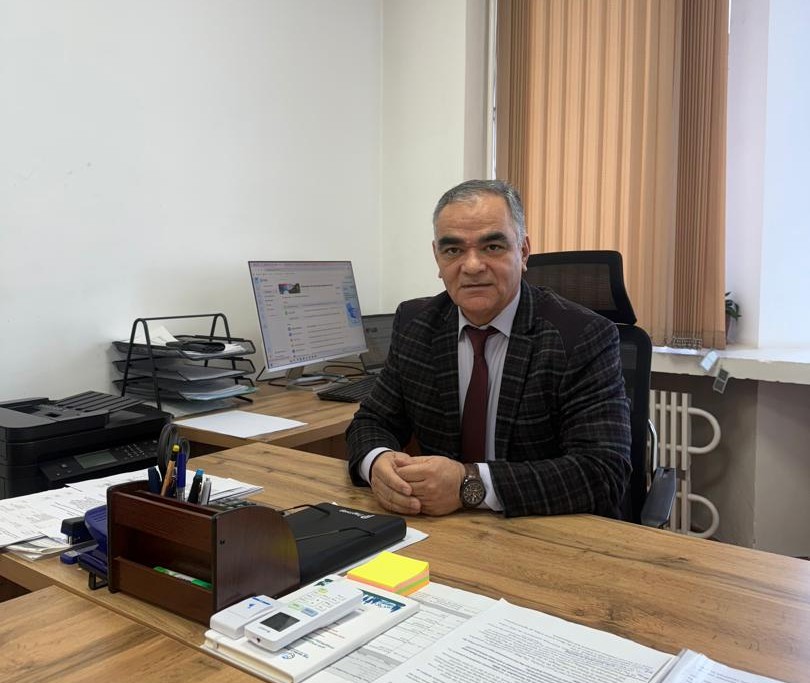
— First of all, I would like to note that our institution — the Project Management Unit for Agribusiness Development — manages and coordinates the project's implementation in Tajikistan. We facilitate collaboration among government agencies, the World Bank Group, the Pandemic Fund, and other partners involved in the initiative.
The project was launched in June 2025. Its defining feature is that it unites the efforts of four key government agencies: the Ministry of Health and Social Protection of the Population, the Ministry of Agriculture, the Committee for Food Security, and the Committee for Environmental Protection.
One of our notable achievements was the establishment of the National One Health Coordination Structure on March 28, 2026. This is a major institutional step, as it creates a foundation for more systematic cross-sectoral cooperation in addressing challenges related to infectious diseases, food security, and environmental risks.
Currently, work is underway to strengthen laboratory infrastructure, improve veterinary and epidemiological surveillance systems, develop digital tools, and build specialist capacity. Procurement of modern equipment, laboratory supplies, and specialized vehicles has begun and is ongoing.
However, I would not want to reduce the project's outcomes to material and technical upgrades alone. In my view, the most important shift lies in gradually shaping a new approach to problem-solving. We must learn to identify shared threats in a timely manner, exchange information, and make coordinated decisions rather than working in isolation within separate agencies. This is where I see the core value of the project for Tajikistan.
— Professional training for specialists is a key condition for the sustainability of the One Health system. How much emphasis will the project place on capacity building? What training and professional development opportunities are planned for specialists across different sectors — healthcare, veterinary medicine, agriculture, and environmental protection?
— I completely agree that human capital is one of the most critical conditions for the sustainability of the One Health system. You can build modern laboratories, purchase expensive equipment, and deploy digital systems, yet without qualified specialists capable of using these resources effectively, sustainable results will remain out of reach. Therefore, workforce training occupies a central place in the project.
For healthcare workers, training is planned in epidemiological surveillance, infectious disease prevention, laboratory diagnostics, and public health emergency response.
For veterinary specialists, particular focus will be placed on the prevention, detection, and control of zoonotic diseases, biosafety, and modern laboratory testing methods.
In the agricultural sector, training activities are scheduled for specialists of relevant institutions, alongside an update to the curriculum of the Veterinary Faculty at the Tajik Agrarian University to incorporate modern One Health principles.
For environmental sector specialists, training and practical instruction are planned in wildlife disease monitoring, bird migration, environmental factors, and transmission pathways of zoonotic infections.
In addition, the project includes joint cross-sectoral trainings, study tours, and knowledge exchange with international experts and specialized institutions.
Joint training for representatives from different agencies seems especially important to me. When a physician, a veterinarian, an agronomist, and an ecologist examine a single problem together, they gain a much better understanding of how their professional fields interconnect. Our objective is not merely to conduct a set number of training sessions, but to build a professional community of specialists who can collaborate effectively and sustain this work after the project concludes.
— A vital pillar of the One Health concept is containing antimicrobial resistance (AMR), which affects human and animal health, agriculture, and the environment. What measures are planned in this area under the project in Tajikistan?
— Antimicrobial resistance is indeed a serious issue causing global concern today. The danger lies in the fact that microorganisms gradually develop resistance to antimicrobial agents, including antibiotics. As a result, standard treatments for infectious diseases can become less effective.
It is important to recognize that this issue extends beyond human medicine. It is closely linked to veterinary care, livestock farming, food production, and environmental health. Combating antimicrobial resistance therefore requires an integrated approach.
The project provides support for implementing the National Action Plan on Antimicrobial Resistance. Specifically, we plan to develop multisectoral annual work plans that will align the activities of relevant government agencies and ensure more coordinated execution of planned measures.
Significant attention will also be given to training medical and veterinary specialists, upgrading laboratory capacities, and developing monitoring systems for antimicrobial residues. A dedicated component focuses on environmental safety: the project will build capacity to monitor antimicrobial residues and waterborne diseases.
Yet, in my opinion, another aspect is equally vital — a responsible attitude toward antibiotic use. Healthcare workers, veterinarians, and farmers must understand the consequences of the uncontrolled use of these drugs. The general public must also recognize that antibiotics should never be self-prescribed or taken without proper medical guidance.
We must understand that antimicrobial resistance is a shared challenge, and addressing it requires accountability from every stakeholder: the state, the professional community, agricultural producers, and citizens themselves.
— How important do you consider raising public awareness of One Health principles? Does the project include outreach and educational initiatives for citizens, farmers, and rural communities so that people better understand the links between human health, animal health, food quality, and the environment?
— I believe that without raising public awareness, it is impossible to fully implement the One Health concept. In reality, this concept affects every single person, even if they have never heard the term "One Health" before.
For example, when a farmer follows veterinary and sanitary standards in animal husbandry, they not only protect their own livestock but also reduce the risk of spreading infections to the public. When a producer ensures food safety, they make a direct contribution to protecting human health. And when society treats the environment, water quality, and waste disposal responsibly, it also helps prevent numerous diseases.
That is precisely why the project includes informational and educational activities aimed at raising awareness of priority infectious diseases, international health regulations, and climate factors affecting public health. Special attention will be directed toward veterinarians, farmers, livestock breeders, and rural residents.
The media, educational institutions, and local communities must play a significant role here. People need more than general information — they need clear, practical recommendations they can apply in everyday life. I am convinced that an informed and responsible citizen is a key participant in the disease prevention system. Consequently, we view public awareness not as a secondary track of the project, but as an essential prerequisite for its long-term success.
— Looking at long-term outcomes, what changes should the project bring to Tajikistan's healthcare, agriculture, and environmental sectors?
— I would like to begin by stating that the overarching goal of the project is not simply to improve the performance of individual government agencies, but to establish a more resilient national system for preventing, detecting, and responding to threats affecting human, animal, and environmental health.
For the healthcare system, this means stronger epidemiological surveillance capacities, improved laboratory diagnostics, and heightened readiness to prevent and respond to infectious diseases.
For agriculture and veterinary services, it means more effective veterinary control, improved animal disease monitoring, and safer products of animal origin.
For the environmental sector, it entails developing capacities to monitor ecosystem health, track wildlife diseases, and identify environmental factors that could pose threats to human and animal health in a timely manner.
However, I would like to highlight one more outcome — the advancement of interagency and regional cooperation. Tajikistan is situated in a region where challenges related to infectious diseases, animal movement, bird migration, food security, and environmental risks are transboundary in nature. Therefore, they cannot be resolved effectively at the national level alone.
Cooperation with Central Asian countries, sharing information and expertise, and adopting harmonized approaches to threat prevention and response are of great importance for all nations in the region. Ultimately, we aim to achieve a system in which medical, veterinary, agricultural, and environmental services can exchange information promptly, jointly assess risks, and take necessary action. I am confident that this approach will not only strengthen the country's preparedness for potential epidemiological threats, but also bolster food security, protect public health, and preserve natural resources.
In closing, I would like to underscore the core principle of the One Health concept: "Human health cannot be secured without animal health and environmental well-being." All these elements are inextricably linked and mutually influence one another. That is why safeguarding human health must begin not only in medical facilities, but also in agriculture, veterinary medicine, food safety systems, and environmental protection. I believe this embodies the core philosophy of One Health and its significance for the future of Tajikistan and the entire Central Asian region.
Background: The Regional Program “One Health for Pandemic Prevention, Food Systems Resilience, and Ecosystem Health in Central Asia” is implemented by five countries of the region and the Regional Environmental Centre for Central Asia (CAREC) with financial support from the World Bank Group, the Pandemic Fund, and the HEPR program. In the Republic of Tajikistan, the project is coordinated by the State Institution “Project Management Unit for Agribusiness Development.”
Shoira Toirova — PR Specialist, One Health Program, shoira.tajikistan@gmail.com
For further information:
Oxana Kravtsova — Regional Coordinator, CAREC One Health Program, okravtsova@carececo.org