
Every year on February 2, the global community celebrates World Wetlands Day.
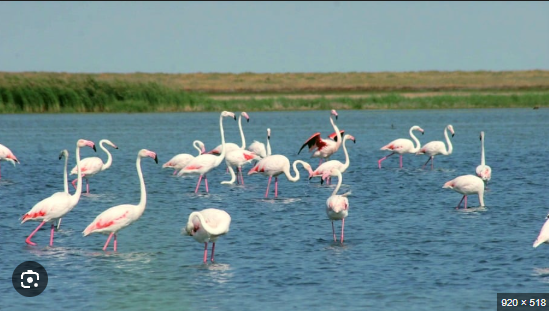
Photo: David Moon. Flamingos on Lake Tengiz, Korgalzhyn nature reserve.
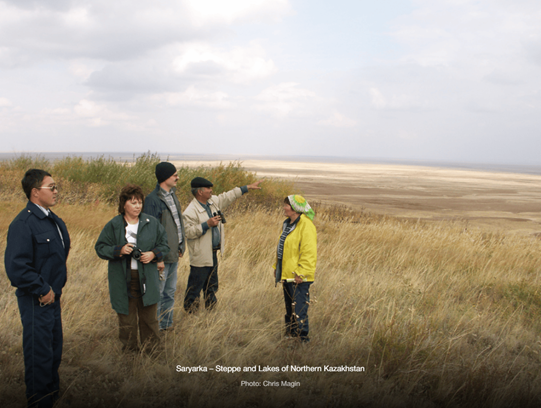
Фото: Chris Magin. Saryarka – Steppe and Lakes of Northern Kazakhstan
In 2026, the key theme is "Traditional Knowledge and Cultural Heritage," highlighting the inseparable and direct link between the state of water bodies and human well-being.
In recent decades, Central Asia has faced significant degradation of its wetland systems. Unique natural sites are turning into salt flats or disappearing entirely. The primary drivers of these changes include:
- Urban Transformation: Large-scale development of coastal zones and the filling of water bodies to expand urban infrastructure. The most resonant example in the region is the gradual destruction of the Maly Taldykol lake system in Astana (Kazakhstan). The development of these natural reservoirs not only destroys unique nesting sites for migratory birds (including flamingos)but also deprives megacities of natural flood protection and "cool islands," leading to urban overheating and a worsening microclimate for residents.
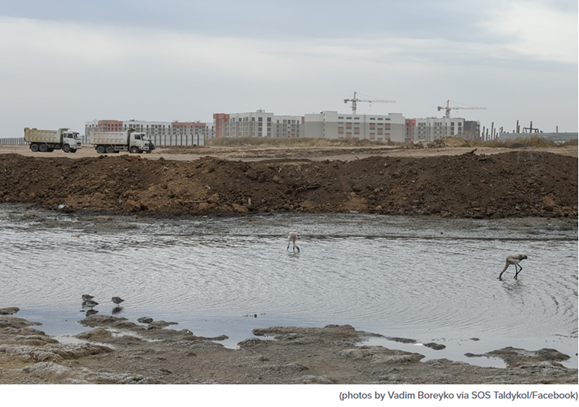
Photo: Vadim Boreyko via SOS Taldykol/Facebook
- Intensive Agriculture: High levels of water withdrawal from the Amu Darya and Syr Darya rivers restrict the replenishment of deltaic and floodplain lakes. A characteristic example is the degradation of the Amu Darya delta in Uzbekistan and the reduction of lake systems in the lower Syr Darya in Kazakhstan. Over the last 50–60 years, the area of active wetlands in these zones has decreased several times, and in the last decade, dozens of lake systems have completely dried up due to critical river flow deficits. This has led to massive fragmentation of natural habitats, the disappearance of unique tugai forests, and a total loss of the fishery value of these territories.
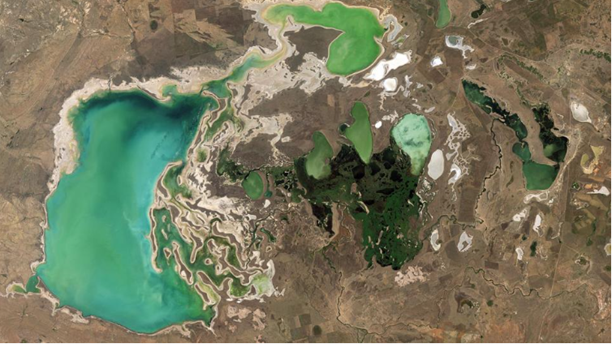
Photo: David Moon. View of Lake Tengiz from space
- Climate Change: Accelerated glacier melting and abnormally high evaporation disrupt the natural hydrological cycle. High-altitude lakes in the Pamir and Tien Shan mountains serve as vivid examples; due to glacier degradation, they lose stable replenishment and grow shallow. Similar processes are observed at Lake Balkhash and the lakes of Northern Kazakhstan: rising average annual temperatures lead to intensive evaporation, which, during low-water cycles, causes rapid salinization and a reduction in surface area.
- Technogenic Impact: Pollution from wastewater and the fragmentation of river channels by hydraulic structures. The construction of dams and hydroelectric power plants without maintaining environmental flow standards disrupts natural floodplain cycles, leading to the degradation of meadows and lakes along the Syr Darya and Ili rivers. Furthermore, turning water bodies into storage for industrial and drainage water (e.g., Lake Sorbulak near Almaty or industrial pollution of rivers in the mining regions of Tajikistan and Kyrgyzstan) causes chemical degradation of wetlands, destroying their self-purification capacity.
By losing wetlands, we lose:
Wetlands are critical stopover points for millions of migratory birds. The disappearance of even small water bodies deprives rare species, such as flamingos, Dalmatian pelicans, and white-headed ducks, of resting and nesting sites. Along with the water, the cultural landscape vanishes: traditional land-use methods that for centuries ensured harmony between man and nature.
The loss of wetlands is not only an ecological challenge but also a risk to socio-economic stability. Drying water bodies expose the bottom, which becomes a source of salt dust, correlating with an increase in respiratory diseases. In cities, wetlands mitigate the microclimate; their absence intensifies summer heat. Wetlands function as free natural filters ("kidneys") and water level regulators. Replacing them artificially would require billions in investments for treatment plants and drainage systems. The degradation of adjacent lands and the decline in biological productivity negatively affect both fisheries and agriculture as a whole.
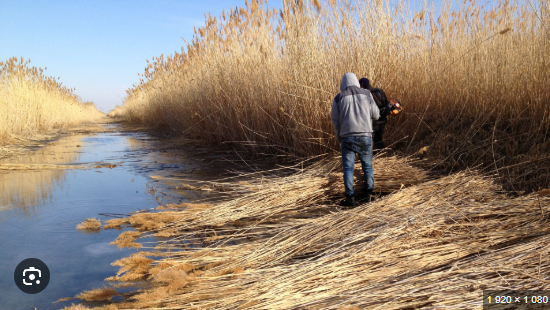
Photo: Aibek Samakov. Along the Syr Darya in Kazakhstan
The Path to Recovery
Preserving remaining wetlands and restoring degraded zones is not just an environmental initiative but a strategic investment in the water security of the entire region. The priority of short-term economic gains—whether from business or the state—must give way to responsibility for the future. Careful management of urban wetlands and the rational distribution of river flow to sustain these ecosystems is the only guarantee of a sustainable future for the next generations of Central Asian residents. Only then can we ensure that clean water and a healthy environment remains accessible to everyone. .
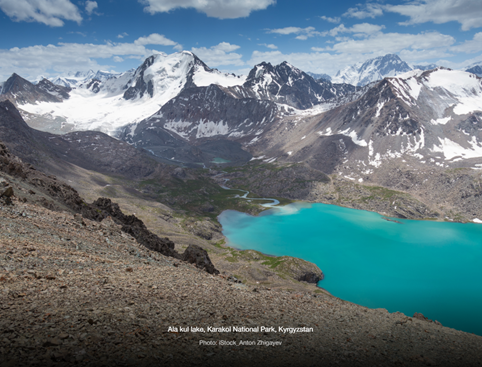
Photo: iStock_Anton Zhigayev. Ala kul lake, Karakol National Park, Kyrgyzstan

Lyudmila Kiktenko – Program Manager, Environmental Management Program, CAREC, lkiktenko@carececo.org