
June 12, 2025 – Samarkand, Uzbekistan
The Zarafshan River plays a critical role in providing water resources for the economies of Uzbekistan and Tajikistan. Approximately 7.5 million people live within the basin, the majority of whom reside in Uzbekistan, where large agricultural clusters are located in the Samarkand, Navoi, and Bukhara regions. In contrast, the upper part of the basin in Tajikistan is predominantly home to small-scale farmers, mainly engaged in rice cultivation around the Penjikent area.
Currently, Uzbekistan uses around 94% of the Zarafshan River’s water resources, leaving 6% for Tajikistan. However, this water use balance may shift in the future, as Tajikistan plans to expand irrigated lands by converting pasturelands into agricultural fields to meet the needs of a growing population and to strengthen national food security.
Climate change is already having a significant impact on the region. The Zarafshan basin is experiencing water shortages, extreme weather events, frequent droughts, and floods. In the long term, rising temperatures and the earlier onset of snowmelt may lead to a reduction in water availability during the growing season, which is the most critical period for irrigation and agriculture. These challenges call for integrated and coordinated solutions among the basin countries, especially considering the transboundary nature of climate risks.
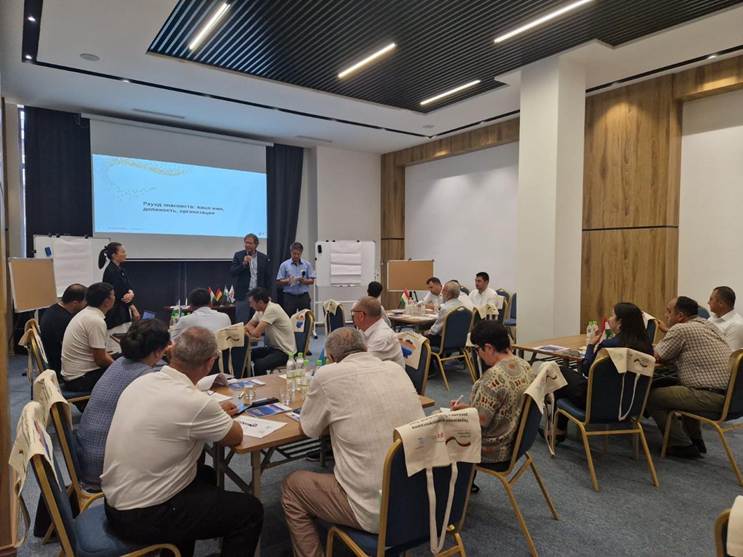
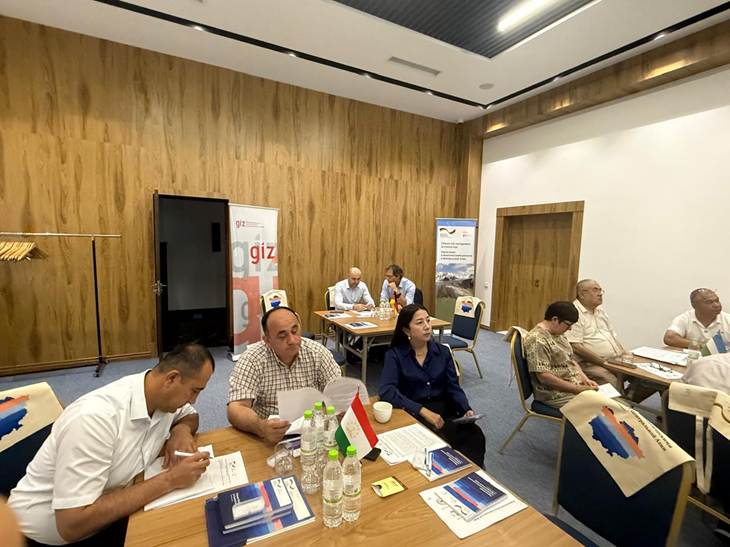
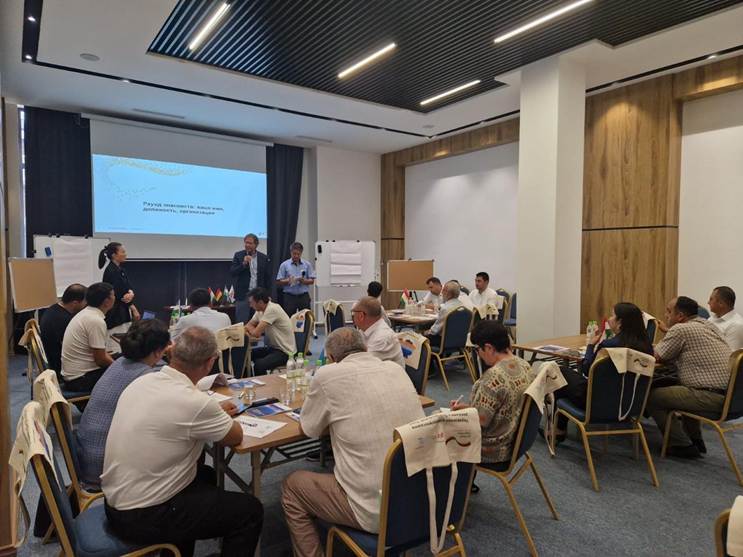
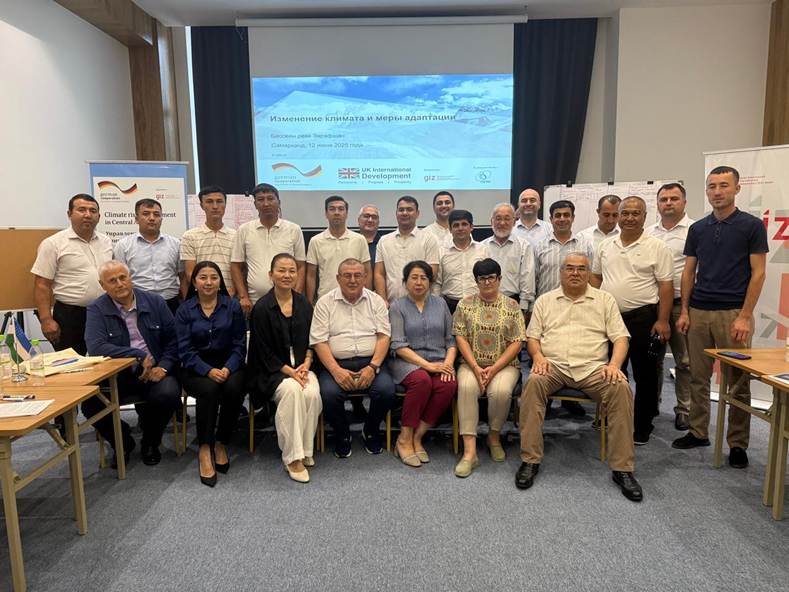
To enhance cooperation on climate change adaptation, a training workshop was held on June 12 in Samarkand, organized by the Regional Environmental Centre for Central Asia (CAREC) within the framework of the project “Climate Risk Management in Central Asia”, implemented by the Deutsche Gesellschaft für Internationale Zusammenarbeit (GIZ) on behalf of the Federal Ministry for Economic Cooperation and Development of Germany (BMZ).
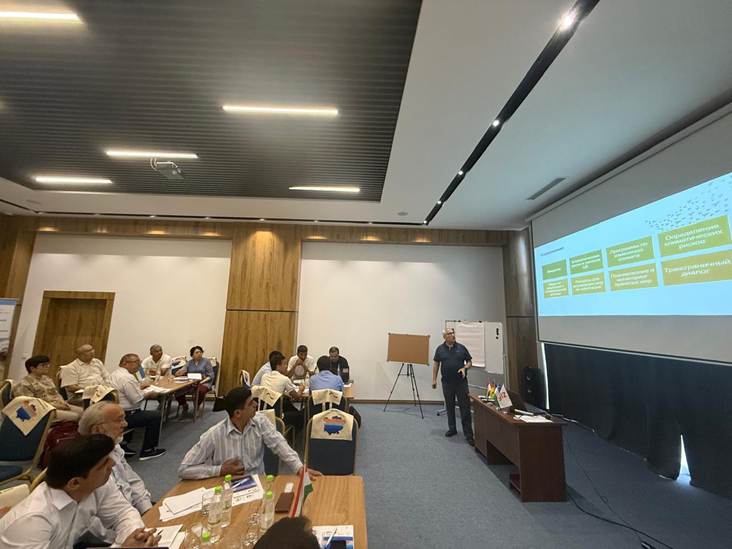
The event brought together 20 participants from Tajikistan and Uzbekistan, including representatives of water management and environmental agencies, hydrometeorological services, emergency response institutions, and local authorities. Members of the Basin Council of the Uzbek part of the Zarafshan River Basin, established with the support of CAREC and Caritas Switzerland, also took part in the training.
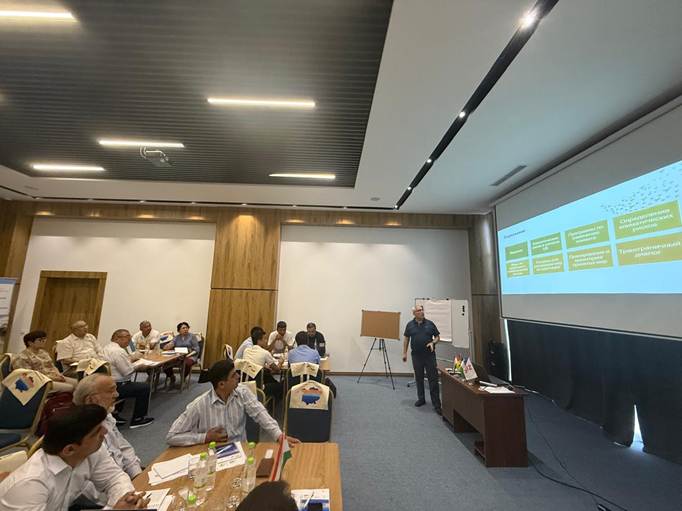
The training aimed to build practical knowledge among decision-makers on integrating climate adaptation measures into territorial planning—at the regional and district levels, as well as within national adaptation and basin plans. Participants reviewed the results of the climate risk assessment for the Zarafshan River Basin and discussed pathways for institutionalizing these measures, including their incorporation into strategic and programmatic planning processes.
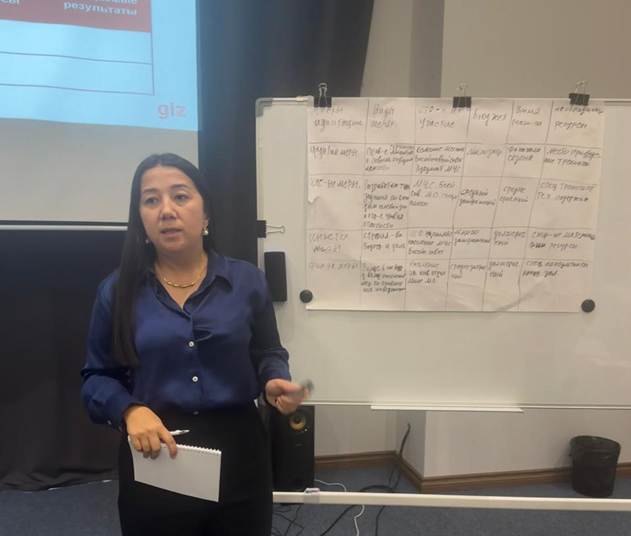
Special attention was given to coordination issues between the two countries. Participants explored mechanisms for information exchange, opportunities for interagency collaboration, and approaches for joint responses to climate challenges, taking into account the transboundary context.
For more information, please contact:
Irina Yugay, Acting Manager, Water Initiatives Support Program, CARECwisspecialist@carececo.org
Vladimir Grebnev, Regional Climate Change Specialist, CAREC cc_specialist@carececo.org