

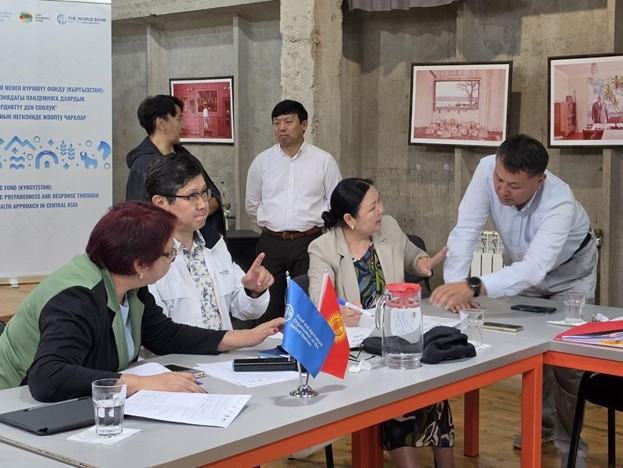
On July 1–2, the Coordination Meeting of the National "One Health" Committee—under the Public Health Coordination Council of the Cabinet of Ministers of the Kyrgyz Republic—took place in the Kemin District of the Chuy Region.
The meeting was organized within the framework of the project "Pandemic Fund (Kyrgyzstan): Pandemic Preparedness and Response Using the 'One Health' Approach in Central Asia." This initiative covers Kazakhstan, Kyrgyzstan, Tajikistan, Turkmenistan, and Uzbekistan, and is implemented with the support of the Pandemic Fund and the Quadripartite Alliance for One Health.
The project helps countries in the region strengthen their readiness for major disease outbreaks and manage pandemic and epidemic risks more effectively. At the core of the "One Health" approach is the interconnectedness of human, animal, and environmental health.

The main theme of the meeting was coordination between three key sectors: healthcare, veterinary medicine, and environmental protection.
The event brought together representatives from the Ministry of Water Resources, Agriculture, and Processing Industry; the Ministry of Health; the Ministry of Natural Resources, Ecology, and Technical Supervision of the Kyrgyz Republic; the Presidential Administration of the Kyrgyz Republic; CAREC; as well as regional experts and specialists.
CAREC Presents Regional Work Plans and Tools
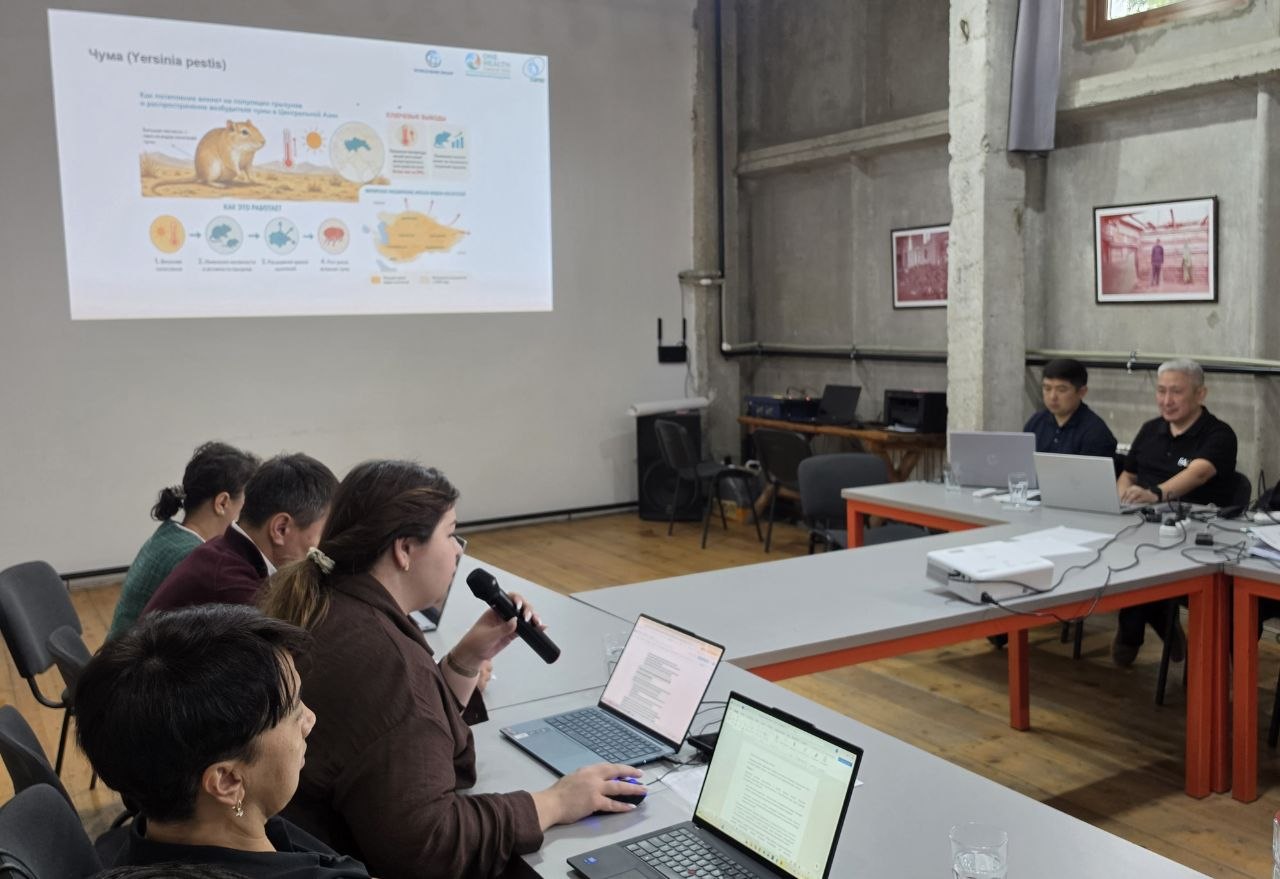
Oksana Kravtsova, Regional Manager of the "One Health" program at the Regional Environmental Centre for Central Asia (CAREC), presented the structure of the program's Regional Secretariat, alongside CAREC’s plans and strategic actions to promote the "One Health" approach across Central Asia.
The CAREC team also introduced key tools for project implementation, including:
-
Measurable indicators of agency readiness for pandemic threats.
-
Workforce capacity assessments.
-
Regular monitoring of decision implementation at the regional level.
Special attention was given to communication: rapid information exchange between agencies, strengthening cross-country cooperation, and developing specialized knowledge-sharing tools. Participants emphasized that an effective response to public health threats requires cross-sectoral collaboration, the exchange of expertise, and sustained cross-border communication.


From Coordination to Joint Action
During the practical sessions, participants discussed an intersectoral emergency preparedness plan for personnel and began developing Standard Operating Procedures (SOPs) and rapid response teams for cross-sectoral cooperation.
Analytical data revealed a shortage of specialized professionals, including epidemiologists and veterinarians. To address this, participants modeled response scenarios for outbreaks of dangerous zoonotic infections (diseases that jump from animals to humans), such as anthrax, brucellosis, rabies, and echinococcosis.
Key Takeaway: Early warning of outbreaks is a tool for responsible risk management, not a threat to the reputation of an individual sector or country.

Shared Threats Demand Shared Solutions
For Kyrgyzstan, adapting the region's advanced scientific research and practices is particularly critical. Because Central Asian countries share connected ecosystems, they require:
- Joint monitoring of wildlife migration.
- Studies on how climate change impacts the spread of disease vectors (like insects or ticks).
- Integration of digital epidemiological surveillance systems.
Such approaches will help identify and prevent threats before they escalate into large-scale crises.

Following the meeting, participants prepared a package of practical recommendations and outlined next steps for integrating SOPs and digital monitoring tools into the biological security systems of Central Asian countries.
By Shoira Toirova, PR-specialist “One Health” Program