

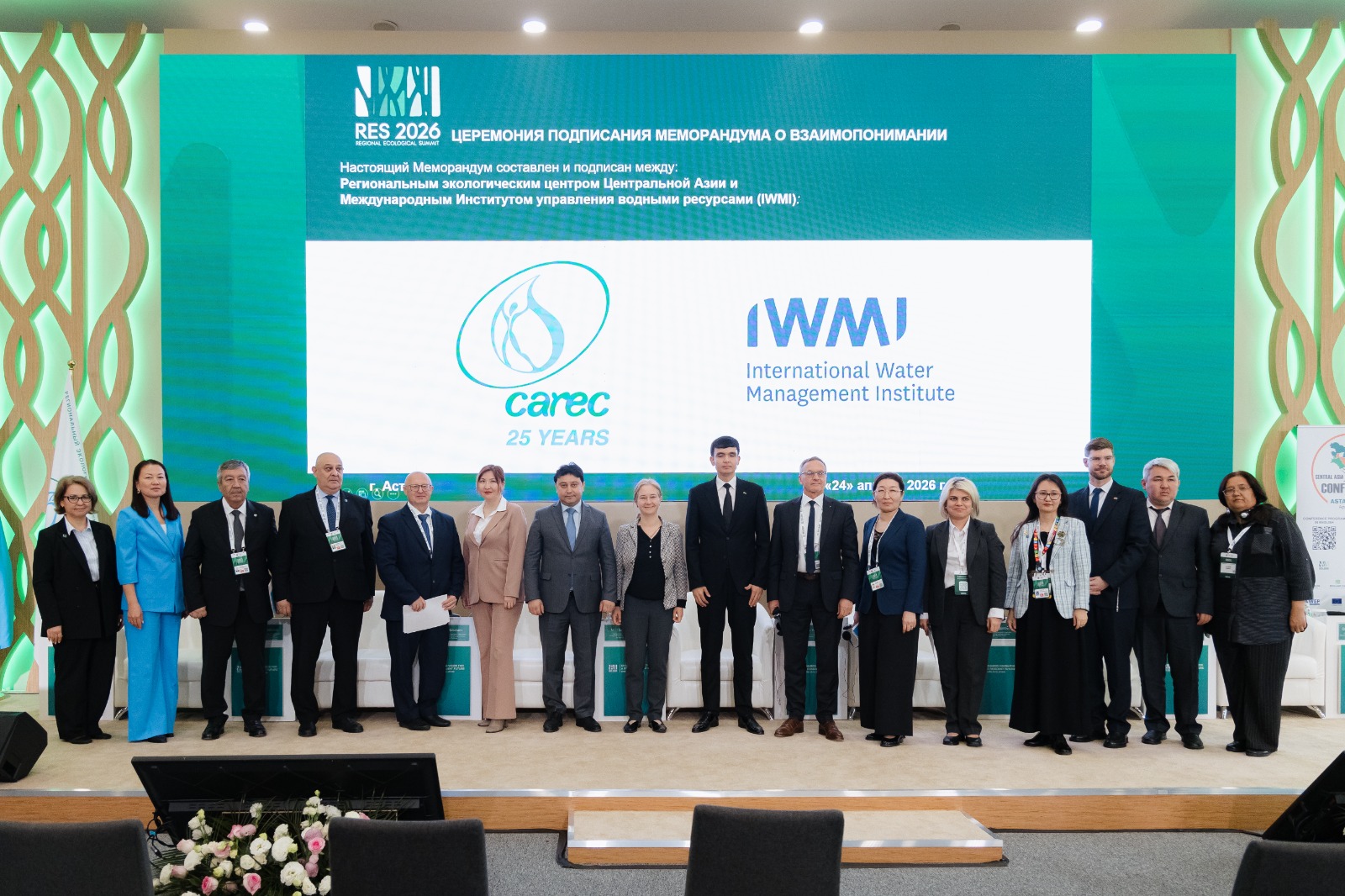
Photo credits: IWMI
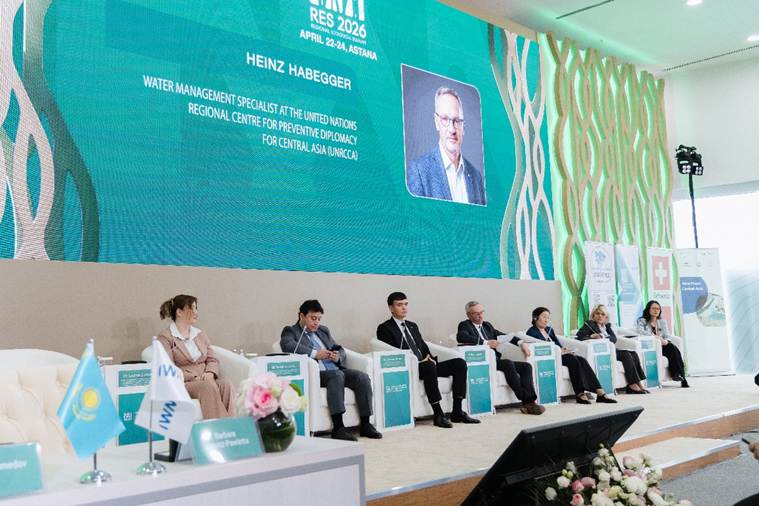
ASTANA, April 24, 2026 — As part of the Central Asian Climate Change Conference (CACCC-2026), held on the sidelines of the Regional Environmental Summit, a session of the Blue Peace Central Asia project titled “Water Resources Management under Climate Impact” took place.
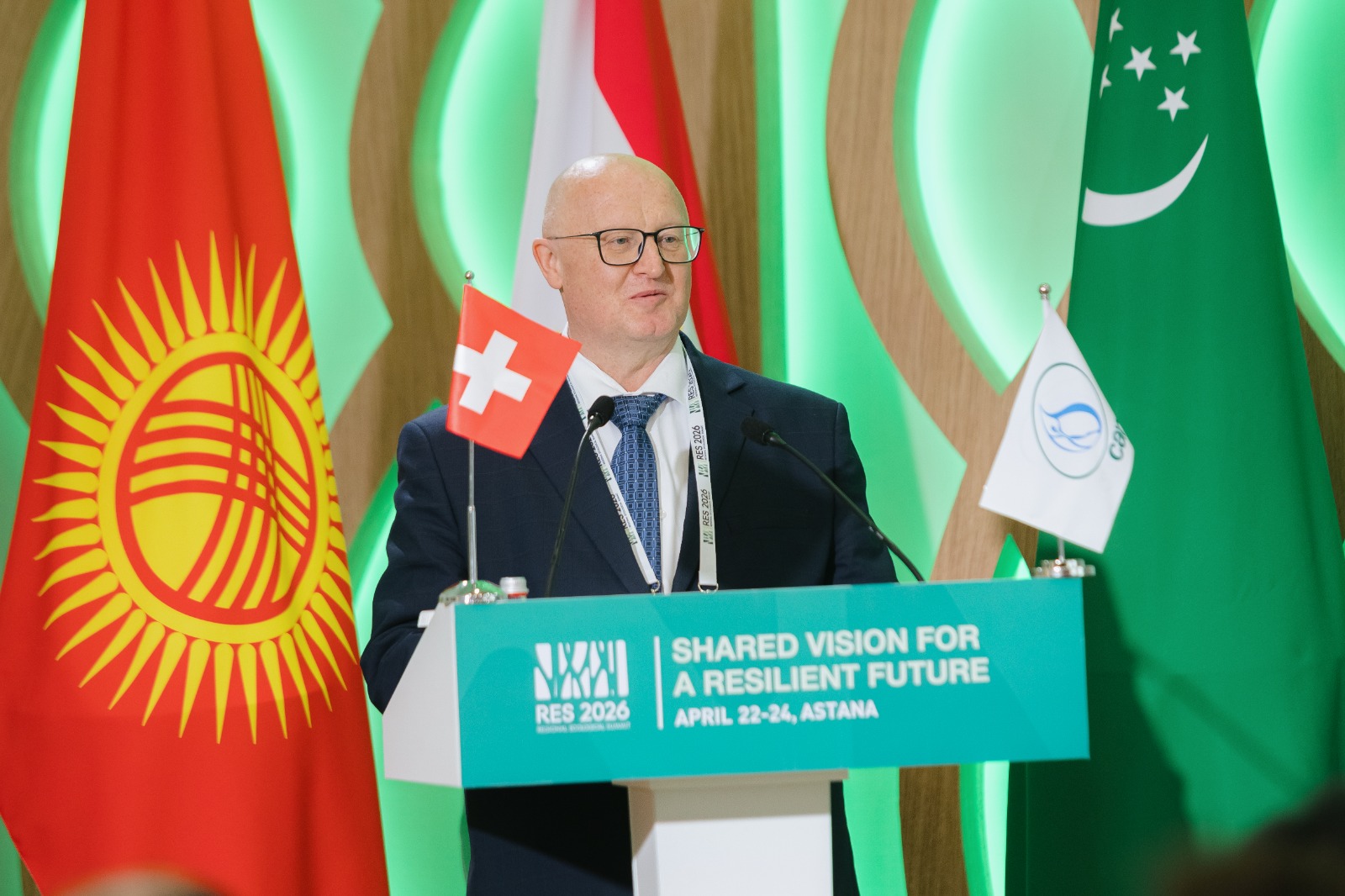
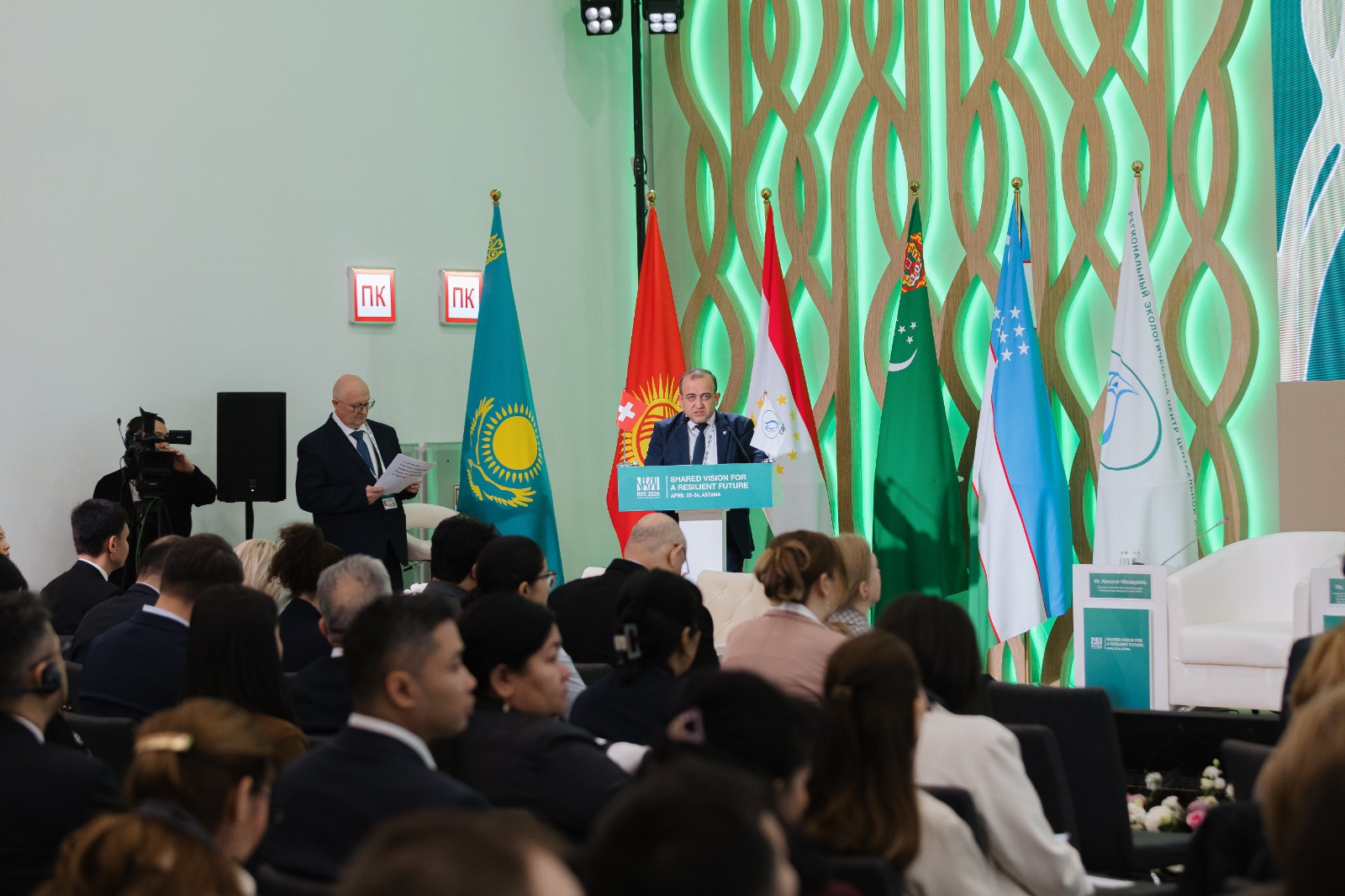
Photo credits: IWMI
The event, organized by the Regional Environmental Centre for Central Asia in cooperation with the International Water Management Institute and with financial support from Switzerland, brought together representatives of the five countries of the region and international partners.
The session was opened by Talgat Momyshev, Vice Minister of Water Resources and Irrigation of the Republic of Kazakhstan, who emphasized the importance of the Blue Peace Central Asia initiative as a platform for moving from dialogue to practical action, including in the field of climate adaptation.
.jpeg)
The session was opened by Talgat Momyshev, Vice Minister of Water Resources and Irrigation of the Republic of Kazakhstan, who emphasized the importance of the Blue Peace Central Asia initiative as a platform for moving from dialogue to practical action, including in the field of climate adaptation.
“Blue Peace Central Asia creates real opportunities for building sustainable mechanisms of transboundary cooperation and moving from discussions to concrete solutions,” he noted.
The central event of the session was the presentation of the strategic document developed within the project — the Regional Concept of Water and Climate Actions.
The document is based on the analysis of more than 240 unified indicators across five Central Asian countries and provides an evidence-based foundation for developing a common regional approach to climate adaptation in the water sector.
The key strategic priorities for regional cooperation identified include:
– development of climate-resilient monitoring and forecasting systems;
– promotion of the regional GLOFCA network for Glacial Lake Outburst Flood early warning;
– establishment of a regional climate services center based on joint climate modeling;
– harmonization of approaches to water quality monitoring;
– development of joint water-energy solutions and benefit-sharing mechanisms.
Special attention was given to the degradation of the cryosphere and the need to update the evidence base for risk management in transboundary river basins.
The keynote speaker of the session, Iskandar Abdullaev, Senior Researcher at International Water Management Institute, noted that climate risks, including drought, have long gone beyond national borders, and the way countries respond to these risks has become a test of mutual trust.
“Drought in the transboundary basins of Central Asia is not a local climate problem, but a shared regional risk that requires joint data, agreed rules, and coordinated actions at the basin level. The most effective investment lies in shared data, shared rules, and joint adaptation measures,” he emphasized.
Another speaker, Saltanat Zhakenova, regional climate change expert, stressed that unilateral water management is becoming increasingly unviable.
.jpg)
Photo credits: IWMI
.jpeg)
“The climate challenges facing the region, combined with the current institutional realities, make unilateral water resources management structurally impossible. The window for preventive action is rapidly narrowing,” she noted.
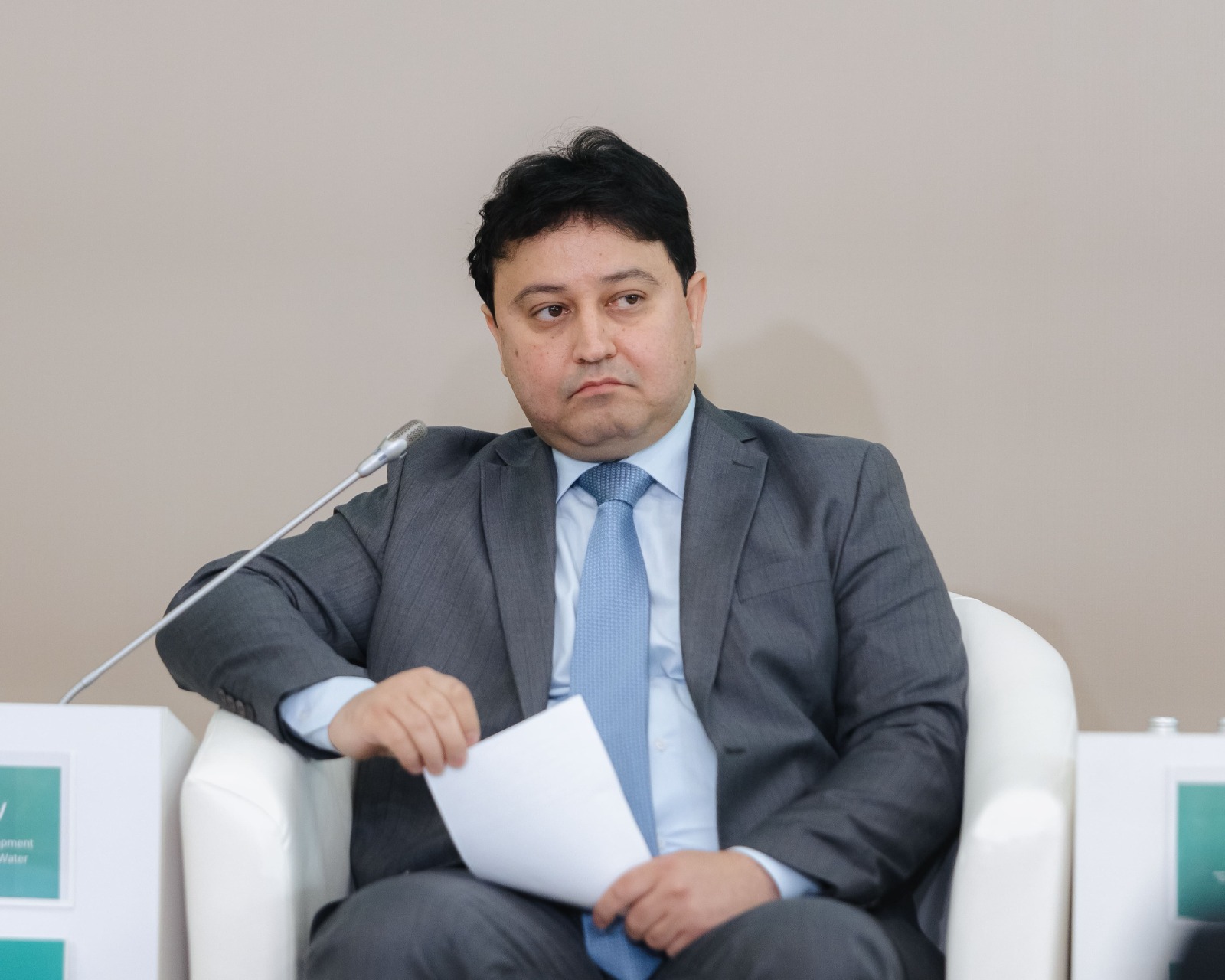
Panel speakers representing профильные government agencies from Kazakhstan, Tajikistan, Turkmenistan, and Uzbekistan confirmed that the identified regional priorities are already being reflected in national reforms and strategies, creating a foundation for further alignment of approaches.
.jpg)
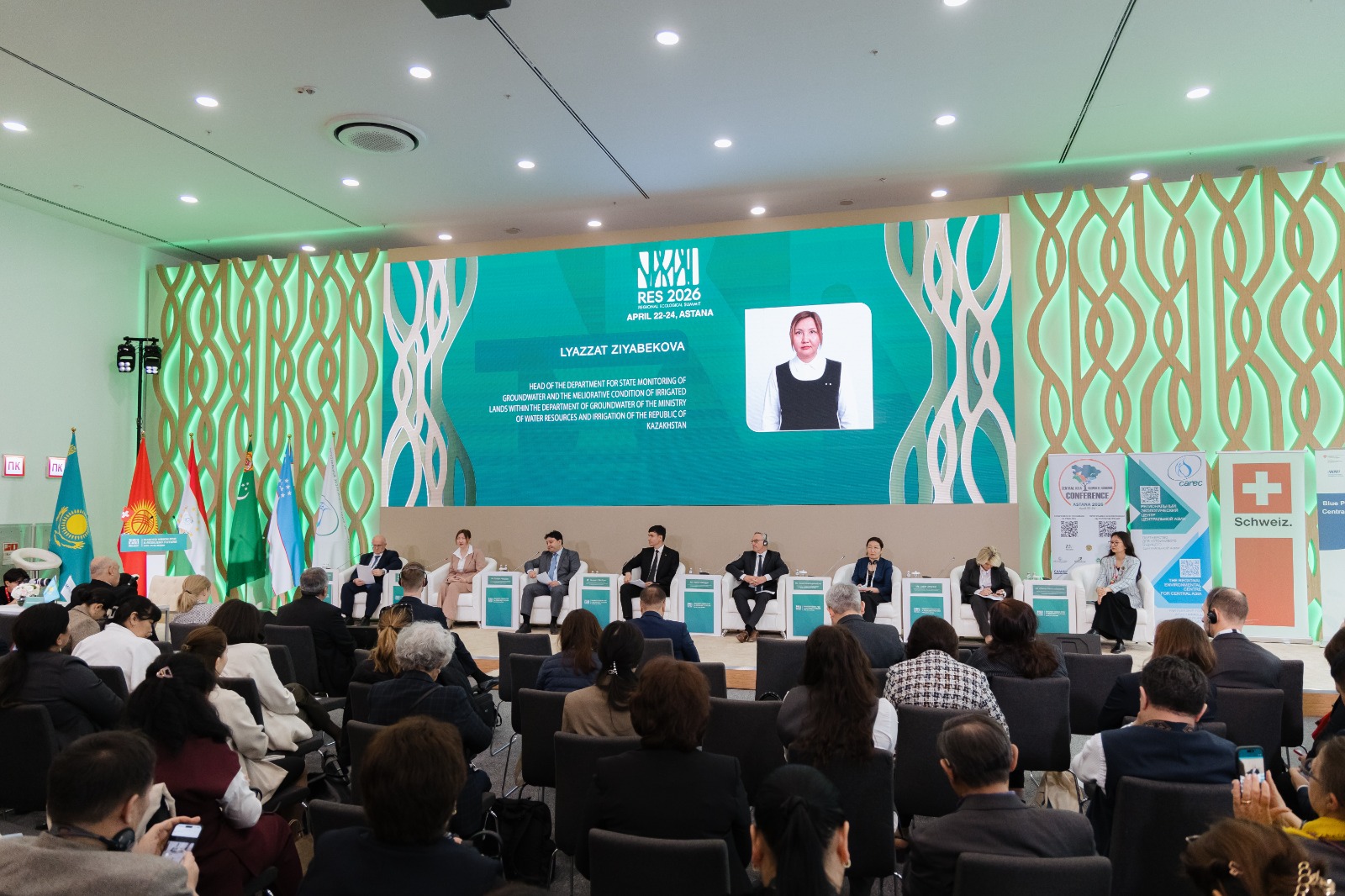
Photocredits: IWMI
Representatives of international organizations and the expert community emphasized that full regional cooperation across the Aral Sea basin is impossible without institutional strengthening of the International Fund for Saving the Aral Sea, the development of bilateral and trilateral working groups, and the active involvement of Afghanistan in the regional water dialogue.
Special emphasis was also placed on the need for inclusive decision-making, including the participation of the scientific community, local communities, and strengthening the role of women in local water resource management.
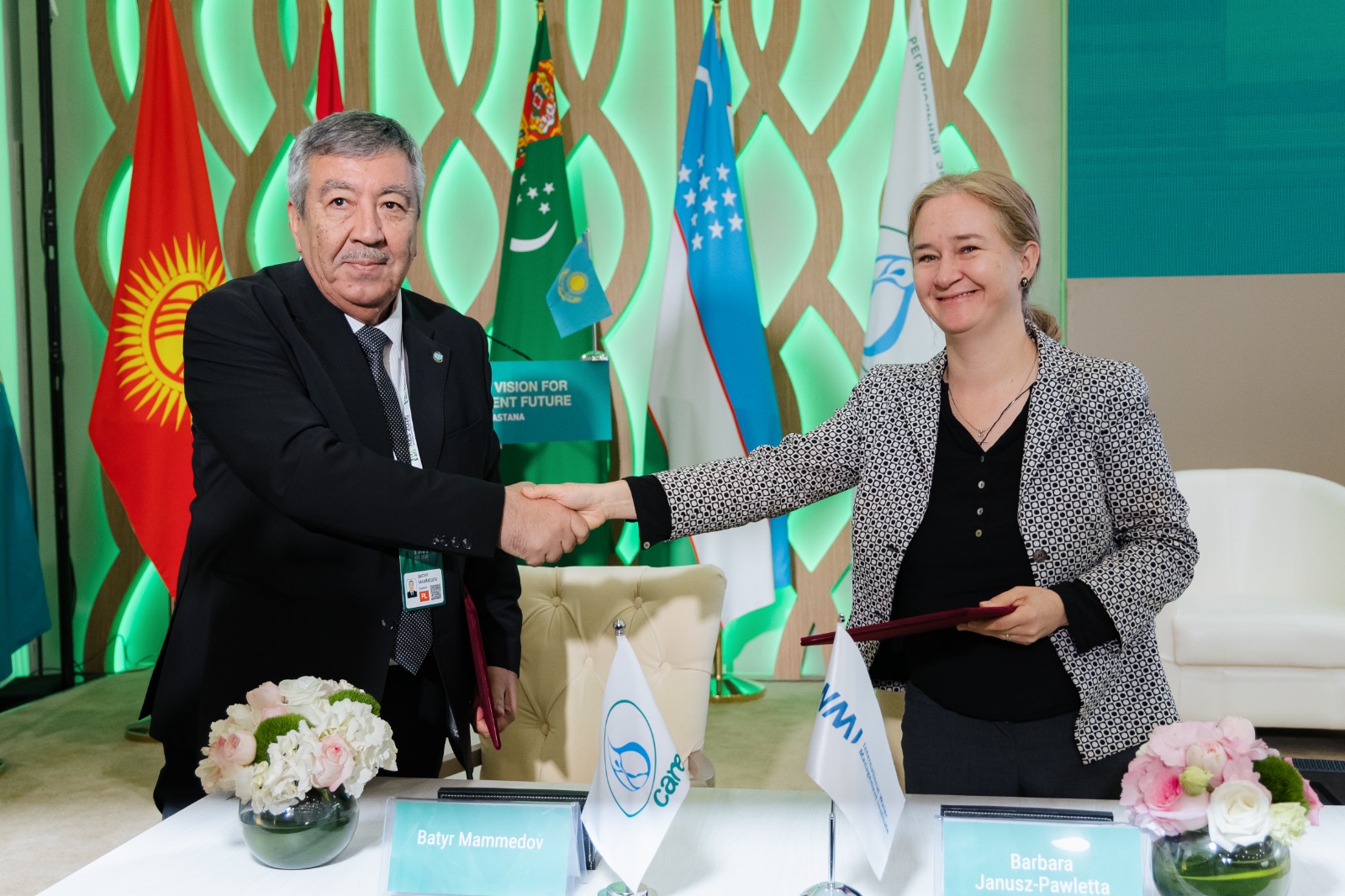
A practical outcome of the session was the strengthening of institutional partnerships. A ceremonial signing of Memorandums of Understanding took place between the Ministry of Water Resources and Irrigation of the Republic of Kazakhstan and International Water Management Institute, as well as between Regional Environmental Centre for Central Asia and IWMI.
These agreements establish the foundation for the joint implementation of projects in climate-resilient water resources management and the further advancement of regional cooperation in Central Asia.
.jpeg)
Photocredits: IWMI
The Blue Peace Central Asia initiative (2025–2029) aims to support sustainable water resources management and promote water diplomacy in the region’s transboundary basins.
The project includes three main areas: hydro-diplomacy, implementation of projects for basin and investment planning on small transboundary rivers, and capacity building for young professionals and women.
Blue Peace promotes a multi-level and multi-stakeholder approach to water governance in Central Asia. Special attention is given to equitable distribution and efficient management of water resources in close connection with the region’s socio-economic development and stability.
The project is implemented by a consortium of International Water Management Institute and International Union for Conservation of Nature in partnership with Regional Environmental Centre for Central Asia.
Additional Information:Irina Yugay — Acting Program Manager, CAREC Water Initiatives Support Program i.yugay@carececo.org