

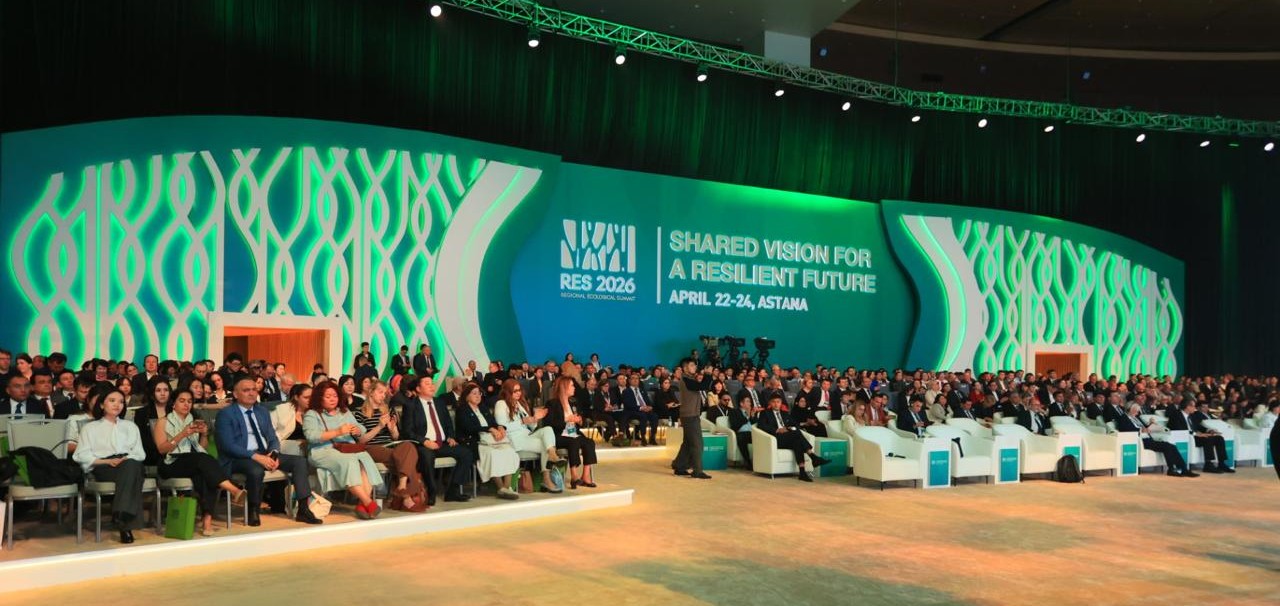
The eighth Central Asian Climate Change Conference (CAKIC-2026) has opened in Astana. Over the years, the conference has become a key regional platform for dialogue, knowledge exchange, and the development of practical climate solutions.
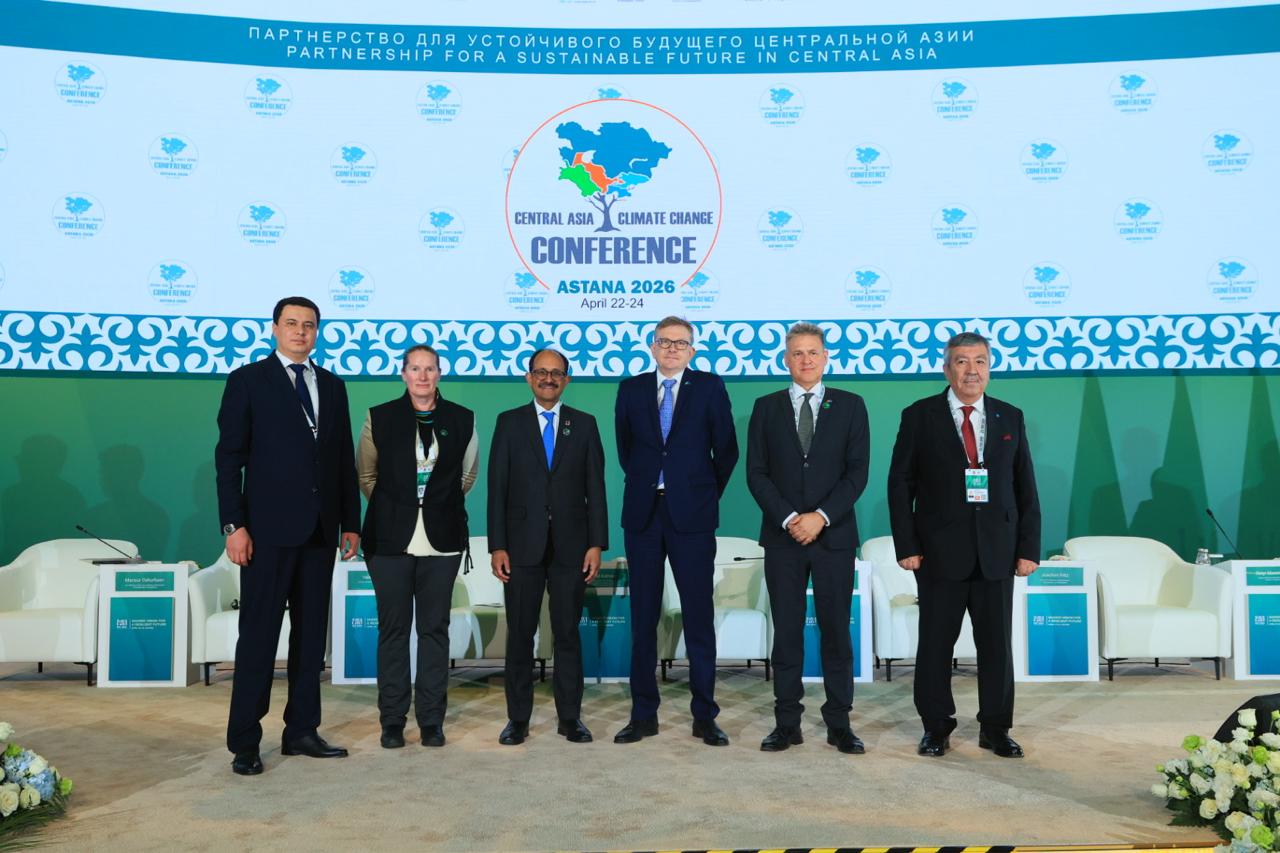
In his address at the plenary session, Vice Minister of Ecology and Natural Resources of the Republic of Kazakhstan, Mansur Oshurbayev, emphasized that climate change is already having a tangible impact on Central Asian countries, affecting water resources, energy systems, agriculture, and overall quality of life. In this context, the climate agenda is increasingly viewed not only as an environmental priority, but also as an economic one.
Particular attention was given to the need to advance sustainable development and transform energy systems. For the region, this implies simultaneously ensuring energy security, modernizing infrastructure, and reducing the carbon intensity of the economy.
It was noted that Kazakhstan is consistently implementing its commitments under the Paris Agreement, including its updated Nationally Determined Contribution through 2035, while shifting focus toward practical implementation of climate objectives. The country is developing a roadmap toward carbon neutrality by 2060, improving its emissions trading system, and undertaking efforts to reduce methane emissions.
In parallel, a national climate change adaptation plan is being developed, aimed at reducing the vulnerability of the economy and regions to climate-related risks.
In conclusion, the importance of regional cooperation was underscored, as issues related to water resources, energy, and climate require coordinated action among all Central Asian countries. The conference is expected to contribute to strengthening such cooperation and advancing joint solutions.
Valerie Hickey, World Bank Group Director Environment, highlighted Central Asia’s growing global leadership in shifting the climate agenda from commitments to real implementation. The region was praised not only for setting ambitious goals, but for delivering tangible results—particularly by treating investments in energy, water, and nature as opportunities for economic growth rather than constraints.
It was emphasized that countries in the region are moving beyond simply identifying climate challenges and are actively leveraging them to create jobs, stimulate growth, and improve living standards while advancing environmental sustainability. Central Asia was presented as a model of how economic development and environmental protection can go hand in hand, rather than being competing priorities.
A key factor behind this progress is the region’s focus on building strong foundations for private sector investment. This includes developing critical infrastructure—especially in energy and water—and creating a stable, predictable regulatory environment that encourages business participation while easing pressure on public finances.
The speaker also outlined several major international initiatives supporting this transition. These include significant investments in regional energy connectivity to create a shared power market, as well as coordinated efforts with international partners to improve water and energy management through technical assistance and financing.
In addition, Central Asia is leveraging its natural resources as a cost-effective solution for climate resilience and sustainable development. Programs aimed at enhancing land productivity, protecting ecosystems, and creating new economic value chains were highlighted as examples of this approach.
In conclusion, the region was described as a strong and effective coalition of countries working together to drive economic growth, expand opportunities, and build a sustainable, livable future.
Sir Jim Skea, Chair of the Intergovernmental Panel on Climate Change (IPCC), outlined the role of the Intergovernmental Panel on Climate Change (IPCC) and highlighted key global and regional climate challenges. The IPCC was established as a UN body that provides policymakers with scientific assessments on climate change, its impacts, future risks, and possible adaptation and mitigation strategies. Importantly, it is not purely a scientific institution but an intergovernmental platform that connects science with policymaking.
All 195 member states of the United Nations and the World Meteorological Organization participate in the IPCC process. Each assessment cycle, typically lasting around seven years, involves the election of scientific leadership and the work of hundreds of volunteer scientists who produce comprehensive reports. These reports undergo rigorous review by experts and governments before being formally approved, making the IPCC process one of the most authoritative and thorough in environmental science.
According to the findings of the sixth assessment cycle, exceeding 1.5°C of global warming above pre-industrial levels is now almost inevitable in the coming years. Under current policies, global temperatures could rise by 2.8°C by the end of the century, and even if all national commitments are fulfilled, warming is still expected to reach around 1.9°C—exceeding the safer 1.5°C threshold.
The speaker emphasized that risks such as wildfires, permafrost degradation, biodiversity loss, and water scarcity increase significantly beyond 1.5°C of warming. With global temperatures already rising by about 1.4°C, the world is beginning to experience more frequent extreme weather events, including floods and wildfires.
Special attention was given to Central Asia, which faces a unique combination of gradual and extreme climate risks. One of the most critical issues is the rapid loss of glacier mass in high mountain regions, which could decline by up to 70% by the end of the century. This would significantly reduce water availability, with river runoff in glacier-fed basins potentially decreasing by more than 10%.
The speaker also noted that climate change interacts with human activities, particularly in land and water management. Increased groundwater extraction, changing precipitation patterns, and unsustainable agricultural practices are likely to intensify soil erosion and desertification. As a result, aridity in Central Asia is expected to increase rapidly, placing additional pressure on ecosystems and regional economies.
Prepared by Zhanna Khusainova, Consultant / Public Relations and Communications Expert, CAREC, pr@carececo.org
--------------
The Central Asia Climate Change Conference (CACCC-2026) is organized by the Regional Environmental Centre for Central Asia (CAREC) under the World Bank’s Central Asia Resilient Landscapes Restoration Program (RESILAND CA+) in collaboration with the Central Asia Water and Energy Program (CAWEP), the World Bank, and Deutsche Gesellschaft für Internationale Zusammenarbeit (GIZ) GmbH, with additional support from other programs and partners.
The Central Asia Water and Energy Program (CAWEP) is a partnership between the World Bank, the European Union, Switzerland, and the United Kingdom aimed at strengthening water and energy security at both the regional and national levels in the context of a changing climate.