

Rome, Italy, 21 September 2026. — Tajikistan’s experience in advancing food security and developing sustainable production systems was presented at the FAO Global Conference on One Health Action in Agrifood Systems, taking place from 21 to 23 September at the headquarters of the Food and Agriculture Organization of the United Nations (FAO) in Rome.
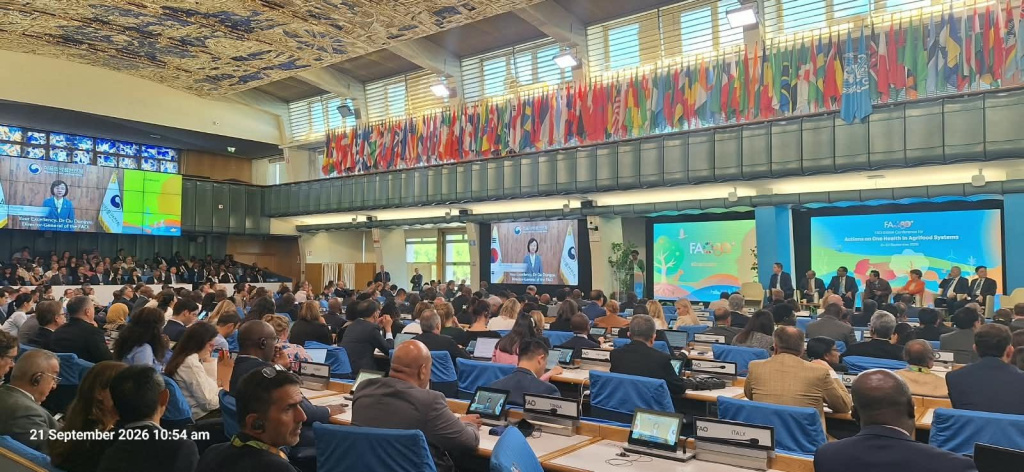
The main theme of the conference is “One Health in Agrifood Systems — Everyone’s Health, Everyone’s Responsibility, Everyone’s Action.”
The conference focuses on the practical application of the One Health approach in agrifood systems. Participants are discussing how coordinated action across different sectors can contribute to strengthening food security and the resilience of production systems, reducing risks to human, animal and plant health, and promoting the sustainable use of natural resources.
Key topics include climate change, biodiversity loss, emerging diseases, antimicrobial resistance, food safety, and the resilience of agrifood systems.
Tajikistan at the High-Level Plenary Session
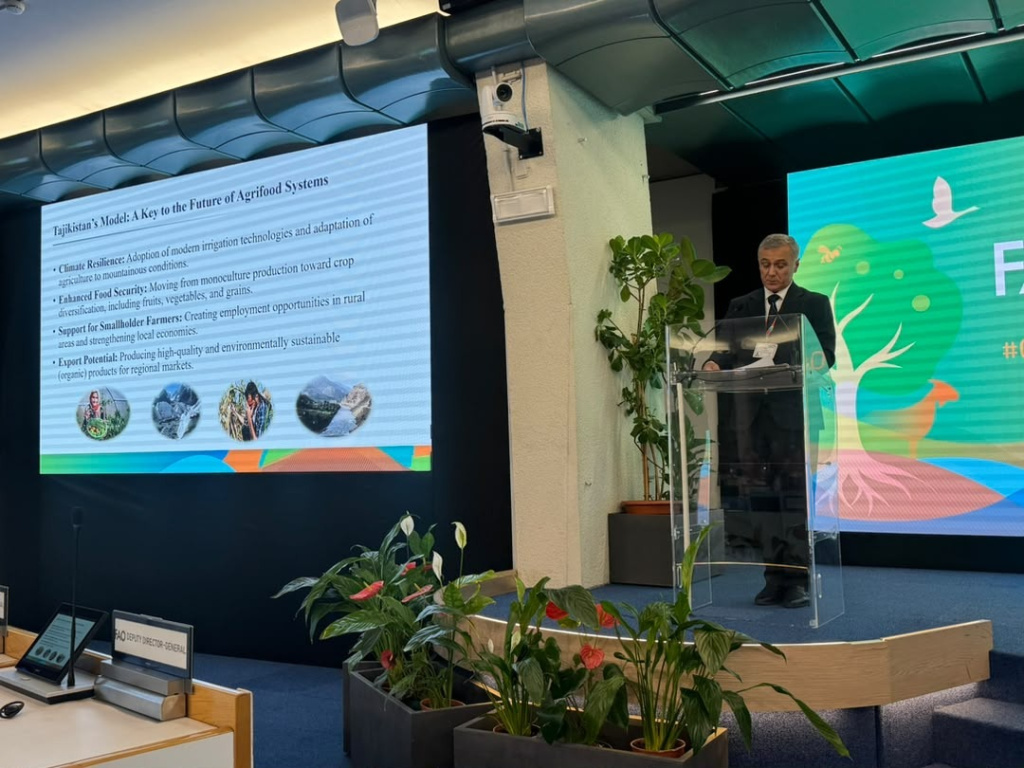
On 21 September, as part of the conference’s high-level plenary programme, Muhammadsaid Fayzullozoda, Chairman of the Food Safety Committee under the Government of the Republic of Tajikistan, delivered a keynote presentation entitled “Ensuring Food Security through Healthy Production Systems.”
At the beginning of his address, he expressed appreciation to FAO, the World Bank and other international partners for their support to Tajikistan in strengthening food security, developing veterinary and phytosanitary systems, and implementing measures to prevent risks to public health and ecosystems.
The Chairman presented Tajikistan’s experience in institutional coordination for food safety to an international audience. The mandate of the Food Safety Committee covers veterinary services and animal health, phytosanitary measures and plant protection, control of products of animal origin, prevention of the spread of quarantine diseases, as well as quality control of seeds, genetic material and food products at different stages of the food chain.
This integrated approach brings together different areas of control and helps identify risks associated with food production and safety at an early stage.
Healthy Production Systems
A central point of the presentation was the need for closer cooperation among sectors and timely information exchange. Tajikistan’s presentation highlighted that fragmented institutional approaches and insufficient data sharing can complicate the management of risks that simultaneously affect agriculture, human and animal health, and natural resources. Cross-sectoral coordination through the One Health approach was presented as one of the ways to address these challenges.
Particular attention was given to the need to balance increased agricultural productivity with the conservation of natural resources and the prevention of long-term risks. Agricultural development, for example, should not contribute to increased antimicrobial resistance, soil degradation or the depletion of water resources.
The presentation also emphasized the importance of considering the economic, social and environmental consequences of policy and production decisions and ensuring safe and sustainable production for future generations.
The presentation further highlighted the role of the Food Safety Committee in overseeing different stages of the production chain — from cultivation and production to processing, storage, transportation and the distribution of food products.
Regional Cooperation
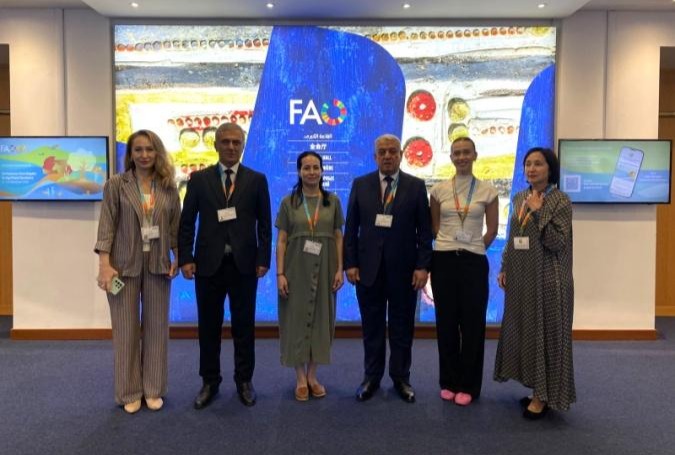 Tajikistan’s participation in the global conference is supported through the expertise and organizational assistance of the One Health Programme in Central Asia implemented by the Regional Environmental Centre for Central Asia (CAREC).
Presenting Tajikistan’s national experience at the FAO platform provided an opportunity to exchange knowledge and practices with international partners and to discuss further cooperation in the areas of food security, sustainable agricultural production and One Health.
Tajikistan reaffirmed its commitment to continued international and regional cooperation, the use of best practices, and participation in joint initiatives aimed at further strengthening food safety and food security systems.
Background Information
Food Safety Committee under the Government of the Republic of Tajikistan
The Food Safety Committee under the Government of the Republic of Tajikistan is responsible for veterinary services, phytosanitary measures and plant protection, control of products of animal origin, seed production and breeding, as well as food safety and quality control at different stages of the food chain.
Regional Environmental Centre for Central Asia (CAREC)
The Regional Environmental Centre for Central Asia is an independent, non-political and non-profit international organization with a regional mandate. It supports the governments of Central Asian countries, as well as regional and international stakeholders, in addressing environmental challenges and advancing sustainable development in Central Asia and Afghanistan.
Through promoting dialogue and cooperation among stakeholders in the field of environmental protection, CAREC has developed into a leading regional knowledge centre on environment and sustainable development, recognized by national, regional and international partners.
CAREC was established in 2001 through a joint decision of the five Central Asian states — Kazakhstan, Kyrgyzstan, Tajikistan, Turkmenistan and Uzbekistan — the European Union and the UNDP, following the resolution of the Fourth Pan-European Conference, held in Aarhus, Denmark, in 1998.
Shoira Toirova
PR Specialist, One Health Program