

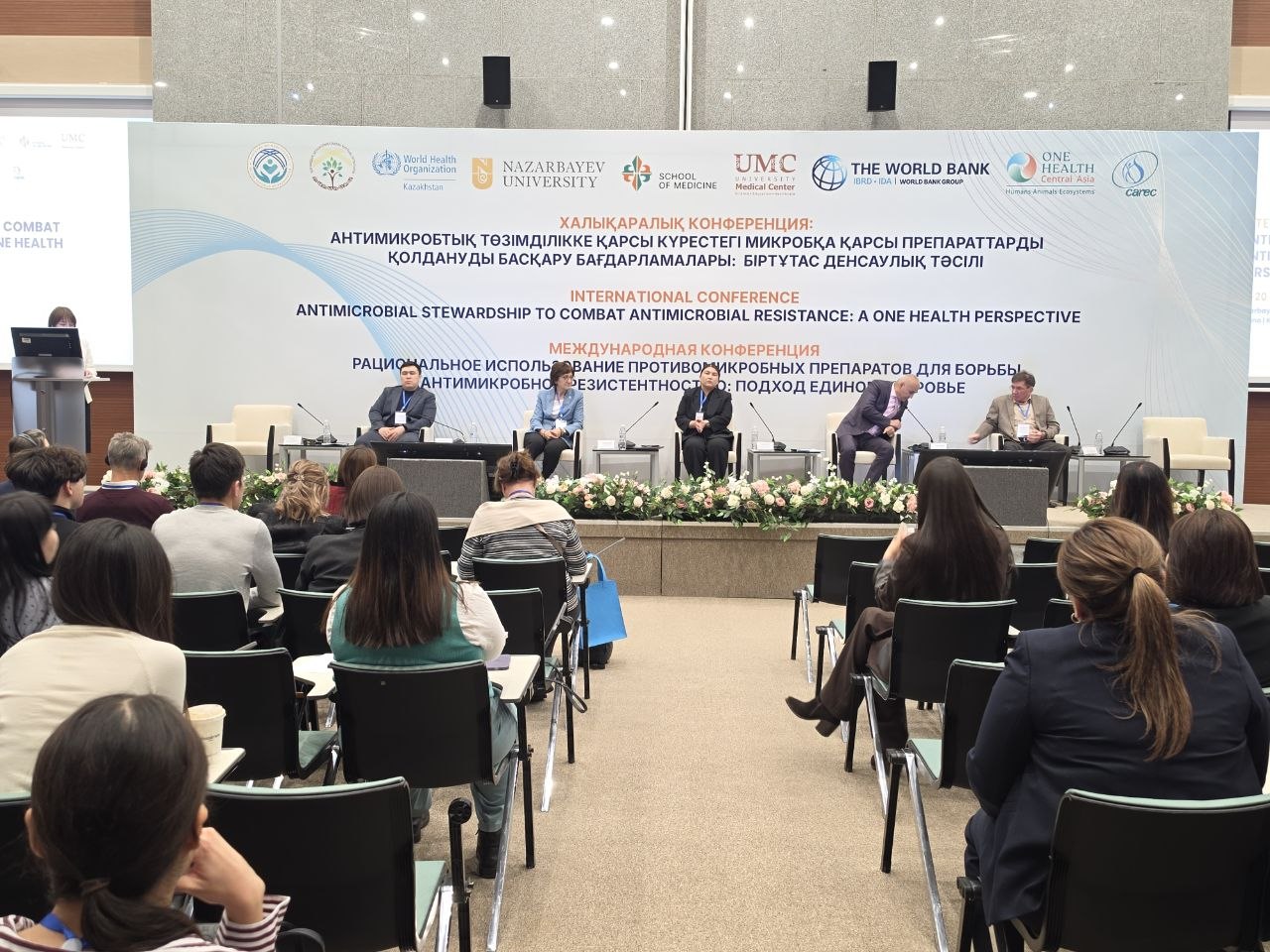
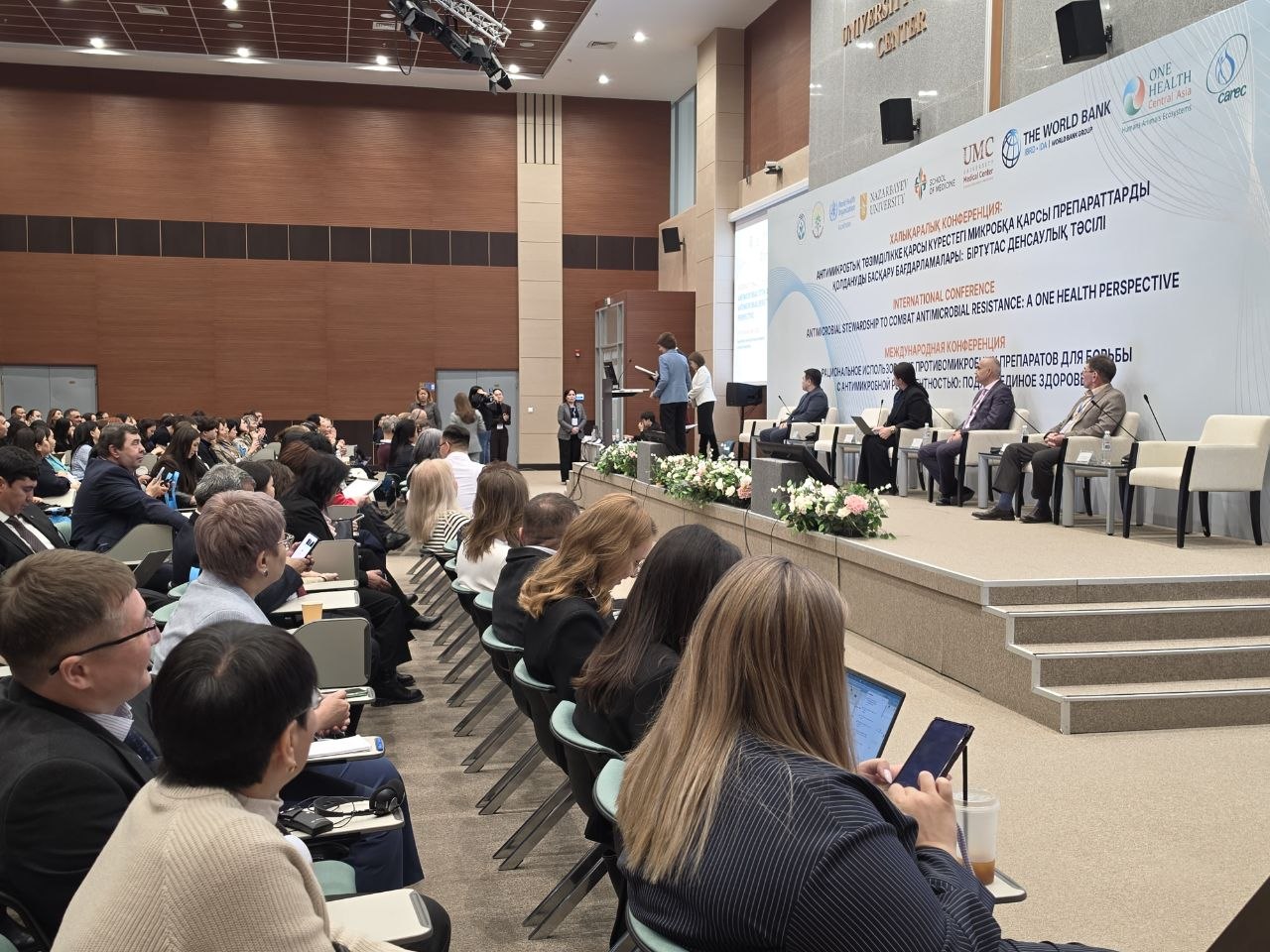
19 November 2026, Astana, Kazakhstan. An international conference bringing together representatives of government institutions, international organizations, the scientific and medical communities, and experts from Central Asia and other regions has opened at the School of Medicine of Nazarbayev University
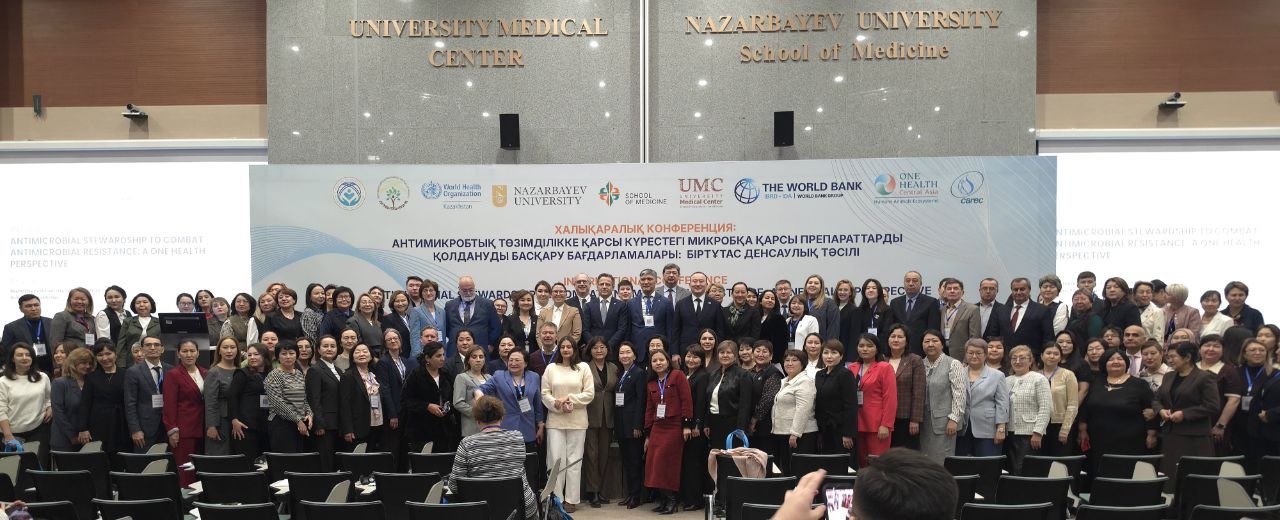
The event is taking place on 19–20 November as part of World AMR Awareness Week, with the Regional Environmental Centre for Central Asia (CAREC) serving as a co-organizer. The aims to promote the exchange of scientific knowledge and practical experience, strengthen cross-sectoral cooperation, and identify effective solutions to address antimicrobial resistance (AMR).
A key focus of the event was the session entitled “AMR in Central Asia: Achievements, Gaps and Opportunities for Progress through the One Health Approach.” The session brought together representatives from Kazakhstan, Kyrgyzstan, Tajikistan, Turkmenistan, and Uzbekistan, who presented their national experiences, progress, ongoing challenges, and priorities for further action.
Discussions focused on strengthening epidemiological and laboratory surveillance, promoting the responsible use of antimicrobials, enhancing veterinary services, ensuring food safety, monitoring the environment, and improving cross-sectoral cooperation.
Kazakhstan is developing a state information system for biological safety. Prototype modules have been prepared for recording microbial strains and managing pathogenic biological agents. At the same time, work is underway to map existing information systems and develop technical specifications for a unified digital platform.
An important step has been the launch of a pilot epidemiological surveillance project on antimicrobial resistance by the Ministry of Agriculture in four regions of the country. In 2025, more than 19,000 tests were conducted as part of related activities. Aggregated data on 40 microorganisms are being used to assess the situation and determine appropriate response measures.
Particular attention is being paid to strengthening laboratory capacity, including the modernization of reference laboratories, upgrading diagnostic equipment, developing professional competencies, and improving quality assurance systems. Plans also include the construction of a modular laboratory in Turkistan Region.
Capacity-building remains another important priority. More than 7,000 healthcare professionals have received training on AMR and the responsible use of antibiotics.
At the same time, the data presented highlighted significant challenges in prescribing practices. According to a national study, 67% of antibacterial prescriptions lacked sufficient justification. Furthermore, overall antibiotic consumption increased by 68% in 2024 compared to the previous year, while parenteral antibiotic use rose by 58%.
Kazakhstan identified the development of integrated cross-sectoral surveillance, the expansion of antimicrobial stewardship programmes, stronger infection prevention and control, and enhanced regional cooperation as key priorities.
Kyrgyzstan: Data Integration and Intersectoral Coordination
Asel Kanymetova, Head of the Scientific and Practical Centre for Infection Prevention and Control and Medical Waste Management at the National Institute of Public Health under the Ministry of Health of the Kyrgyz Republic, presented the country's experience.
One of the important areas of work has been a national study on bloodstream infections, conducted with the support of the World Health Organization (WHO). The study involved 40 hospitals and three central reference laboratories. The fieldwork has been completed, and analysis of the microbiological data is currently underway.
In the veterinary sector, a pilot project supported by the Food and Agriculture Organization of the United Nations (FAO) has been implemented to strengthen laboratory monitoring of antimicrobial resistance. Approximately 1,800 animal faecal samples and 40 milk samples were collected across four regions. The research covered microorganisms including Escherichia coli, Salmonella, Staphylococcus, and Streptococcus. An expanded testing panel covering 37 antimicrobial agents was introduced for laboratory diagnostics.
Kyrgyzstan has also established a regulatory framework that includes a Law on Biosafety, infection prevention and control regulations, and requirements governing prescription-only dispensing of medicines. The national intersectoral AMR action plan brings together the health, veterinary, and environmental sectors.
However, as the speaker noted, existing mechanisms still operate largely in isolation. Key priorities include standardizing laboratory data, harmonizing microbiological testing methods, ensuring compliance with prescription requirements for antibiotics, and establishing a unified information platform for data exchange across the three sectors.
Tajikistan's national experience was presented by Firuz Davlyatov, Chief Specialist of the Occupational and Food Hygiene Department of the State Sanitary and Epidemiological Surveillance Service and National Accreditation Consultant.
His presentation highlighted progress in strengthening the national AMR response system, improving intersectoral coordination, and modernizing laboratory infrastructure.
In 2025, the country underwent its second Joint External Evaluation, which helped identify further priorities for improving national preparedness and response to biological threats.
An important institutional development has been stronger interagency cooperation involving the Ministry of Health and Social Protection of the Population, the Ministry of Agriculture, the Committee for Environmental Protection, and other relevant institutions.
Key achievements included the development and publication of national roadmaps for harmonizing efforts to address antimicrobial resistance, training specialists in biosafety and infectious disease diagnostics, and improving laboratory preparedness for outbreak response.
More than 300 specialists received training in biosafety and the diagnosis of diseases such as avian influenza, brucellosis, foot-and-mouth disease, and plague. More than 120 laboratory specialists were trained in outbreak response and the safe handling of biological samples. Improvements in laboratory processes have reduced the time required to obtain test results by more than 30%.
The country is also working to introduce laboratory quality standards, develop an early warning system, improve animal identification and traceability mechanisms, and upgrade equipment and laboratory infrastructure.
Priorities for the coming years include developing a unified early warning platform, integrating data across sectors, strengthening laboratory capacity, improving the regulatory framework, and expanding regional information exchange.
Ensuring the sustainability of these achievements is also a key concern, with a gradual transition from predominantly external support towards national financing and stronger institutional responsibility.
Uzbekistan presented its experience in developing a national AMR response system. One of the country's key achievements has been the establishment of the Centre for Antimicrobial Resistance Studies, which has been coordinating activities, providing methodological support to laboratories, improving protocols, and training specialists for approximately 12 years.
The national laboratory system is also advancing the implementation of international quality management standards. Preparations for accreditation under ISO 15189 began in 2020, and compliance with the standard was confirmed in 2025. Further work to strengthen the quality management system is ongoing.
Cross-sectoral cooperation is another important area. Joint research with veterinary services has examined the prevalence of Salmonella and Campylobacter among humans and animals. The experience gained provides a foundation for further development of integrated surveillance.
Uzbekistan is also implementing public awareness initiatives to promote the responsible use of antibiotics. These include educational activities for students, awareness campaigns, and the publication of educational materials in Uzbek, Russian, and English.
Further priorities include expanding the laboratory network, improving epidemiological surveillance, strengthening the veterinary sector, and ensuring continuity of previously implemented projects.
Turkmenistan presented its experience in developing the national laboratory system and introducing modern microbiological diagnostic methods.
Quality control procedures are regularly implemented in specialized laboratories, while an electronic reporting system facilitates information exchange between different levels of the laboratory network.
The National Bacteriological Reference Laboratory underwent a specialized assessment mission by the World Health Organization. Following the international assessment, the laboratory received a score of 91% in terms of compliance with international standards.
Particular attention is being paid to the introduction of modern laboratory diagnostic technologies. These include MALDI-TOF mass spectrometry, which enables rapid and accurate identification of bacteria and fungi. Alongside automated technologies, conventional methods for determining microbial susceptibility to antibacterial agents continue to be used.
Other important areas include specialist training, participation in international scientific and practical events, and the organization of training seminars for laboratory professionals.
As part of the One Health approach, Turkmenistan established an intersectoral coordination committee in 2024, bringing together representatives of more than ten ministries and government agencies.
The presentations demonstrated that Central Asian countries have already established important institutional, regulatory, and laboratory mechanisms to address antimicrobial resistance. However, common challenges remain, including insufficient data integration, differences in laboratory methodologies, limited human and financial resources, and the need for stronger oversight of antimicrobial use.
The transition from individual national initiatives towards a coordinated regional system based on the One Health approach is becoming increasingly important.
Laboratory data exchange, harmonization of diagnostic methods, joint research, and the development of cross-sectoral early warning mechanisms can provide a foundation for a more effective response to threats associated with the spread of antimicrobial-resistant microorganisms.
The regional session provided an important platform for comparing national experiences, identifying shared priorities, and strengthening partnerships among Central Asian countries in the fight against antimicrobial resistance.
Shoira Toirova — Communications Specialist, One Health Program
This publication was prepared by the Regional Environmental Centre for Central Asia (CAREC) within the framework of the regional One Health Program in Central Asia. The Program is implemented with financial support from the World Bank and the Pandemic Fund. The author bears sole responsibility for the content of this publication. The views expressed do not necessarily reflect the official position of the World Bank or the Pandemic Fund.
For further information:
Oksana Kravtsova — Regional Manager of the One Health Program, CARECokravtsova@carececo.org