

A series of training seminars were recently held in the Gorno-Badakhshan Autonomous Region (GBAO) as part of the project "Resilient Landscape Restoration in Tajikistan." The initiative aims to strengthen environmental capacity in local communities while enhancing sustainable livelihoods. The focus of these events was the sustainable use of pasture resources — a critical component of the mountain ecosystems in Tajikistan.
Knowledge as a Driver of Sustainable Development
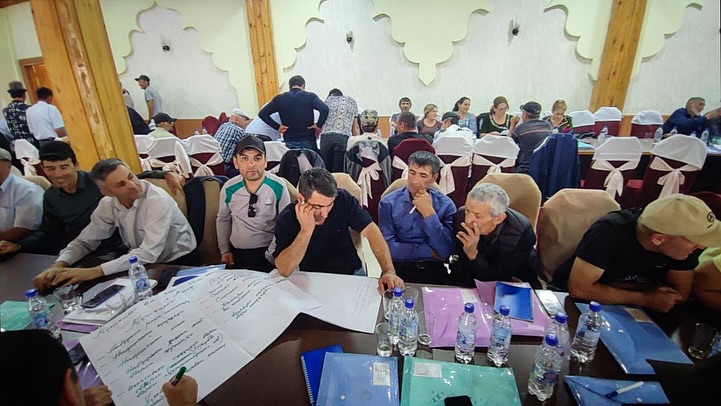
The seminars were organized for pasture users and members of newly established Community Pasture Associations (CPAs) — grassroots institutions that help manage access to and usage of natural resources. Participants had the opportunity to deepen their understanding of legal frameworks and ecologically sustainable practices in pasture management.
Key topics included a review of the Law of the Republic of Tajikistan “On Pastures” and the Law “On Joint Use of Pastures and Improving the Activities of Pasture and Forest Users.” These presentations highlighted mechanisms for collective decision-making, equitable pasture allocation, users’ rights and responsibilities, and strategies to prevent land degradation.
Educational Materials and Practical Support
To reinforce the training, tailored educational modules were distributed among participants, along with printed copies of the relevant laws and environmental livestock management guidelines that emphasize biodiversity conservation. Stationery supplies were also provided to support the work of CPAs in remote and hard-to-reach areas.
Such practical support is vital for communities where access to legal information and training resources is often limited.
Scope and Geographic Coverage
The seminars were conducted in four pilot districts of GBAO — Murghab, Shughnan, Vanj, and Rushan — which are part of the project’s target area and play a strategic role in promoting sustainable natural resource practices. In total, more than 100 people participated, including community leaders, local authorities, and activists.
Open Dialogue and Experience Sharing
Beyond the presentations, a strong focus was placed on group discussions and practical exercises. Participants shared real-life experiences, identified local challenges, and worked together to develop community-driven solutions based on both legal frameworks and traditional knowledge. These discussions fostered collaboration between different pasture user groups and helped shape sustainable management approaches.
Strengthening Institutions for Long-Term Impact
The seminars marked an important step in building the institutional capacity of local communities, promoting environmentally responsible, inclusive, and long-term models of natural resource governance. Community Pasture Associations are being empowered to act more effectively — guided by principles of equality, transparency, and long-term sustainability.
Contact information: