

An introductory seminar dedicated to the development of Kazakhstan’s national climate transparency system in the context of the implementation of the Paris Agreement was held in Astana within the framework of the “Capacity-building Initiative for Transparency” (CBIT) project, supported by the Global Environment Facility (GEF).
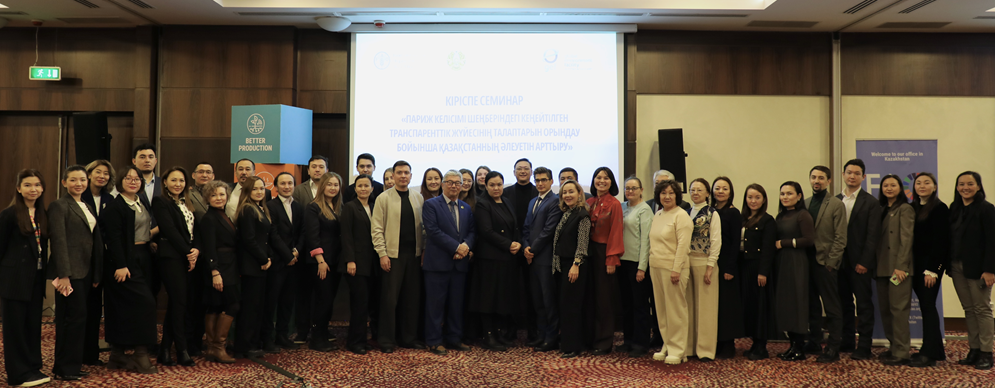
On January 30, 2026, representatives of government bodies, international and regional organizations, the expert and scientific community, non-governmental organizations, and the private sector discussed key issues related to climate transparency.
The discussions focused on strengthening the country’s capacity to transition to the Enhanced Transparency Framework (ETF) and on Kazakhstan’s institutional readiness to implement the requirements of Article 13 of the Paris Agreement, as well as on practical aspects of improving national mechanisms for monitoring, reporting, and verification (MRV) of climate data.
During the opening and thematic sessions, it was emphasized that enhancing climate transparency is a crucial prerequisite for the effective implementation of climate policy, the fulfillment of international commitments, and the integration of climate data into strategic and investment planning processes.
Participants were presented with the CBIT project concept, its key objectives, components, and expected results. The discussions addressed the current climate reporting systems, potential points of synergy among agencies and partners, as well as next steps for the preparation and coordination of the project document.
“This project is extremely important and timely for Kazakhstan. In the context of growing climate risks and increasing international reporting requirements, it is essential to build a sustainable, transparent, and institutionally embedded climate data system now. The project lays the foundation not only for fulfilling international obligations, but also for making more informed management decisions in the field of sustainable and low-carbon development of the country,” emphasized Yerlan Zhumabayev, Director of the Kazakhstan Country Office of the Regional Environmental Centre for Central Asia, highlighting the relevance of the CBIT project.
During the seminar, tools and approaches aimed at transitioning from the traditional MRV model to the modern ETF system were also presented in detail, including the preparation of Biennial Transparency Reports, tracking progress on Nationally Determined Contributions (NDCs), as well as monitoring adaptation measures and climate finance.
Additional information:
Yerlan Zhumabayev – Director, the Kazakhstan Country Office of the Regional Environmental Centre for Central Asia, kazakhstan@carececo.org