

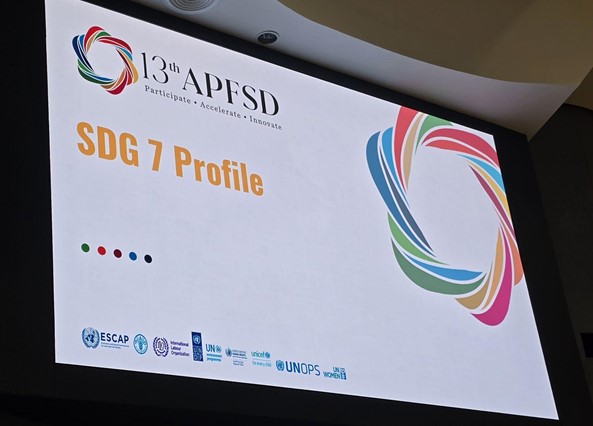
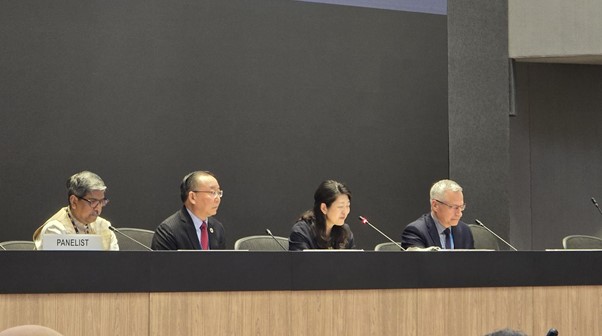
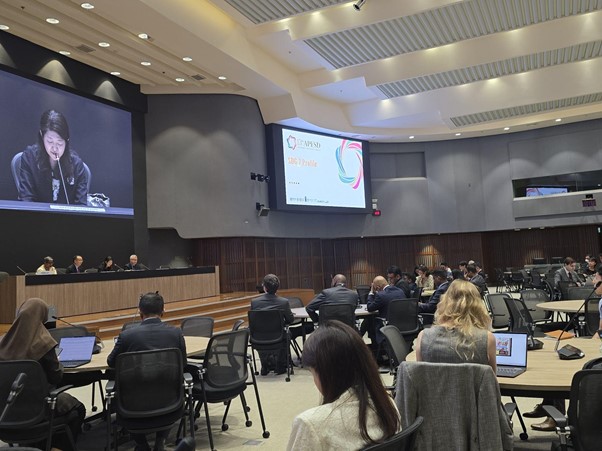
BANGKOK, February 23, 2026 — As part of the 13th Asia-Pacific Forum on Sustainable Development (APFSD), regional leaders and experts discussed the 2026 SDG 7 Goal Profile—a comprehensive assessment of the region’s progress in ensuring access to affordable and clean energy. The discussion revealed a critical paradox: despite achieving near-universal access to electricity, the share of renewable energy in the total mix remains stagnant against a backdrop of rapidly surging demand.
The session opened with a review of the regional data presented in the "SDG 7 Profile." Despite record-breaking rates of renewable energy capacity additions, fossil fuels continue to dominate electricity generation. Energy efficiency improvement rates (approximately 2% per year) remain twice as low as the 4% target required to meet 2030 goals.
For Central Asia, these regional trends manifest in specific national challenges. Despite the scaling up of wind and solar energy projects, limited budgetary capacity and persistent fossil fuel subsidies remain barriers that constrain the pace of the energy transition.
The central theme of the 2026 Profile was the "human dimension." Participants emphasized that the energy transition must be inclusive, which implies:
● Closing the Urban-Rural Gap: Ensuring access to clean cooking and heating technologies in remote areas.
● Public Health Impact: Understanding that reducing dependence on fossil fuels directly improves air quality and reduces the incidence of respiratory diseases.
● Human Capital Development: Creating new professional pathways for young researchers and engineers in the clean energy sector.
The Regional Environmental Centre for Central Asia (CAREC) participated in the discussions, presenting a vision of how regional coordination can help adapt global goals to national realities.
Looking ahead to the Regional Environmental Summit in Astana, the outcomes of the Bangkok dialogue lay the foundation for developing joint statements and preparing investment-ready pilot projects that align with the global climate agenda.
#CentralAsia #EnergyTransition #SDG7 #APFSD2026 #MethaneAction #ClimateAction #CleanEnergy #OneHealth #Sustainability #AsiaPacific #RegionalCooperation #GlobalMethanePledge