
In Japan, government programs supporting rural development expanded significantly during the 1960s. However, global recognition emerged with the One Village One Product (OVOP) initiative, officially launched in 1979 in Ōita Prefecture by Governor Morihiko Hiramatsu.
The idea is simple yet highly effective: each community identifies its unique product—whether agricultural, handicraft, or food-based—and develops it into a regional brand. This approach strengthens local economies while preserving cultural identity.
Origins of OVOP
The OVOP program emerged in response to a pressing challenge: rural areas were experiencing population decline, young people were migrating to cities, and local economies were weakening. Hiramatsu proposed stimulating development through the creation of distinctive, value-added products.
Each community selected products reflecting its identity, such as citrus fruits, mushrooms, wool crafts, or ceramics.
The core OVOP principles include:
· Local initiative — development driven from the grassroots level;
· Value addition — processing products rather than exporting raw materials;
· Quality and design — ensuring market competitiveness;
· Human capital development — strengthening skills, training, and quality standards.
Design and Marketing: Japanese Minimalism
A defining feature of the Japanese OVOP model is meticulous attention to detail. Products are expected to be not only functional but also visually appealing, characterized by clean forms, natural colors, and carefully designed packaging.
These elements transform local goods into recognizable brands and significantly increase their market value. In Japan, OVOP products were marketed through major retail networks, including Muji, demonstrating that strong design and consistent quality enable even small-scale producers to compete successfully in international markets.
Adapting the Model in Kyrgyzstan
In Kyrgyzstan, OVOP became part of pilot initiatives implemented with the participation of Japanese experts and volunteers. The model was adapted to local conditions characterized by mountainous terrain, limited arable land, extensive pasture use, and ongoing land degradation challenges.
Local communities, together with technical experts, identified village-specific products and acquired skills in processing technologies, packaging, and branding.
Examples of developed products include:
· felt products with contemporary design;
· jam made from young pine cones;
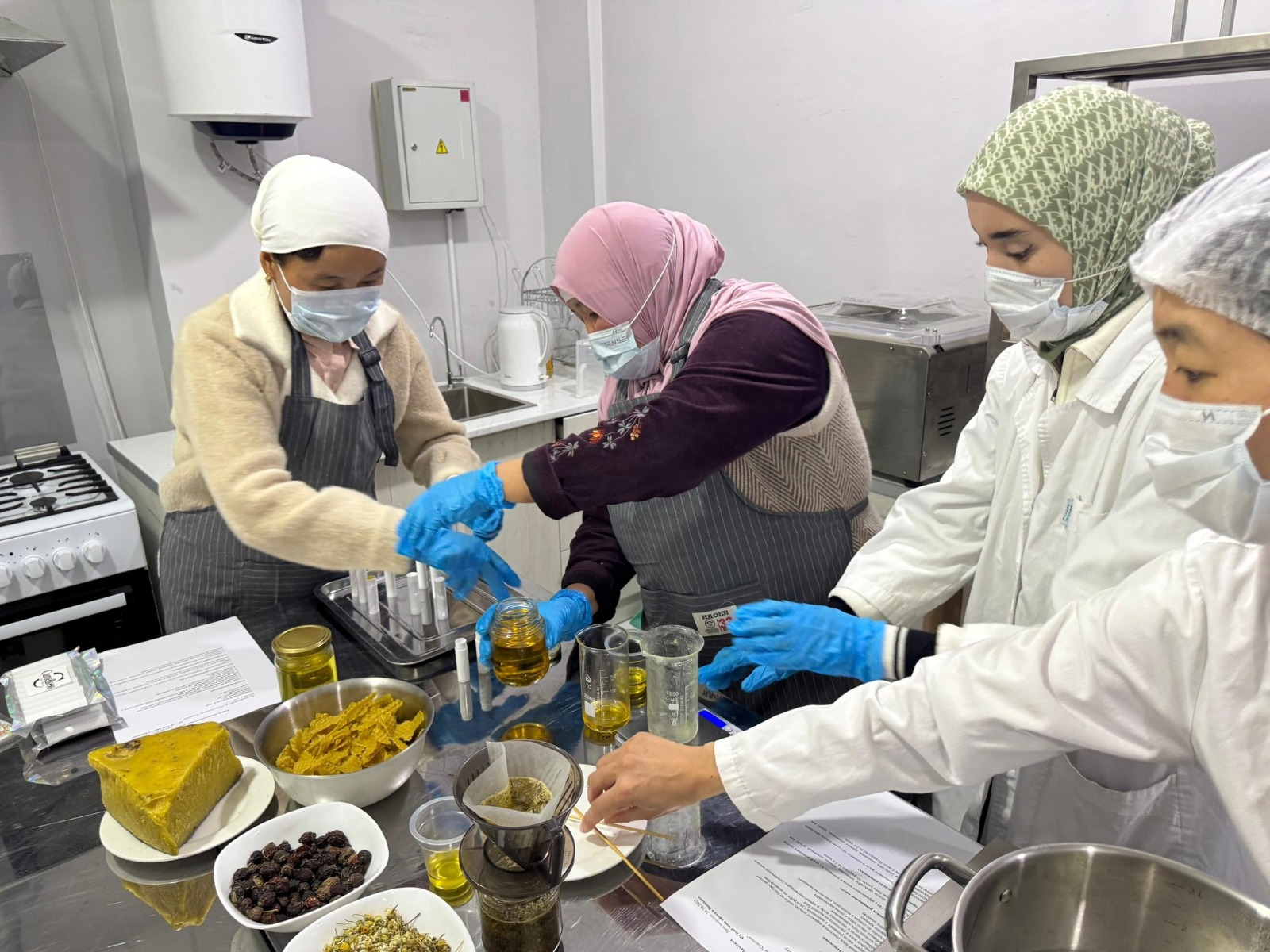
· processed sea buckthorn and rosehip products;
· tourism-oriented souvenir goods.
.jpeg)
.jpeg)
The central objective is value creation and sustainable income generation. Communities gain opportunities to diversify livelihoods, reduce pressure on pastures, and simultaneously contribute to the restoration of degraded lands.
Environmental Dimension
In Kyrgyzstan’s mountainous regions, pasture and soil degradation remain critical challenges. OVOP contributes indirectly to addressing these issues: income generated from processed and branded products reduces dependence on livestock grazing, while the planting of fruit and berry shrubs and trees helps stabilize slopes and supports land restoration.
Thus, economic development initiatives are effectively aligned with environmental objectives.
The One Village One Product model has demonstrated effectiveness both in Japan and in Kyrgyzstan. It integrates economic development, local identity, and environmental responsibility.
.jpeg)
Today, even a small village can become a recognizable brand—innovative, minimalist, and competitive—capable of attracting tourists and improving the quality of life of local communities.
OVOP stands as a compelling example of how a simple idea can transform entire regions.
Prepared by:
Zhanna Khussainova — PR/Communications Consultant and Expert, Regional Environmental Centre for Central Asia (CAREC) pr@carececo.org
Nazik Atambekova — PR Specialist, KG RESILAND Project, Ministry of Emergency Situations of the Kyrgyz Republic inforesiland.kg@gmail.com