

The RESILAND CA+ program project in Tajikistan — “Sustainable Landscape Restoration in the Republic of Tajikistan” (RESILAND Tajikistan) — continues to deliver tangible results in rehabilitating degraded land and improving livelihoods in rural areas across the country. This was highlighted during the Regional Dialogue on Restoration of Landscapes in Central Asia in Tashkent, Uzbekistan.
The initiative focuses on restoring forests, pastures, and agricultural land, supporting biodiversity, and creating sustainable income opportunities for local communities. The project applies an integrated approach that combines natural resource restoration, community development, and scientific support.
One of the project’s key achievements has been the mobilization of local communities. More than 700 Common Interest Groups (CIGs) have been established nationwide, bringing together over 21,500 people, including 8,199 women. According to Solijon Mirzoev, Coordinator of the “Sustainable Landscape Restoration in the Republic of Tajikistan” project (RESILAND Tajikistan), these groups have become local hubs for initiative and collaboration, enabling residents to jointly develop solutions to pressing challenges in their villages and increase local economic productivity.
Business plans were developed for CIG members to improve agricultural efficiency while protecting the environment. Under the program, 500 grants of USD 10,000 each were awarded, enabling communities to implement projects in land reclamation, irrigation infrastructure improvement, and environmentally sustainable farming.
Among the practical results is the construction of 63 greenhouses for CIG members, where early vegetables are grown. These greenhouses supply local markets with fresh produce, increase household incomes, and reduce pressure on agricultural land.
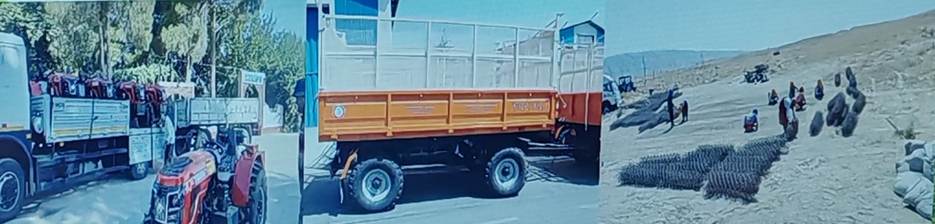
Investments in agricultural machinery reached 14.97 million Tajik somoni. The project procured 49 mini-tractors with equipment sets, 110 motor-cultivators, 69 sprayers, 107 manual lawn mowers, as well as 2 excavators and 9 front loaders. This has significantly increased agricultural productivity and improved the efficiency of labor and land use.
RESILAND Tajikistan: Strengthening science and education
RESILAND Tajikistan has also strengthened the capacity of national agricultural and scientific institutions. Laboratories and classrooms at the Institute of Livestock and Pasture Management of the Tajik Academy of Agricultural Sciences and the Shirinsho Shotemur Tajik Agrarian University were equipped with modern research equipment.
Scholarships were provided to students — including orphans and persons with disabilities — studying agronomy, biodiversity, pasture management, forestry, and ecology. Two doctoral candidates specializing in pasture management received research scholarships.
According to Solijon Mirzoev, these measures lay the foundation for long-term rural development and the training of qualified specialists in sustainable land use.
RESILAND Tajikistan: Restoring pastures and forests
Forest and pasture restoration remains one of the project’s priority areas. Modern equipment was supplied to the Forestry Agency under the Government of the Republic of Tajikistan, soil and vegetation maps were developed for the southern and northern regions, and field surveys and sample plot measurements were conducted — covering 60% in the south and 55% in the north.
Forest management plans are being developed for eight forestry enterprises and one fruit nursery, along with methodological guidelines and instructions for conducting a national forest inventory.
Pasture management has received particular attention. 50 new pasture user associations were established and 14 existing ones strengthened, covering 262 villages in the Kofarnihon, Zarafshan, and Panj river basins.
A total of 64 pasture and livestock management plans were developed, including seasonal grazing routes, forage improvement methods, and ecosystem restoration measures. In Khatlon and Sughd regions, 215 hectares of demonstration fodder plots were established, growing alfalfa, sainfoin, barley, and maize. A seed fund was also created to ensure year-round seed availability.
To reduce pasture degradation risks, a livestock transporter was procured for spring relocation of cattle and small ruminants. Unlike traditional spring grazing — which damages young vegetation and root systems — the transporter moves livestock directly to new pastures, protecting recovering grasslands.
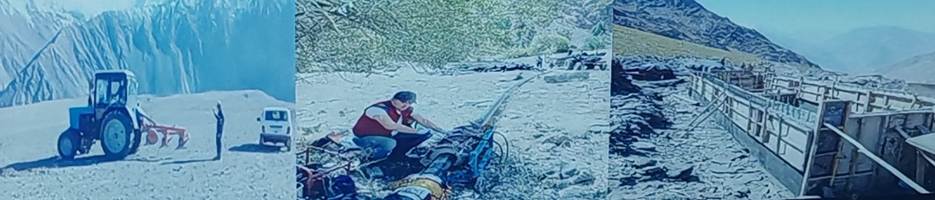
Active reforestation is underway in high-mountain areas with strong community participation. For example, an agroforestry system has been introduced on 300 hectares in Matcha district of Sughd region, where trees are planted between potato rows. This approach restores forests while allowing local residents to maintain agricultural production. A total of 775 reforestation groups, each comprising 25 families, were engaged.
According to Solijon Mirzoev, new technologies are used in planting: irrigation systems, including drip irrigation, are installed first, followed by tree and shrub planting — significantly increasing survival rates. The project plans to plant saxaul on 600 hectares, with survival rates of up to 80% under favorable conditions. In high-altitude and saline areas, apple trees, apricot, rosehip, and pistachio trees are planted.
Greenhouse systems for growing seedlings have been established, tugai forests are being preserved, and salt-tolerant plant species are being introduced to improve soil conditions and ecosystem productivity.
RESILAND Tajikistan: Biodiversity conservation and protected areas
Special attention is given to biodiversity conservation and protected areas. Management plans have been completed for four protected areas, including the Tajik National Park in the Gorno-Badakhshan Autonomous Region (GBAO), the Yagnob National Nature Park in Sughd region, and the Tigrovaya Balka Reserve in Khatlon region and Zorkul Reserve in GBAO.
Protected areas received specialized equipment — tracked loaders, tractors, motor-cultivators, quad bikes, and fire engines. Modern wildlife monitoring technologies, including camera traps and drones, were introduced to combat poaching and monitor rare species such as the Bukhara deer.
RESILAND Tajikistan: Addressing land degradation comprehensively
The Sustainable Landscape Restoration in the Republic of Tajikistan project also addresses water scarcity, which affects approximately 50% of rural settlements in Tajikistan.
Cleaning and rehabilitation of irrigation and drainage systems have returned degraded land to agricultural use.
At altitudes of 1,500–2,500 meters above sea level, climate-resilient crops, fruit trees, and ornamental shrubs are planted to withstand harsh conditions and support ecosystem restoration.
The Sustainable Landscape Restoration in the Republic of Tajikistan project demonstrates a comprehensive approach to Tajikistan’s sustainable development by combining forest and pasture restoration, supporting local communities, advancing scientific development, and conserving biodiversity. The project’s implementation helps local populations increase their incomes, improves the environmental condition of land resources, restores pastures and forest areas, and lays the foundation for the region’s long-term environmental and economic sustainability.
It is recalled that the Agency for Increasing Forests and Green Areas and Combating Desertification under the National Committee on Ecology and Climate Change of Uzbekistan hosted the Regional Dialogue on the Restoration of Landscapes in Central Asia on 9–10 December 2025 in Tashkent.
Government officials from Kazakhstan, the Kyrgyz Republic, Tajikistan, Turkmenistan, and Uzbekistan, together with international experts, discussed enhancing regional cooperation in forest management and transboundary landscape restoration. The event was held under the World Bank–funded Central Asia Resilient Landscapes Restoration Program (RESILAND CA+), the largest ecosystem restoration initiative in the region, which supports climate resilience across all five Central Asian countries through projects implemented by national authorities.
The Program is aimed at strengthening climate resilience in urban and rural areas of Kazakhstan, the Kyrgyz Republic, Tajikistan, Turkmenistan, and Uzbekistan.
The Regional Environmental Centre for Central Asia (CAREC) is implementing the regional component of the RESILAND Kyrgyz Republic, RESILAND Tajikistan, and RESILAND Uzbekistan projects.
Additional information:
Dilovarsho Dustzoda — Deputy Team Leader of the Project Implementation Group for “Sustainable Landscape Restoration in the Republic of Tajikistan: Regional Component”, CAREC
Lyudmila Kiktenko – Deputy Team Leader, “Restoration of Sustainable Landscapes in Kyrgyzstan: Regional Component” Project, CAREC
Azamat Kauazov - Deputy Team Leader of Uzbekistan Resilient Landscape Restoration project: regional component, CAREC