
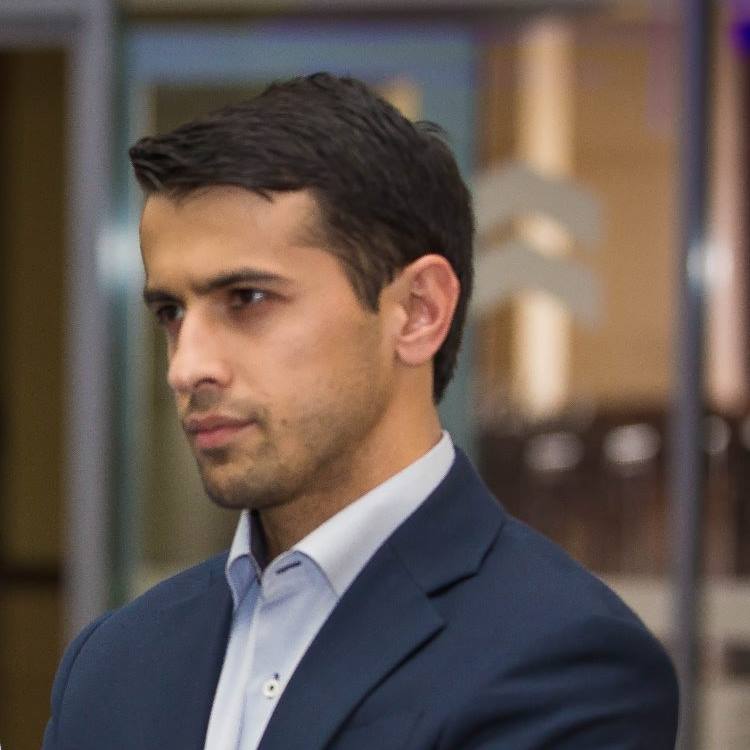
Dr. Navruz Khotamov
Director, Regional Waste Management Center, Dushanbe, Tajikistan
Key National expert for “WasteMAP: Empowering Methane Action in Central Asia's Waste Sector” project
Ask most people to name a major source of methane emissions, and they will likely mention oil and gas fields, leaking pipelines, or flaring towers. Few would think of the local landfill. Yet solid waste disposal sites are one of the most significant, and most overlooked, sources of this powerful greenhouse gas, and the case for treating them with the same urgency as the fossil fuel sector is stronger than most people realize.
Why methane matters, and why now
Methane is roughly 28 times more potent than carbon dioxide (CO2) as a warming agent over a 100-year period, and more than 80 times more potent over a 20-year horizon. But it has one crucial advantage over CO2 as a target for climate action: while carbon dioxide can linger in the atmosphere for centuries, methane breaks down in roughly a decade. This means that cutting methane emissions today produces a fast, measurable slowdown in near term warming, one of the few climate interventions with an almost immediate payoff. This is precisely why the Global Methane Pledge, endorsed by more than 150 countries at the 26th Conference of the Parties to the UN Framework Convention on Climate Change (COP26), calls for a 30 percent cut in global methane emissions by 2030. The Intergovernmental Panel on Climate Change (IPCC) identifies the waste sector, principally landfills and open dumpsites, as the third largest human made source of methane worldwide, after fossil fuels and agriculture.
Why waste deserves the same attention as oil and gas
The oil and gas sector attracts far more scrutiny partly because its emissions are easier to trace to a handful of large corporate actors and specific infrastructure. Landfill methane is diffuse, generated continuously by decomposing organic waste across thousands of disposal sites worldwide, and for decades it simply was not measured with much precision. That is changing. Satellite instruments can now detect and quantify methane plumes over individual landfills with growing accuracy, and the resulting data consistently shows that many facilities emit far more than earlier, simplified national estimates suggested. Ton for ton, this methane warms the planet exactly as much as methane from a gas leak. The fact that it has received less political attention reflects a gap in monitoring and awareness, not a gap in actual climate impact.
The environmental and climate risks
When organic waste, food scraps, garden waste, paper, is buried without oxygen, it decomposes anaerobically and releases landfill gas that is roughly half methane. Left uncaptured, this gas migrates upward through the waste mass and escapes directly into the atmosphere, contributing to near term warming, more intense heat events, and accelerated glacier and snowpack loss in mountainous regions, a particular concern for water dependent economies in Central Asia. Beyond the climate dimension, uncontrolled landfill gas poses direct local risks: it can migrate laterally underground and accumulate in nearby structures, creating fire and explosion hazards; it carries odorous and sometimes toxic trace compounds that affect air quality for surrounding communities; and unmanaged organic decomposition contributes to leachate that can contaminate soil and groundwater if not properly contained.
Practical steps that work, starting now
The reassuring part of this picture is that landfill methane is a well understood, technically manageable problem, and several proven interventions can begin reducing emissions within a few years rather than decades.
First, gas capture and flaring systems at existing landfills intercept methane before it reaches the atmosphere, either burning it to convert it to less potent CO2 or, where volumes justify it, using it to generate electricity or heat. Second, diverting organic waste away from landfills entirely through composting and anaerobic digestion programs prevents methane generation at the source, addressing the problem before it starts rather than after. Third, improved daily and final soil cover practices, even without full engineering upgrades, measurably reduce the fraction of gas that escapes uncontrolled. Fourth, better data is itself an intervention: many countries still estimate national landfill emissions using simplified, aggregate methods rather than facility level monitoring, and satellite tools combined with platforms that map methane data by site are now making it possible to identify the highest emitting facilities and prioritize investment where it will have the greatest effect. Because emissions are typically concentrated at a small number of large, older sites, targeted action at the biggest emitters can deliver outsized climate benefit relative to the cost, a far more efficient use of limited resources than spreading investment thinly across an entire national waste system.
A regional effort already underway
None of this is starting from zero in Central Asia. National governments, regional institutions and international development partners are already working together to bring these solutions to the region's waste sector. Programs supported by organizations such as RMI, the Clean Air Task Force and the Global Methane Hub are helping countries build national and city level methane data through platforms like the Waste Methane Assessment Platform (WasteMAP), while satellite monitoring initiatives are beginning to verify emissions directly at priority sites. This growing partnership between governments and the international community is laying the groundwork for the region to move from estimating the problem to actively solving it.
The waste sector will probably never attract the same geopolitical attention as oil and gas. But the physics of methane make no such distinction, and neither should climate policy. Recognizing solid waste management as a frontline climate sector, backed by better monitoring and targeted investment in capture and diversion, is one of the most cost-effective steps any country can take toward meeting its climate commitments this decade.
***************************************************************************
The views expressed are those of the author and do not necessarily reflect the official positions of CAREC or the Global Methane Hub.
Implemented by the Regional Environmental Centre for Central Asia (CAREC) with financial support from Global Methane Hub (GMH), the “WasteMAP: Empowering Methane Action in Central Asia's Waste Sector” project focuses on strengthening national systems for monitoring and managing methane emissions in the solid waste sector through innovative digital solutions. The project will provide access to satellite data and the global WasteMAP platform.
WasteMAP is an online platform developed jointly by RMI (Rocky Mountain Institute) and CATF (the Clean Air Task Force), with support from the Global Methane Hub, aimed at ensuring transparency, measurability, and manageability of methane emissions in the waste sector.