

Sustainably managed forests and pastures protect soil from erosion and contribute to the restoration of degraded lands. In mountainous areas, the restoration of tree and shrub cover and the regulation of livestock grazing stabilize slopes and preserve water resources. These measures support the natural recovery of ecosystems, enhance landscape resilience, and improve the living conditions of local communities.
Within the framework of the project “Resilient Landscape Restoration in Uzbekistan” (RESILAND Uzbekistan), the following activities are being implemented to support the natural restoration of forests:
• restoration of pasture lands;
• anti-erosion measures in mountain forests;
• protection of restored areas from unauthorized access by the public and livestock grazing.
The implementation of these measures may lead to temporary restrictions on access by local communities to pastures and other natural resources, which may affect their incomes and livelihoods.
In this regard, there is a clear need to establish an effective and fair mechanism that allows affected populations to express their concerns and receive appropriate compensation. To this end, a grievance redress mechanism is being developed under the project. This work is carried out in accordance with one of the key requirements of the World Bank for the project “Resilient Landscape Restoration in Uzbekistan” (RESILAND Uzbekistan), which stipulates that the project must deliver tangible benefits to the local population residing in the project implementation areas.
Grievance Redress Mechanism (GRM): Structure and Functions
In order to prepare local communities and management authorities for the functioning of the grievance redress mechanism, training sessions were conducted in six project regions (Syrdarya, Jizzakh, Samarkand, Surkhandarya, Kashkadarya, and Navoi). Participants received detailed information on:
• procedures for receiving and reviewing grievances;
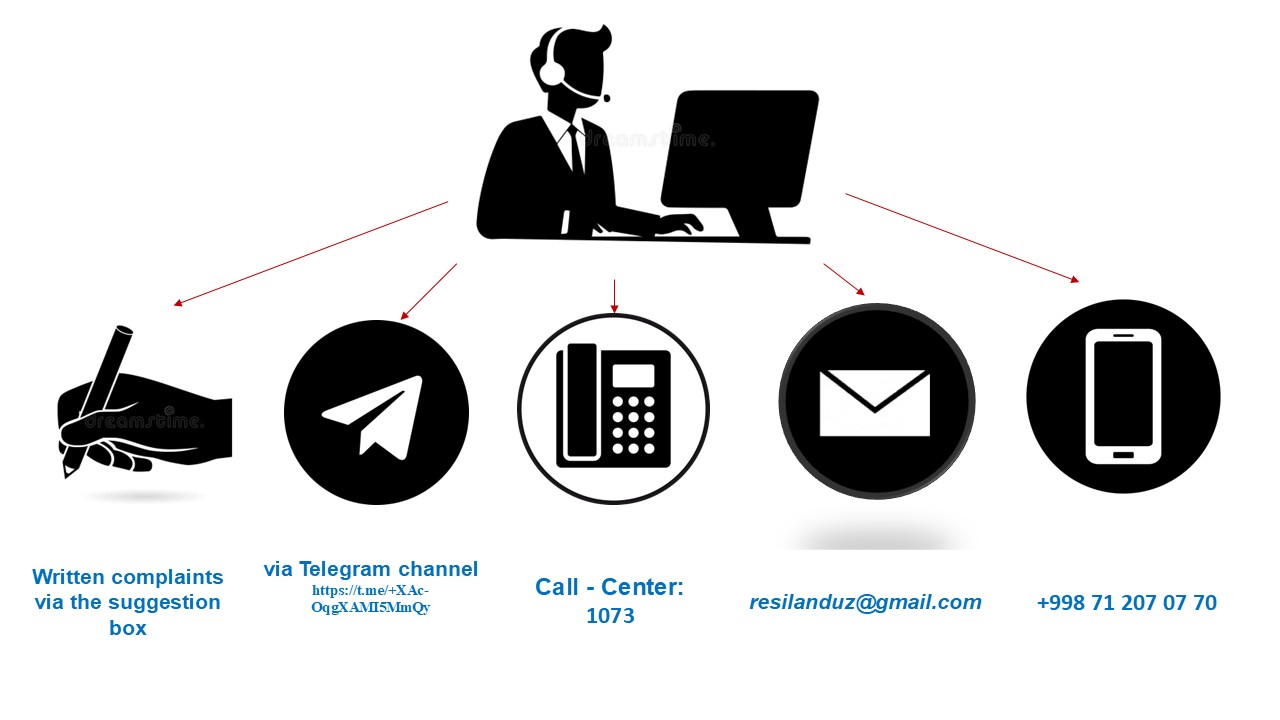
• methods of submitting grievances (orally, in writing, by email, via Telegram, or by phone);
• dispute resolution mechanisms;
• timeframes for grievance review.
In each forestry enterprise covered by the project, special grievance submission boxes have been installed and are inspected monthly. In addition, a contact center has been established to receive anonymous complaints in line with World Bank requirements, and more than 300 forestry staff members have been trained in grievance handling procedures.
The Importance of the GRM for Project Success
- Social justice and trust: An effective grievance redress mechanism ensures fair consideration of complaints and instills confidence among local communities that their interests are protected. This is particularly important for projects that temporarily restrict access to natural resources.
- Early identification and resolution of issues: The GRM enables potential conflicts to be identified at an early stage and resolved before they escalate into serious social problems that could disrupt project implementation.
- Increased project acceptability: The presence of an open and fair grievance redress mechanism enhances the project’s social acceptability among local communities and strengthens their engagement in project activities.
- Compliance with international standards: The GRM ensures compliance with the World Bank’s Environmental and Social Framework and international standards for human rights protection and social justice.
- Joint support for forest restoration: The main objective is to support local communities during the forest landscape restoration process by ensuring fair consideration of their grievances and providing alternative income-generating opportunities.
Next Steps
To further improve public awareness, it is planned to install informational banners about the grievance redress mechanism in all forestry enterprises, national parks, and hunting areas funded by the project.
---------
The Uzbekistan Resilient Landscape Restoration Project (RESILAND Uzbekistan) is part of the World Bank’s RESILAND CA+ program, aimed at strengthening landscape resilience across Central Asian countries. Similar national and regional activities are also being implemented in Kyrgyzstan and Uzbekistan.
RESILAND Uzbekistan is implemented by the Agency for Afforestation, Expansion of Green Areas, and Combating Desertification under National Committee on Ecology and Climate Change of the Republic of Uzbekistan, with financial support from the World Bank, PROGREEN, and KWPF.
The Regional Environmental Centre for Central Asia (CAREC) implements the regional component of the Uzbekistan Resilient Landscape Restoration Project.
Contact information:
Azamat Kauazov - Deputy Team Leader of Uzbekistan Resilient Landscape Restoration project: regional component, CAREC
Dildora Aralova is an environmental safety specialist for the Resilient Landscape Restoration in Uzbekistan (RESILAND Uzbekistan) project, Agency for Afforestation, Expansion of Green Zones and Combating Desertification under National Committee on Ecology and Climate Change of the Republic of Uzbekistan