

By Oxana Kravtsova, CAREC Programme Manager for Environment and Health
Central Asia is a region where agriculture and waste management contribute significantly to methane emissions - a greenhouse gas 28 times more potent than carbon dioxide CO₂ over a 100-year period. Methane accounts for nearly 30% of global warming. In our countries significant methane emissions come from livestock manure, and the decomposition of organic waste in landfills. Addressing these sources is essential for meeting the targets of the Global Methane Pledge, which calls for a 30% reduction in methane emissions by 2030.
One of the most effective solutions to this challenge is biogas technology, which captures methane from organic waste (such as livestock manure, food residuals) and converts it into clean energy. In 2023, according to the world bioenergy association
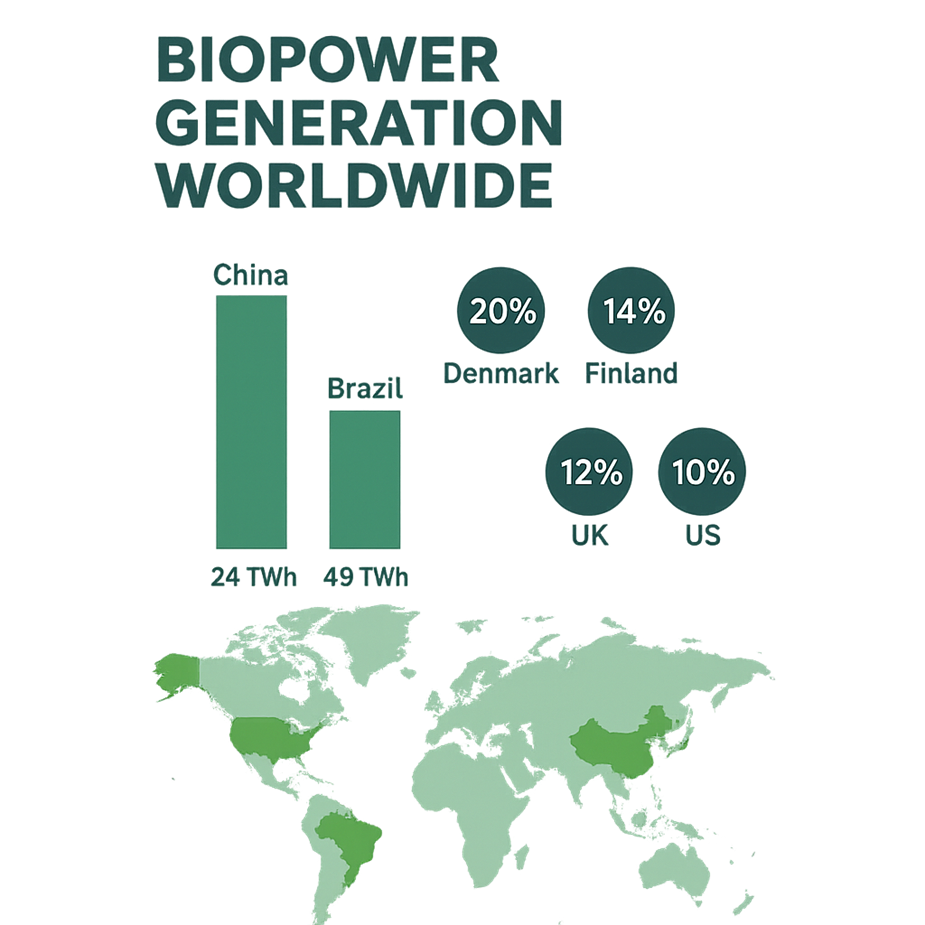
China produced 25% of global biopower (204 TWh). Brazil generated a record 54 TWh from 637 projects, while Japan produced 49 TWh. Top 3 countries for bioenergy in electricity: Denmark (20%), Finland (14%), UK (12%).
Those projects demonstrate how biogas systems can simultaneously cut emissions and boost rural economies.
Why Reducing Methane Emissions Matters
Methane is a short-lived but highly impactful greenhouse gas. In Central Asia, a significant portion of methane emissions comes from agricultural waste, livestock manure, and organic waste decomposition in landfills. When organic matter breaks down anaerobically (without oxygen), it releases methane into the atmosphere. By capturing this methane and converting it into biogas we can simultaneously reduce harmful emissions and provide sustainable energy.
What is Biogas
Biogas is a renewable gas generated through the anaerobic fermentation of various types of organic matter. Its primary components are methane (CH₄) and carbon dioxide (CO₂). Common feedstocks include animal manure, sewage, crop residues such as straw, the organic fraction of municipal and industrial waste, and dedicated energy crops like maize and grass silage.
Biogas can be used for multiple applications, including electricity generation, heat production, and as a transportation fuel. In some countries, it is increasingly used directly for cooking and lighting via household stoves and gas lamps. While electricity production from biogas remains relatively uncommon in many developing countries, it has become a standard application in industrialized nations, where power generation is the primary purpose of most biogas plants.
To maximize efficiency, biogas facilities often operate as combined heat and power (CHP) plants. In such systems, part of the generated heat is used to maintain optimal reactor temperature and, in some cases, for pre-treating incoming feedstock. A typical farm-scale biogas plant consists of several components: a liquid manure storage unit, a receiving and mixing area, a digester (or reactor), a gas storage tank, and storage for the digester residue. In CHP applications, the facility also requires an electrical grid connection and a pipeline or infrastructure to supply heat to end-users.
Investment costs for biogas systems vary with scale. For example, a 150 kW installation typically costs around €5,000 per kW of installed electric capacity. Specific investment costs are higher for smaller plants and lower for larger-scale facilities.
The global biogas potential is significant—sufficient to meet roughly 6% of total primary energy demand or about one quarter of current fossil natural gas consumption. To unlock this potential, each country should design and implement an integrated biogas development strategy. Such a strategy could deliver multiple benefits, including substantial greenhouse gas (GHG) emission reductions, improved energy security, and the creation of new rural employment opportunities. International organizations have an important role to play in supporting national efforts to expand biogas production and use.
Sources of Feedstock
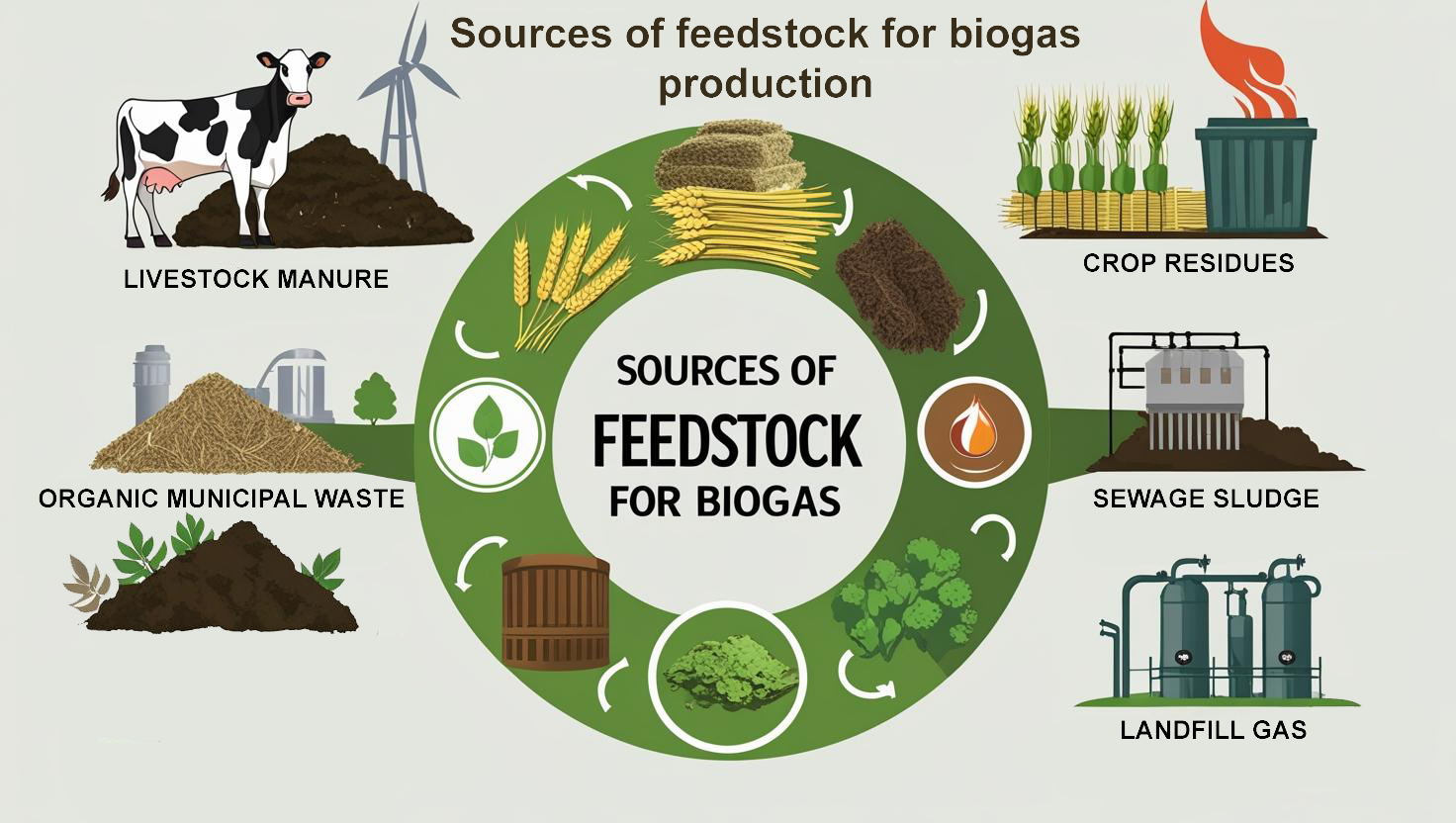
Biogas can be produced from a variety of feedstocks:
- Livestock manure, which releases methane during storage if unmanaged.
- Crop residues such as straw and silage.
- Organic municipal waste from households and industry.
- SEWAGE SLUDGE from wastewater treatment facilities.
- LANDFILL GAS, captured and cleaned for energy use.
Woody biomass is generally unsuitable for anaerobic digestion due to high lignin content but can be converted to methane through thermal gasification.
Anaerobic digestion reduces methane emissions by diverting organic waste from open decomposition. It improves water quality by preventing waste runoff, reduces odors, and destroys harmful pathogens. The byproduct can replace synthetic fertilizers, lowering greenhouse gas emissions from their production.
For rural communities, biogas can reduce dependence on firewood or coal, improve indoor air quality, and lower household fuel costs. It also creates opportunities for local employment in the construction, maintenance, and operation of biogas facilities.
Biogas can be used in:
· Cooking and heating (small-scale household digesters)
· Electricity generation and combined heat and power systems
· Upgrading to biomethane for injection into natural gas grids
· Transport fuel after compression
· Industrial heat and steam generation
· Electricity production to complement variable renewable sources such as wind and solar
To realize the potential of biogas, countries in Central Asia can integrate it into their climate and energy strategies, provide incentives for plant construction, and promote training programs for skilled operation. Partnerships between government, the private sector, and international organizations can accelerate deployment, ensuring that biogas contributes to emission reduction, energy security, and sustainable rural development.
Central Asian projects on biogas
Kazakhstan has Several projects (https://www.ng.kz/modules/newspaper/article.php?numberid=483&storyid=21921)
Kyrgyzstan: Application of biogas technology model for rural areas(https://unece.org/regional-advisory-services/application-biogas-technology-model-rural-areas-kyrgyzstan)
Tajikistan – UNDP Biogas Project for Rural Women (https://www.undp.org/tajikistan/projects/empowering-rural-women-through-access-renewable-energy-biodigesters-project)
Uzbekistan to Launch Biogas Methane Project with Japanese Support (https://kapital.uz/pererabotka-othodov-v-energiyu/)
#MethaneReduction #Biogas