

Jizzakh Region – Uzbekistan – 6 November 2025 – A high-level World Bank delegation, led by Gayane Minasyan, Practice Manager for Environment and Social Development for Europe and Central Asia, conducted a comprehensive field visit to Jizzakh Region to assess the progress of the Uzbekistan Resilient Landscape Restoration Project (RESILAND Uzbekistan).
Overview of the Visit
The delegation, which included World Bank senior environmental specialists Abate Abebe Asferachew and Elena Strukova Golub, alongside RESILAND Uzbekistan staff, evaluated ongoing forest reforestation and pasture restoration activities under Components 2 and 3 of the project. The visit also explored opportunities to accelerate four out of six planned activities aimed at enhancing environmental sustainability and community resilience in the region.
The field assessment encompassed three critical locations:
-
Peshagar Branch of Zomin Forestry Enterprise
-
Beshkubi Branch of Zomin Forestry Enterprise
-
Zomin National Park, Zomin district
Peshagar Branch: Nursery Operations and Sapling Quality
At the Peshagar Branch, the delegation conducted a detailed inspection of nursery facilities, focusing on the volume and quality of saplings designated for plantation in terrace zones.
The assessment revealed encouraging results regarding the viability of local tree species.
According to forest experts, saplings grown from local seeds demonstrate an exceptional survival rate of approximately 90%, significantly higher than many reforestation initiatives globally. This high survival rate is attributed to the use of native species that are well-adapted to the region's climate and soil conditions, ensuring better establishment and long-term sustainability of the restored forest ecosystems. The team evaluated seedling health, root development, and readiness for transplantation to ensure optimal outcomes for the reforestation efforts.
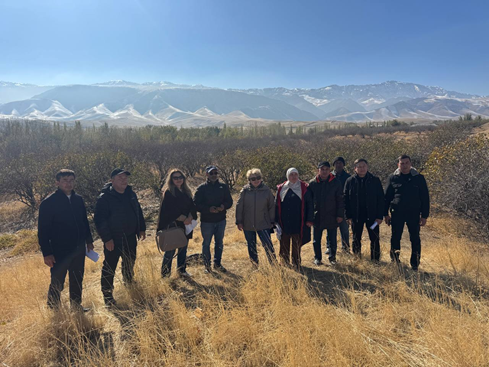
Beshkubi Branch: Terracing and Erosion Control
The Beshkubi Branch visit centered on terracing operations—a critical erosion control measure for mountainous terrain. The delegation examined:
-
Erosion mitigation strategies implemented on steep slopes
-
Plans for transferring saplings from nurseries to terraced areas
-
Technical approaches to sustainable land management on challenging terrain
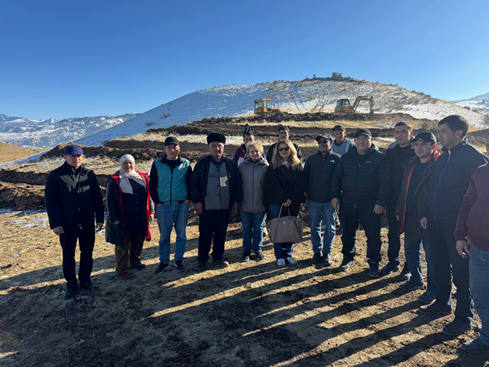
Operational Challenges and Solutions
Director of Jizzakh Forestry Enterprises, Abduqodir Sarimsoqov, presented a comprehensive overview of the operational workflow while highlighting several key challenges:
1. Logistical Constraints in High-Altitude Terrain
Transporting heavy machinery to terrace zones located in mountainous areas at elevations of 2,700-3,000 meters above sea level presents significant logistical and technical challenges. The difficult terrain requires specialized equipment and careful planning to ensure safe and efficient operations.
2. Pasture Fencing Implementation
The establishment of protective fencing for 800 hectares of pasture land is underway to prevent overgrazing and allow vegetation recovery. This extensive fencing project is essential for protecting restored areas and ensuring long-term sustainability.
3. Community Engagement and Economic Impact
A key focus of the project is engaging local communities and creating employment opportunities to reduce rural-to-urban migration. Currently, 30 additional local residents have been employed specifically for the pasture fencing activities, providing income opportunities while involving communities directly in conservation efforts. This approach ensures that local populations become stakeholders in the project's success and benefit economically from sustainable land management practices.
Zomin National Park: Ecotourism and Sustainable Development
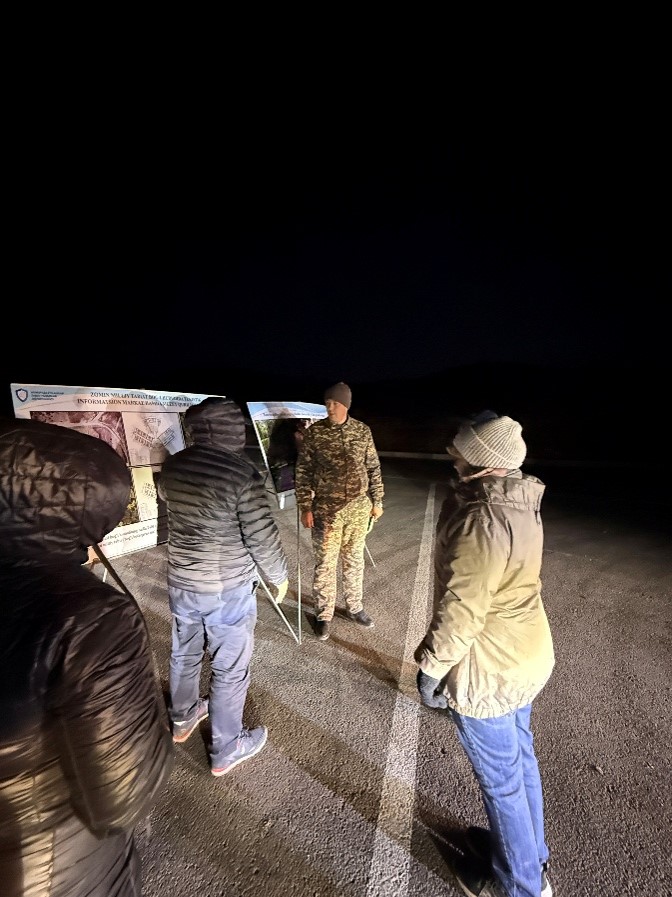
The delegation's visit to Zomin National Park focused on reviewing Component 3 of the RESILAND project and assessing ecotourism development potential. The team evaluated:
Existing eco-trails and their condition
-
Development plans for RESILAND sub-components aligned with Presidential Decree PD-140
-
Opportunities to integrate conservation with sustainable tourism that benefits local communities
Ecotourism represents a vital component of the project, offering economic incentives for conservation while providing alternative livelihoods for local populations. The development of eco-trails and visitor facilities aims to showcase the region's natural beauty while generating sustainable income streams.
Project Impact and Scale
The RESILAND project represents one of Central Asia's most ambitious landscape restoration initiatives. Through this multi-faceted program, over 253,620 hectares of forest and rangeland areas are being restored across Uzbekistan.
The project's comprehensive approach addresses multiple objectives:
-
Environmental Restoration: Reversing land degradation, controlling erosion, and restoring ecosystem functions
-
Climate Resilience: Enhancing the landscape's capacity to withstand climate variability and extreme weather events
-
Biodiversity Conservation: Protecting and restoring habitats for native flora and fauna
-
Livelihood Improvement: Creating employment opportunities and improving economic conditions for local communities
-
Sustainable Land Management: Establishing long-term practices that balance conservation with productive land use
The forestry enterprises demonstrated strong commitment to continuing these restoration efforts, emphasizing the project's role in creating a sustainable future for coming generations while improving local livelihoods through integrated landscape management approaches.
Looking Ahead
The field visit provided valuable insights into implementation progress, operational challenges, and opportunities for acceleration. The World Bank delegation's assessment will inform ongoing support and potential adjustments to ensure the project achieves its ambitious goals.
The collaboration between the World Bank, national authorities, local forestry enterprises, and communities exemplifies the integrated approach necessary for successful landscape restoration at scale. As the project continues, its success in Jizzakh Region may serve as a model for similar initiatives across Central Asia and beyond.
------
The Uzbekistan Resilient Landscape Restoration Project is part of the World Bank’s RESILAND CA+ program, aimed at strengthening landscape resilience across Central Asian countries. Similar national and regional activities are also being implemented in Kyrgyzstan and Uzbekistan.
RESILAND Uzbekistan is implemented by the Agency for Afforestation, Expansion of Green Areas, and Combating Desertification under the Ministry of Ecology, Environmental Protection, and Climate Change of the Republic of Uzbekistan, with financial support from the World Bank, PROGREEN, and KWPF.
The Regional Environmental Centre for Central Asia (CAREC) implements the regional component of the project.
Contact information:
Asferachew Abate– Senior Environmental Specialist, The World Bank
Azamat Kauazov - Deputy Team Leader of Uzbekistan Resilient Landscape Restoration project: regional component, CAREC